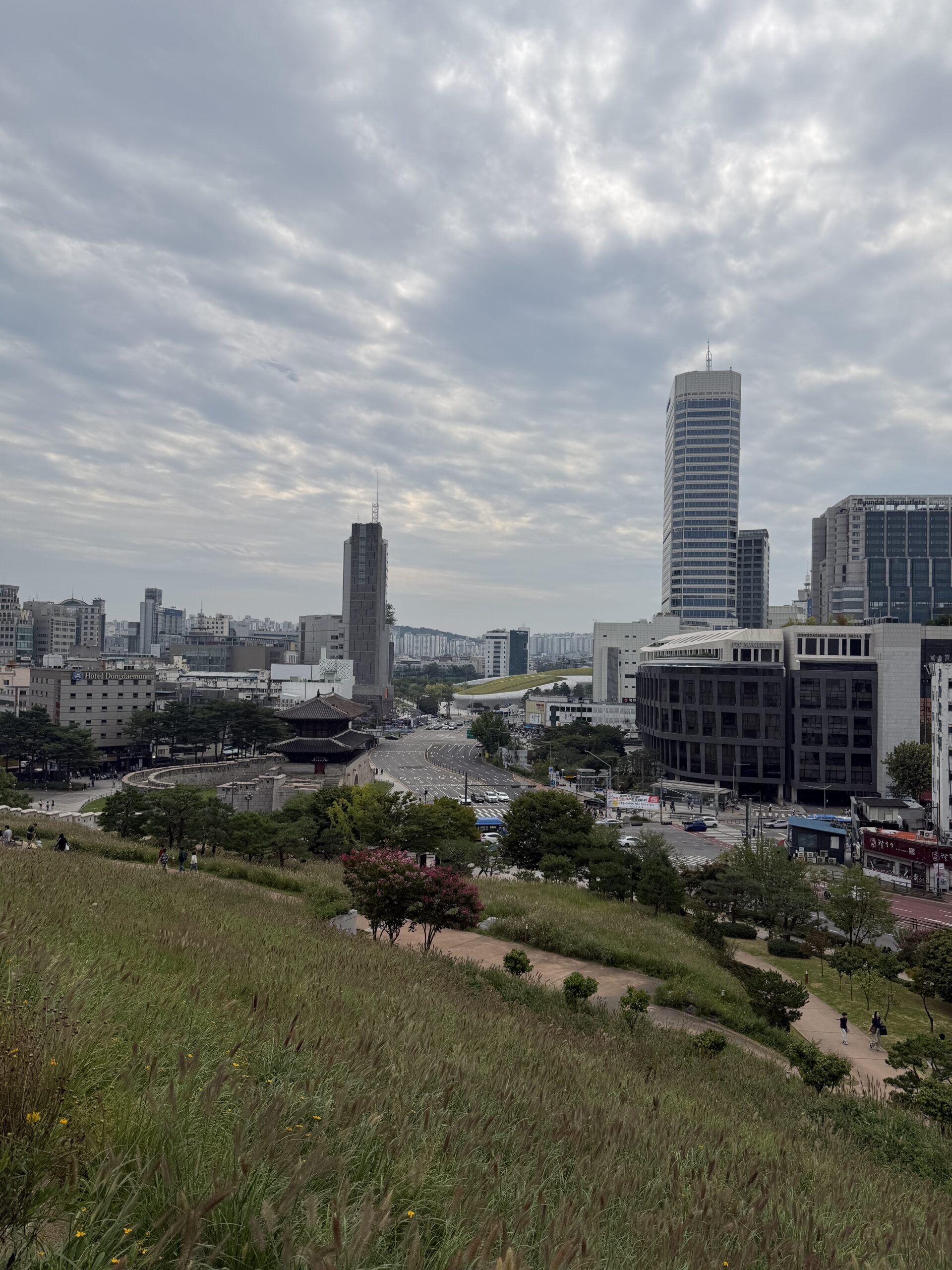
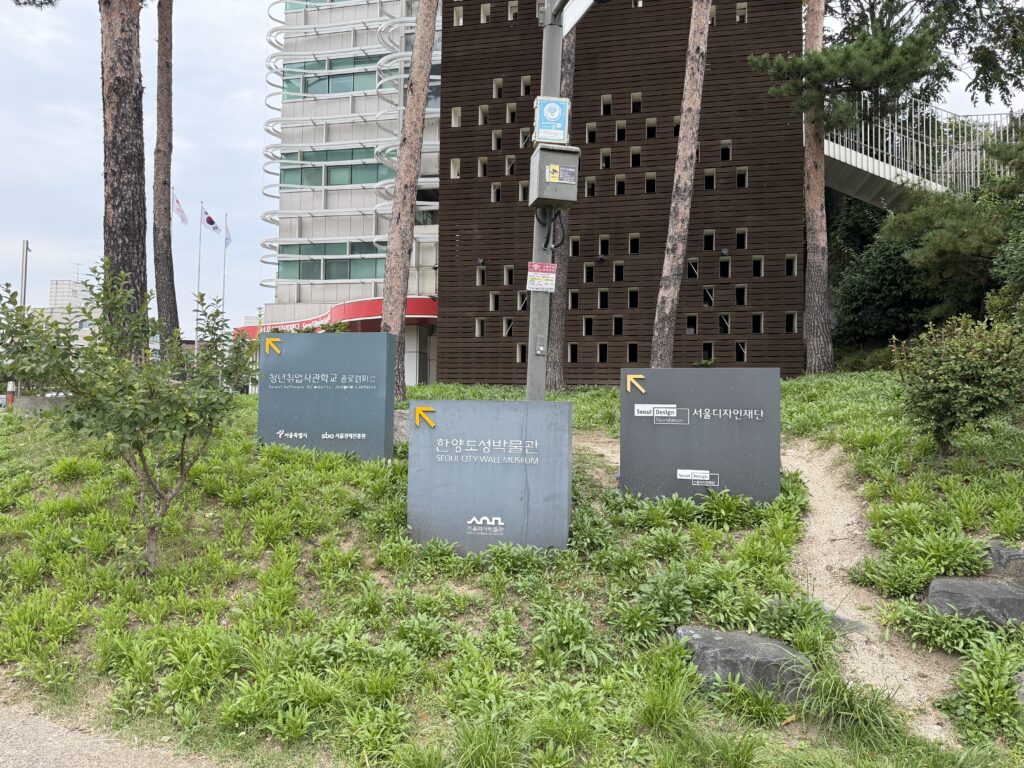
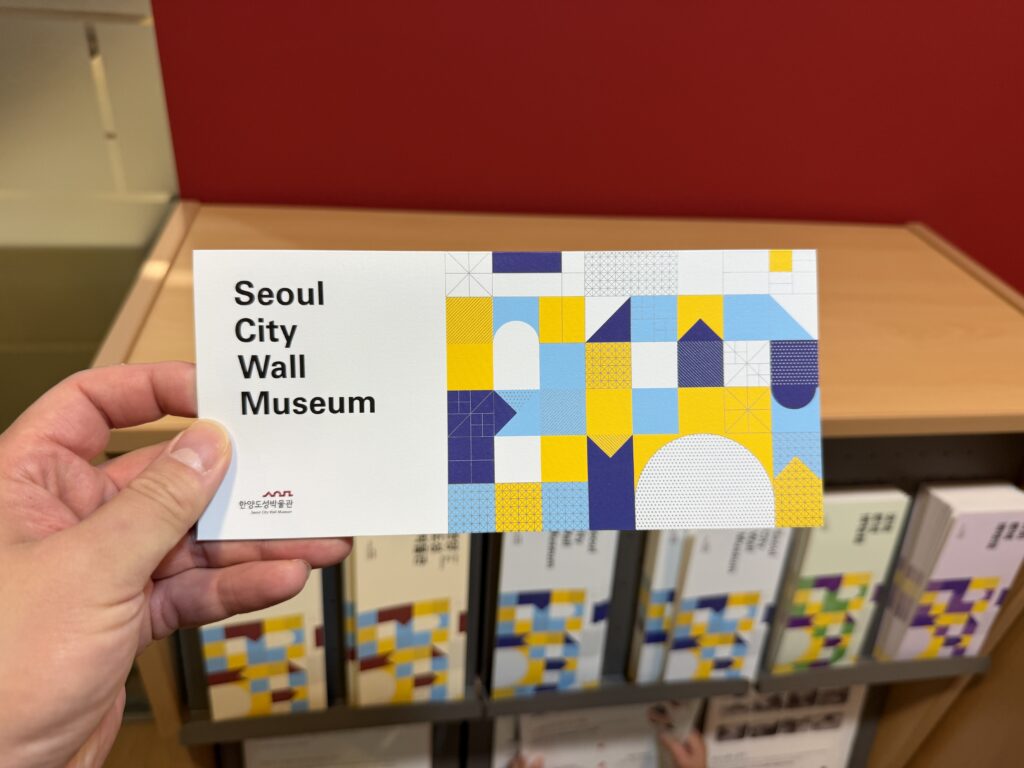
The Seoul City Wall Museum is free, it is three floors, and it is built into the hillside where the wall actually runs. That last part is the whole point. You read about the fortification upstairs, then you walk out of the door and stand on it.
We did the museum first, walked the wall path down to Heunginjimun Gate, and finished in a cafe with the gate in the window. Two hours, one of them free, with a five-year-old and a toddler.
Why this is worth your time in 2026
In 2017 Seoul applied to UNESCO for World Heritage status for the city wall, and withdrew the application after ICOMOS, the advisory body, recommended against inscription. In January 2026 the city tried again with a much larger idea: not the wall on its own, but the Capital Fortifications of Hanyang — the city wall together with Bukhansanseong and Tangchundaeseong, treated as one connected defensive system rather than a single monument. This time the ICOMOS preliminary assessment was positive. The decision is due at the 2027 session of the World Heritage Committee.
Which is a long way of saying that right now this is a free museum with no queue at the door, and that may not be permanent.
What is actually in it
Three floors, and about fifty minutes if you read things.
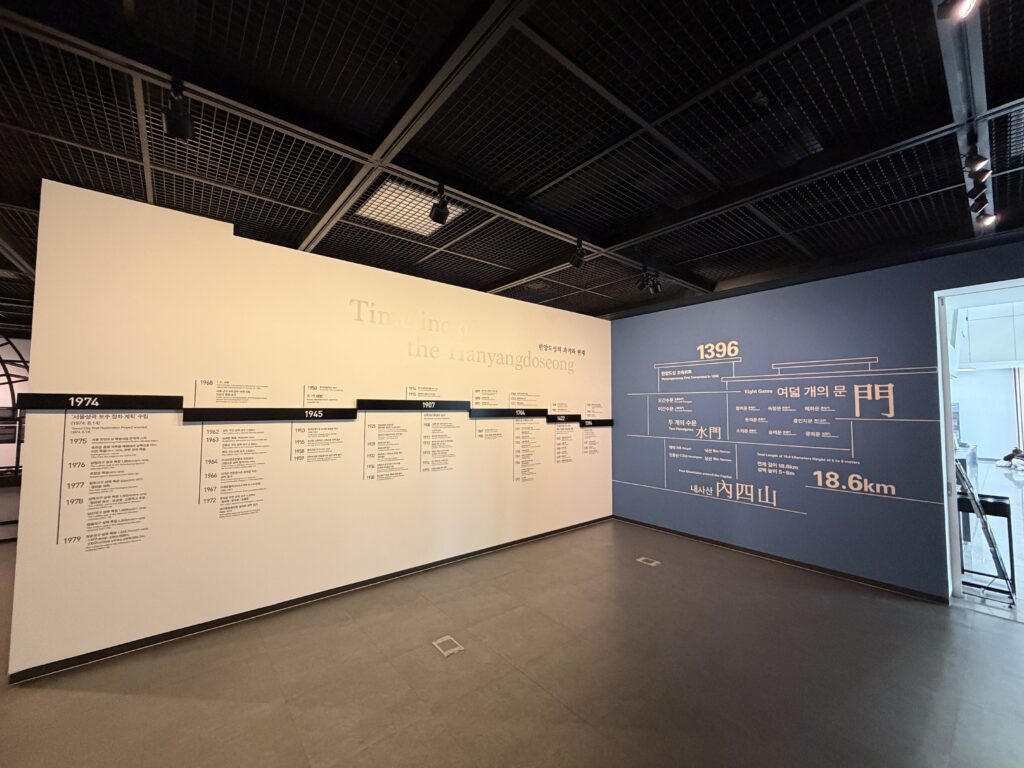
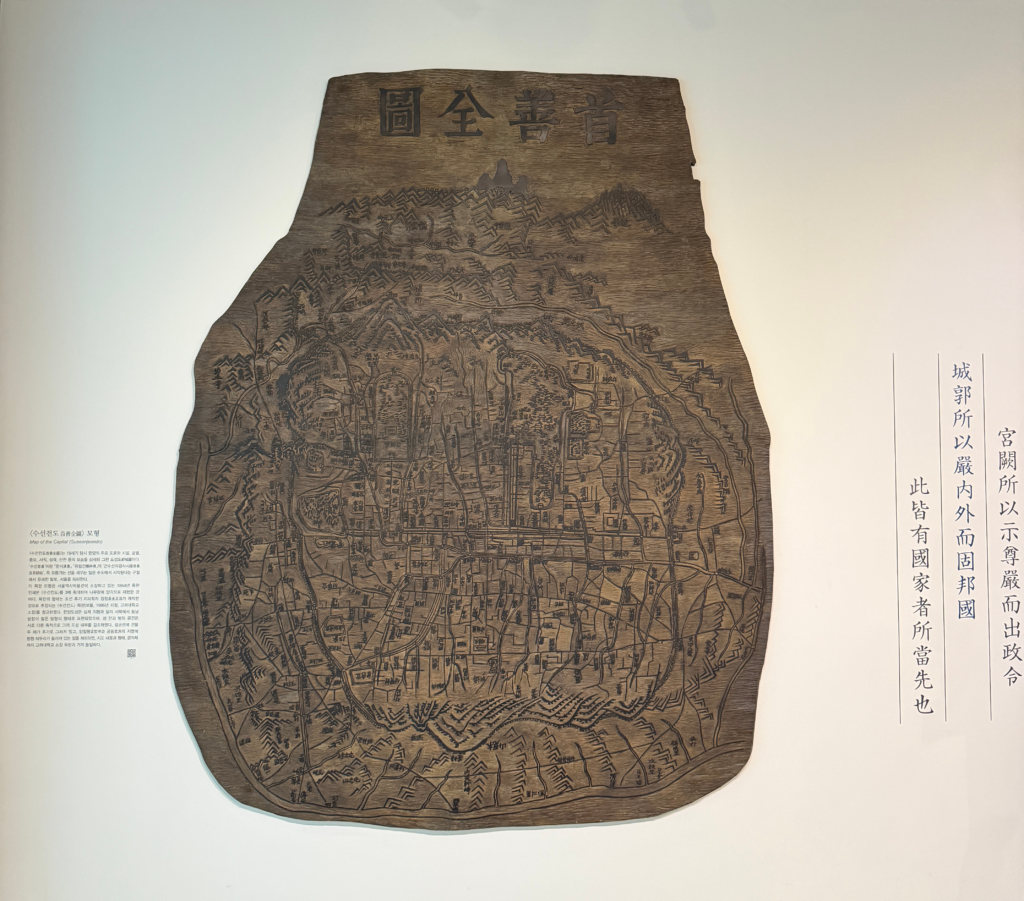
The ground floor has the lobby and the first permanent gallery. The second has the changing exhibition, a learning room and a library. The third has the two galleries that do the real work: one on the founding of Hanyang and the building of the wall in 1396, one on what came afterwards — dismantled in sections under Japanese rule, cut through for roads, then excavated and rebuilt from the 1970s onwards.
Everything is labelled in English. Not a summary panel in English with the details in Korean only. The actual object labels.
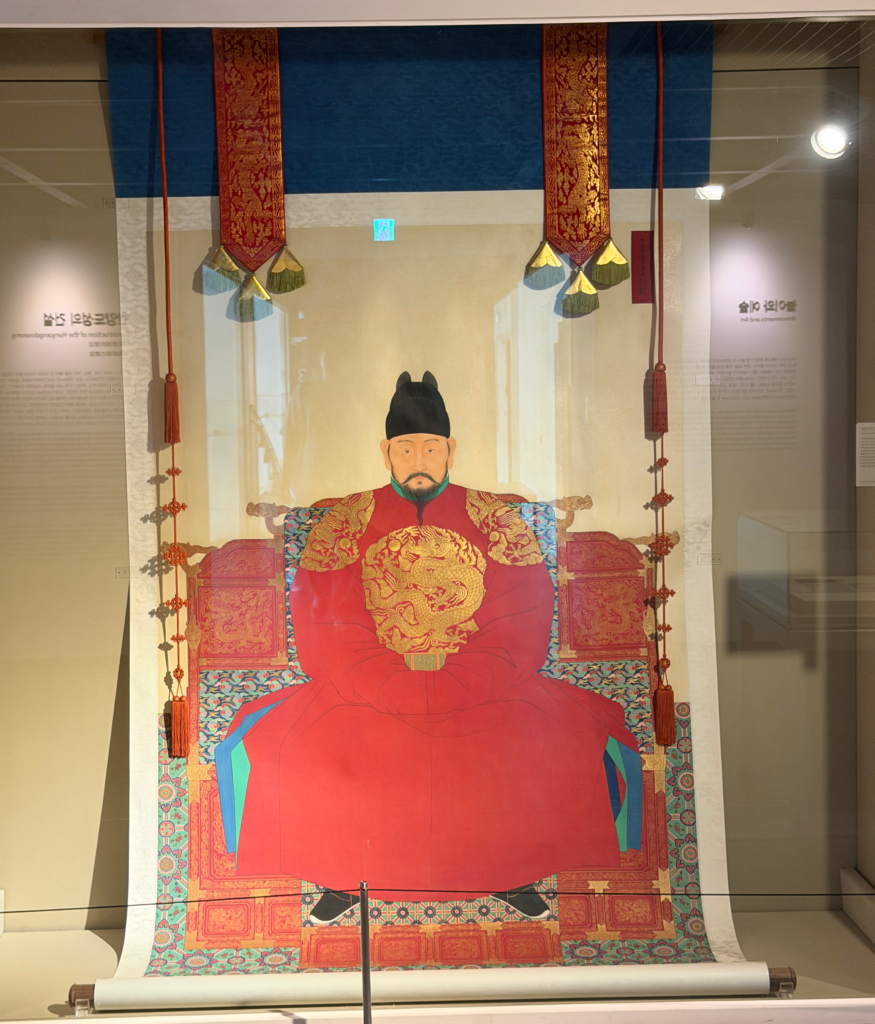
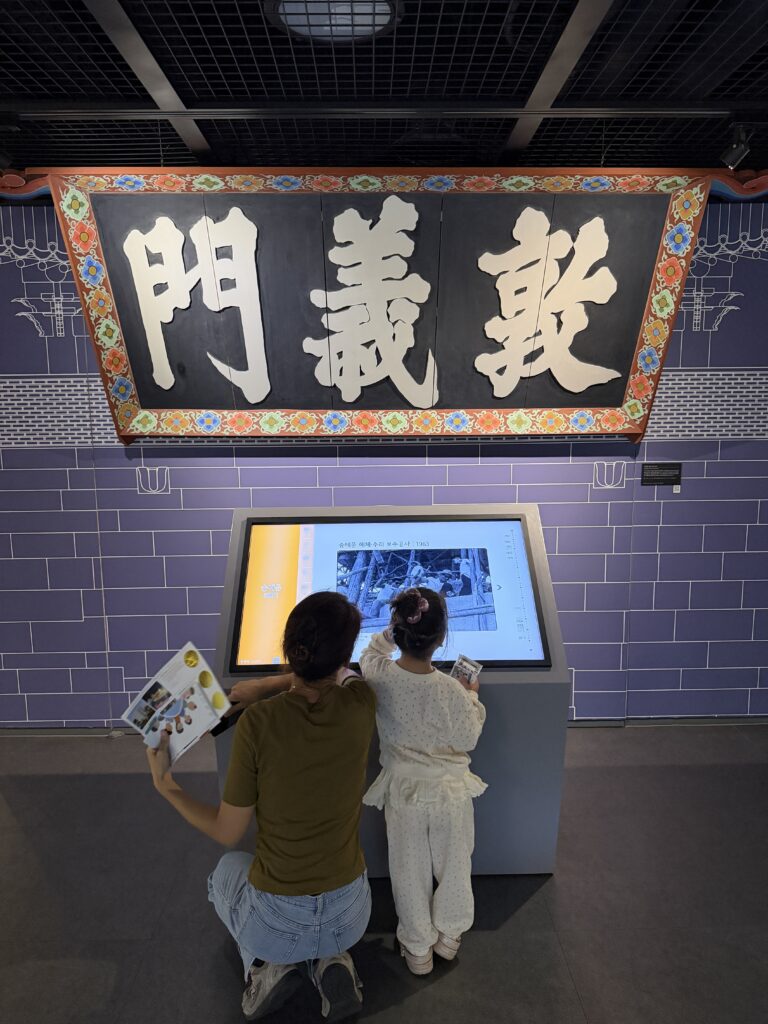
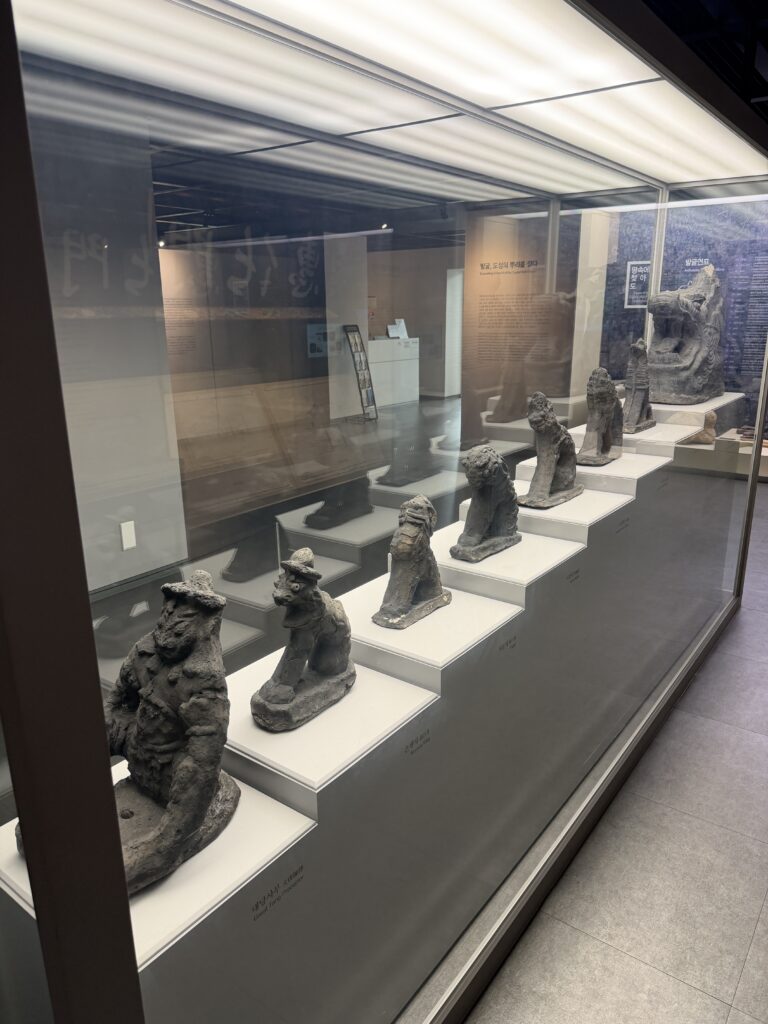
Start on the ground floor
There is no fixed route and the lift will take you straight to the top, but the first gallery is on the ground floor and almost everyone works upwards from there. We did the same, and it reads in the right order that way: the founding of the city, the building of the wall, then what the twentieth century did to it.
Go on a weekday and you will have rooms to yourself. We went at the weekend, and the place was full of primary-school groups — after-school teachers with eight or nine children each, stopped in front of a case, explaining. Not a coach party with worksheets. Small groups, sitting on the floor, being talked to.
Worth knowing for two reasons. The practical one is that on a Saturday the upper galleries get loud and you will wait your turn in front of things. The other is that it tells you what this place is. It is not a display case built for visitors. It is where the city sends its own children to learn what the wall was, which is as good an argument for going as anything in the collection.
The room nobody tells you about
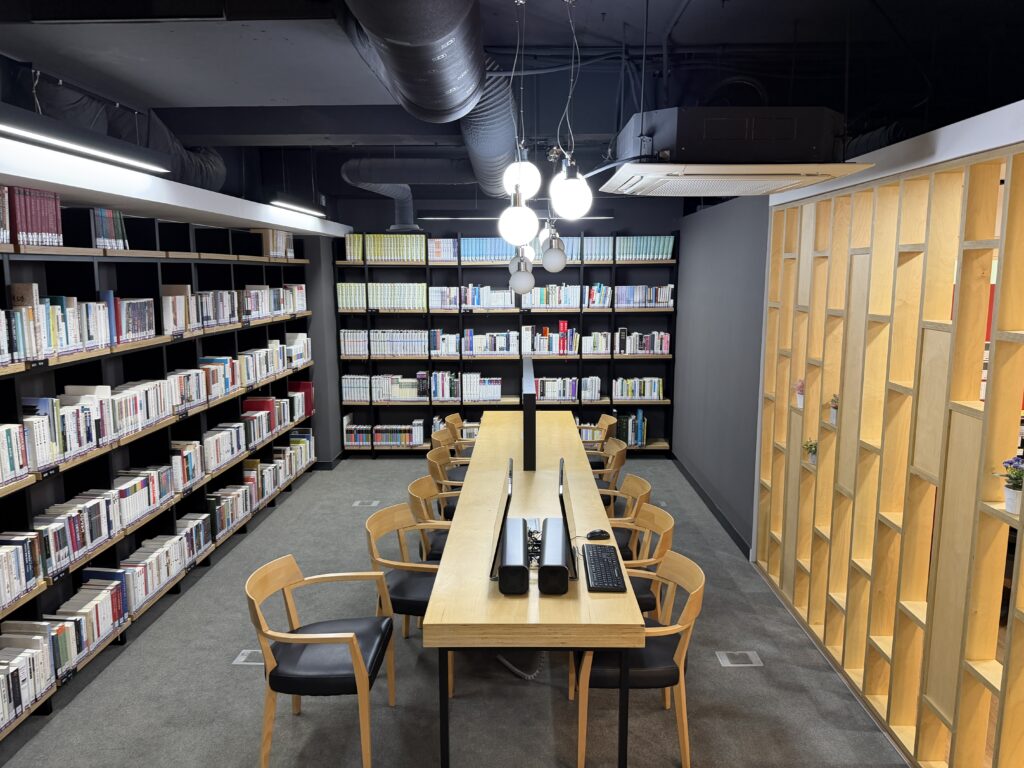
On the second floor there is a library, and this is where we stayed longest.
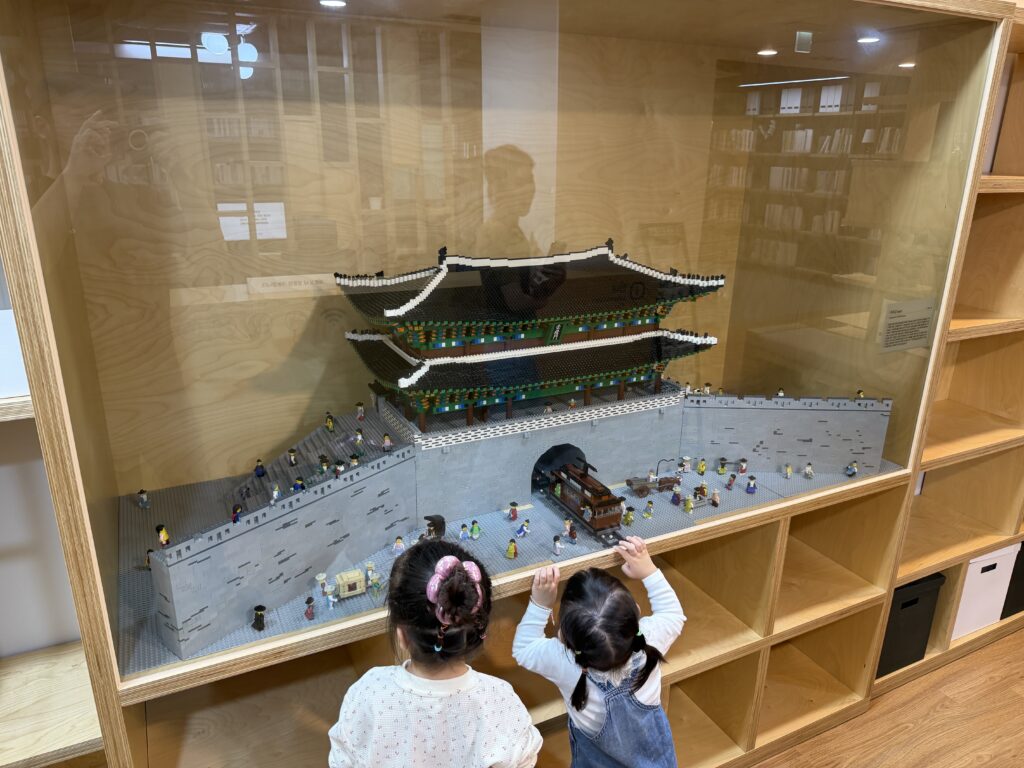
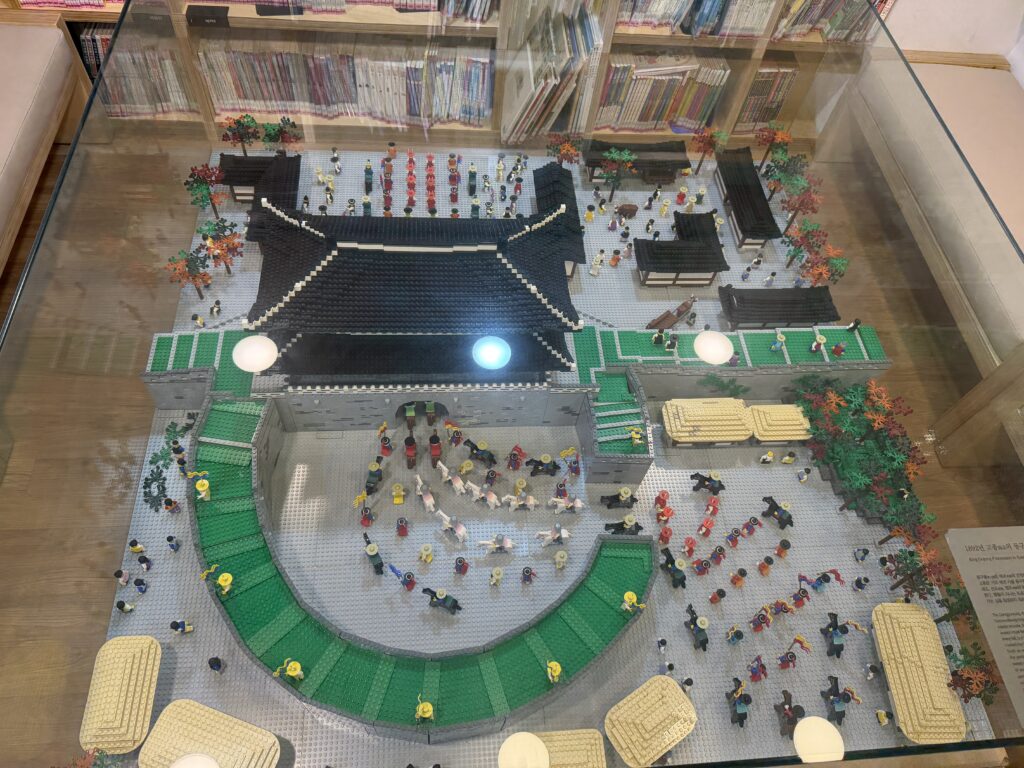
Behind glass there are Lego models of the wall and its gates — a full gate with roof tiles and the wall running off both sides of it, and a palace courtyard with several hundred minifigures arranged across it. That is what gets children to the doorway. What keeps them there is that the shelves have books for them, at their height, in a room with chairs and air conditioning.
We went in September on a hot day. The five-year-old looked at the Lego, then sat down while we read to her, and the toddler did the same thing badly and then properly. It turned a museum visit into a museum visit with a break in the middle, which is the difference between leaving happy and leaving early.
One thing to plan around. The library keeps different hours from the museum: roughly 10am to 5pm, and unlike the museum it closes on public holidays as well as Mondays. So you can arrive on a holiday, find the museum open, and find this room shut.
With a toddler
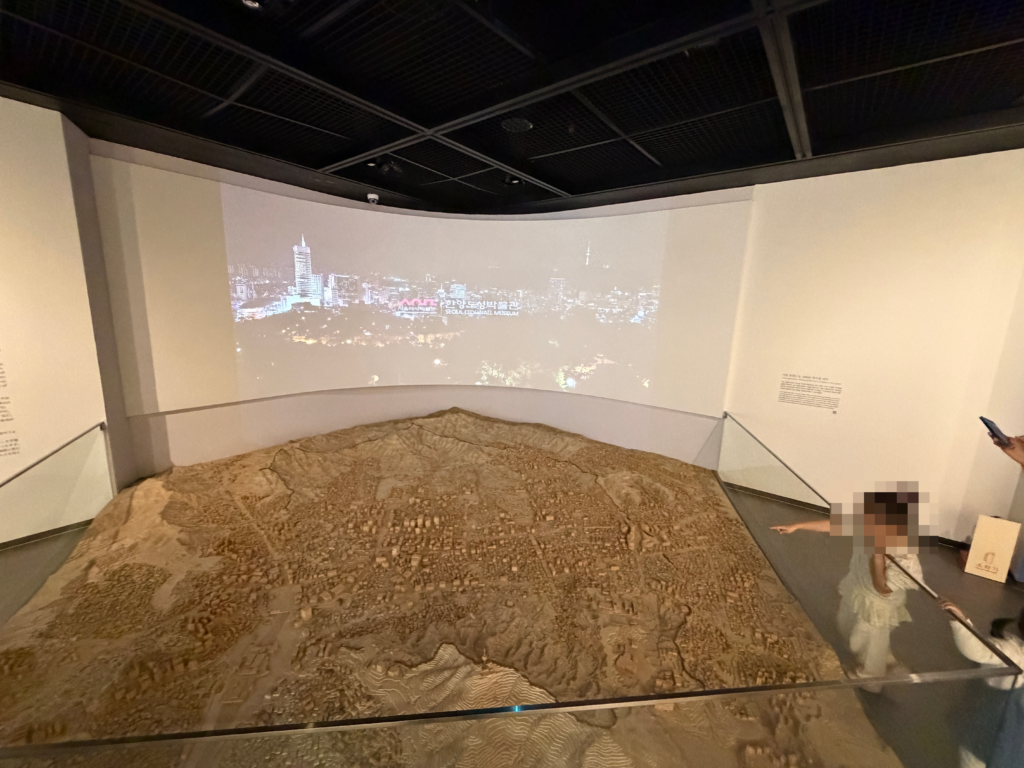
There is a floor-level model of the city in one of the upper galleries, several metres across, with the mountains raised and a film of the modern skyline projected on the wall behind it. It is at the right height for a two-year-old to walk along and point at, and it is under glass, which is why we could let her.
The rest of the museum is pushchair-friendly. Lifts, wide galleries, nothing to catch a wheel on. The difficulty starts outside.
Out of the door and onto the wall
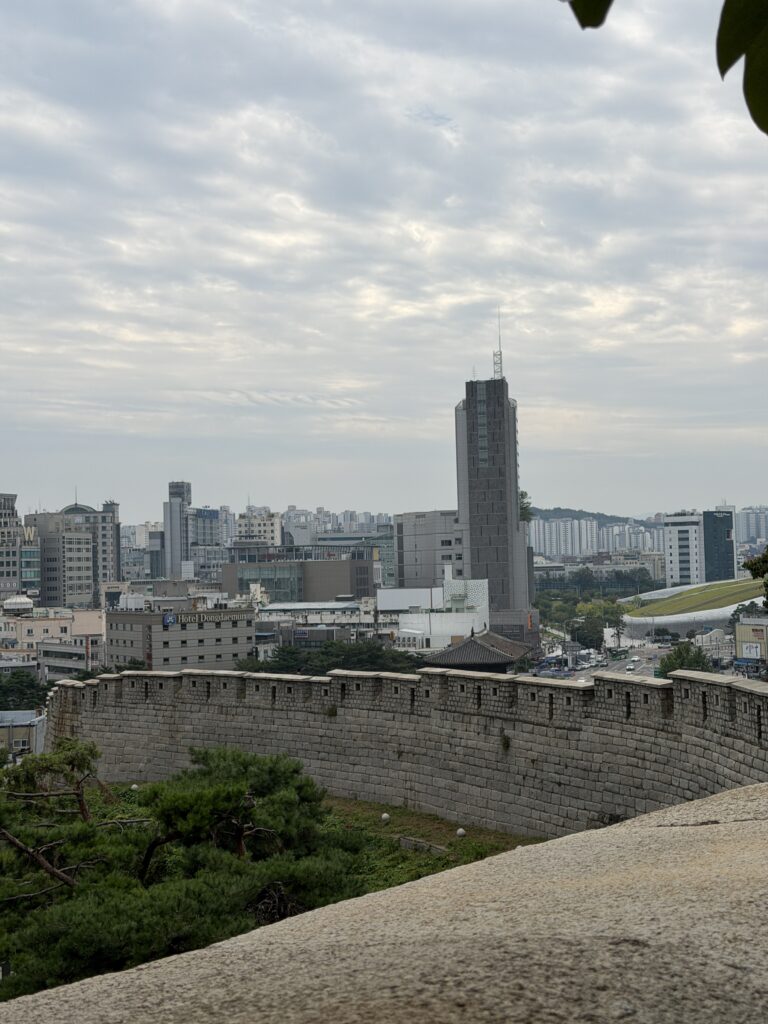
The museum stands in Heunginjimun Park, and the park is the wall. You come out, turn uphill, and within a minute you are walking beside a restored stretch of it with the parapet at shoulder height.
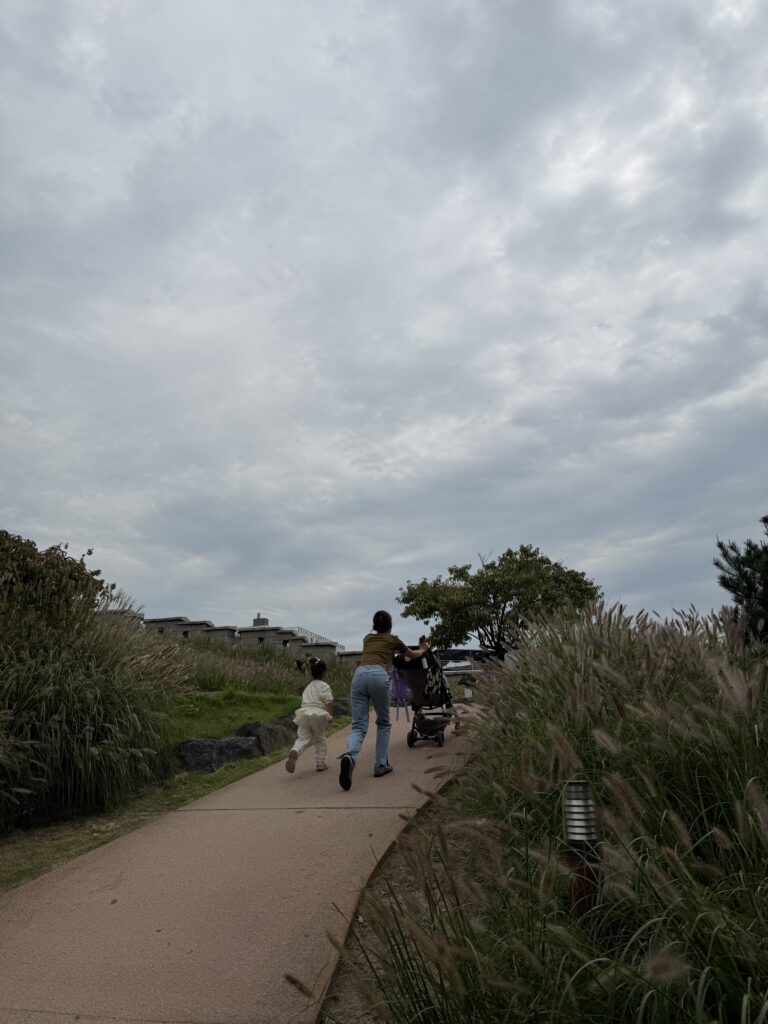
The first part is paved and level and pleasant, and in September the pampas grass is up along both sides of it. Further on it becomes a real path — compacted earth, tree roots, a gradient, steps in two or three places. We had a pushchair and we managed, but one of us was pushing properly rather than strolling. If you are on wheels and want the view without the work, stay on the paved section immediately behind the museum. You get the same sightline over the gate without committing to the hill.
Seeing Heunginjimun properly
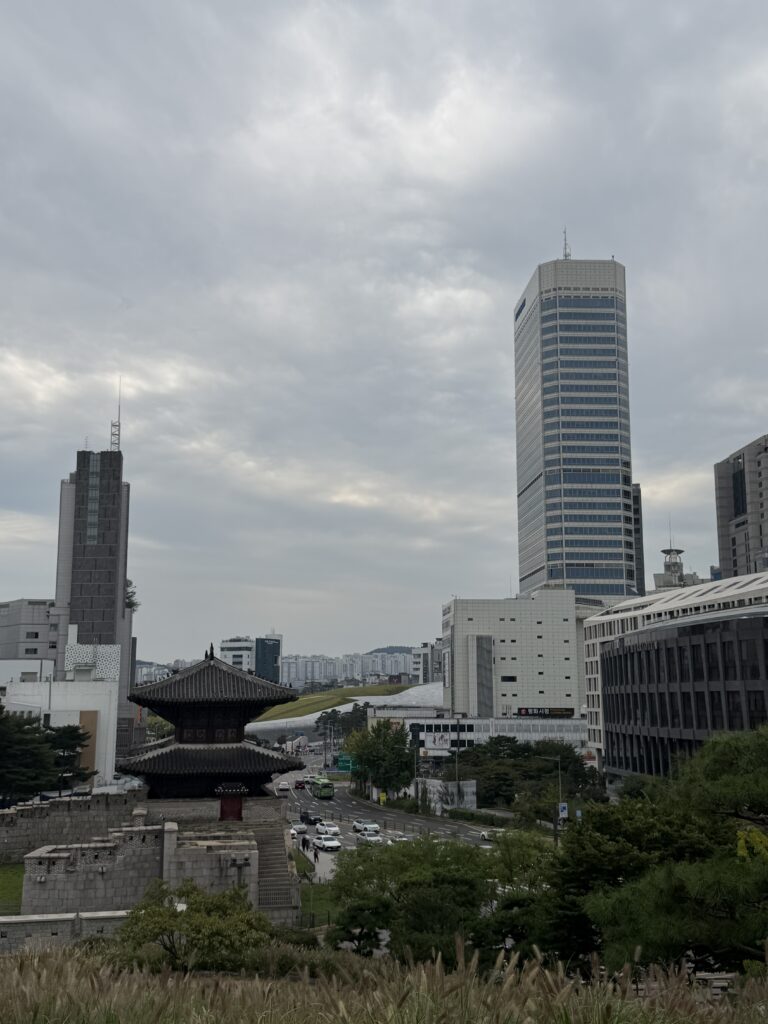
Heunginjimun — Dongdaemun, the east gate — is a designated national Treasure standing on a traffic island. Six lanes go round it. From the pavement you can photograph the roofline, but you cannot really look at the thing, because you are beside moving traffic and below the object you came to see.
The answer is to get above it, and the wall path does that for nothing. From the slope behind the museum the gate sits below you, and the curved outer wall wrapped around its entrance reads as a shape rather than as a barrier, with the line of the fortification running away behind it.
Where to sit afterwards
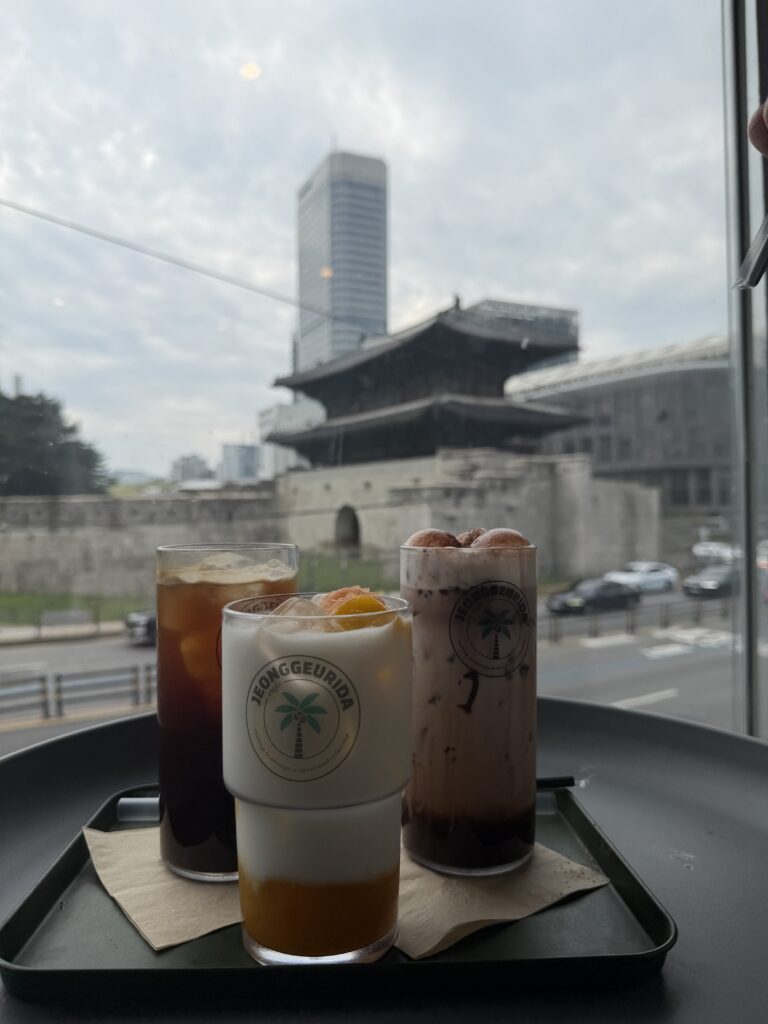
There is a cafe where the wall path meets the road, and its address is number 2, Naksan Fortress Wall Road, which tells you everything about where it is.
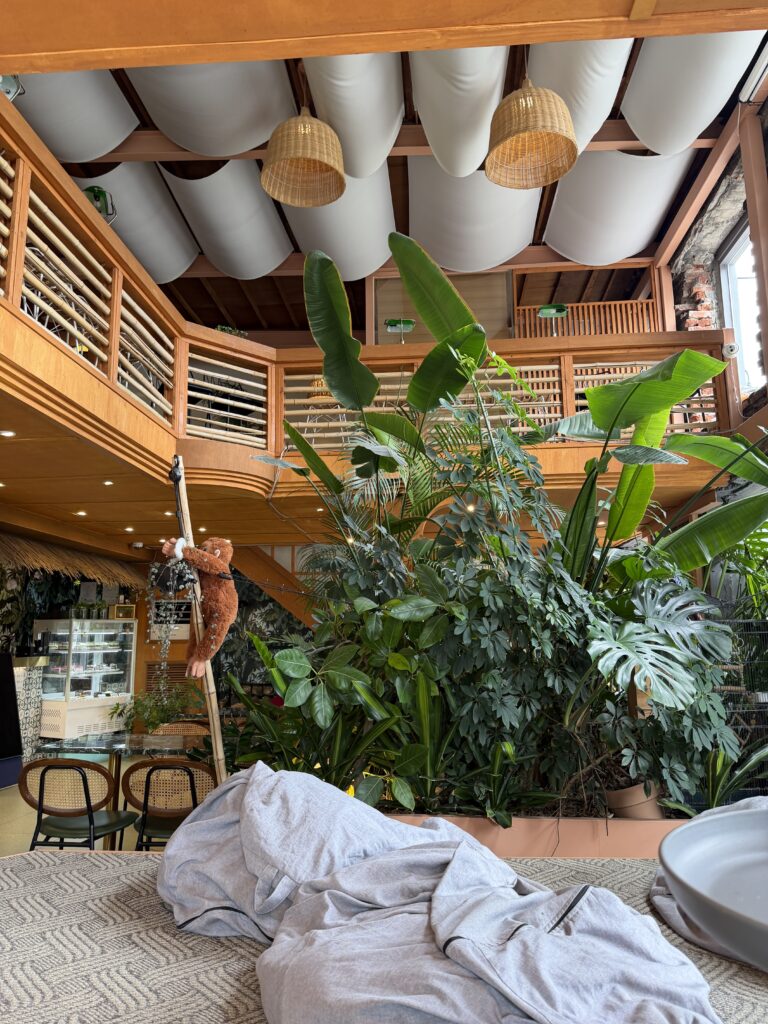
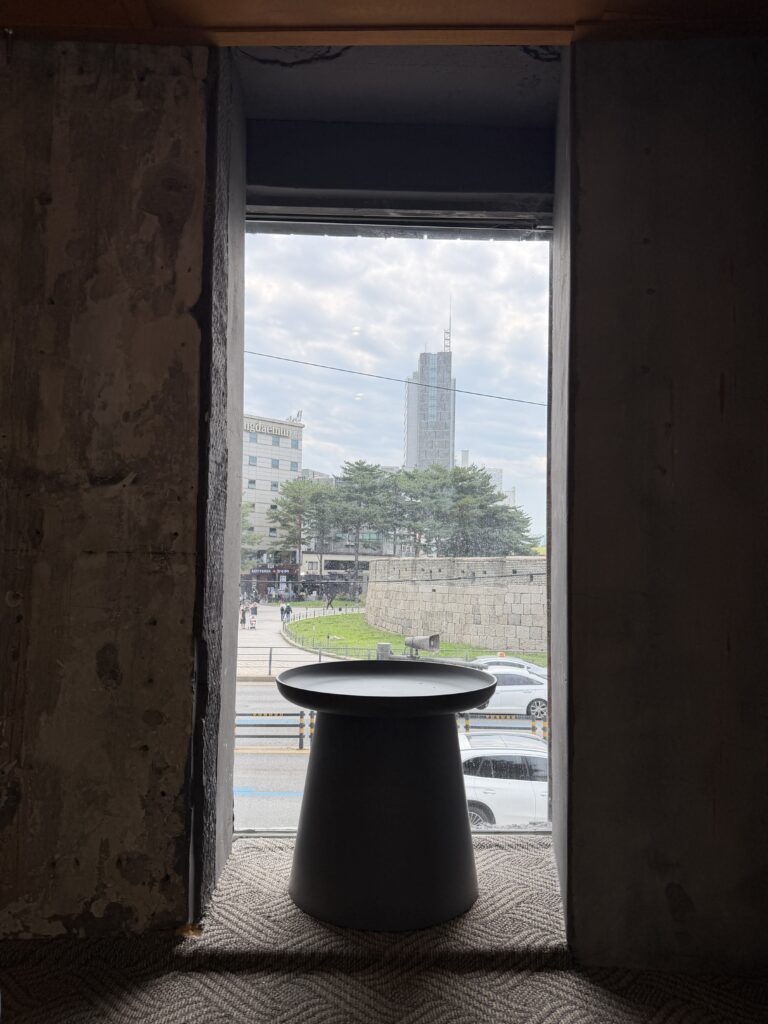
It is called Jeonggeurida. The building is old, with exposed concrete and a mezzanine, and somebody has filled the middle of it with tropical plants to roughly two storeys — not what you expect two minutes from a fourteenth-century gate. Upstairs there are window seats looking straight at Heunginjimun.
The part that mattered to us was downstairs. There is a section where you take your shoes off and sit on the floor, with a low table and a window at floor level, also facing the wall. If you have a small child who has just been asked to be quiet in a museum for an hour, this is the correct room.
Hours are roughly 10am until 10 or 11pm depending on the day, so unless you are arriving late it will be open. One warning: there is an unrelated cafe with the same name in Yongin, an hour outside Seoul. Search the address, not the name.
Getting there, and what to know
Seoul City Wall Museum, 283 Yulgok-ro, Jongno-gu, on floors one to three of the Seoul Design Support Centre. Open 09:00 to 18:00, last entry 17:30, closed Mondays and 1 January. Free, no booking. Tel 02-724-0243.
The second-floor library with the Lego runs 10:00 to 17:00 and closes on Mondays and public holidays.
Nearest station is Dongdaemun (Lines 1 and 4), about five minutes uphill. There are 29 parking spaces at 400 won per five minutes, capped at 45,000 won a day, and the museum itself asks you to come by train.
Photography is allowed. Flash and tripods are not.
Allow fifty minutes inside, twenty on the wall, and as long as you like in the cafe.
Questions people ask
Is the Seoul City Wall Museum free?
Yes. No ticket and no booking.
Is there English?
On the object labels, not only on the summary panels.
Can I take a pushchair?
Into the museum, easily. Onto the wall, with effort. The paved stretch behind the museum is fine; the earth path uphill is harder and has steps.
Is there anything for children?
The second-floor library has Lego models of the gates and a children’s book section, and it is the coolest room in the building in summer. It shuts at 5pm and on public holidays.
When should I go?
Weekday mornings are quiet. At weekends the galleries fill with after-school groups being taught in front of the cases, which is good to see and loud to read in.
How long does it take?
Fifty minutes inside. Two hours for the museum, the wall and a coffee.
Is it worth it if I am not interested in fortifications?
The building sits at the foot of the wall, so you can look at the map and then go and walk on it. That is the reason to come, more than the collection.
Is it open on Mondays?
No. Tuesday to Sunday.
Read next
- Jogyesa Temple and Korea’s First Post Office — Also in Jongno, also free, with a summer lotus festival and an 1884 post office one minute away.
- Ssamzigil: The Insadong Building You Walk Up Like a Hill — A craft mall built as one continuous ramp, with workshops on every floor. We took the pushchair up that one too.
- Gyeongbokgung Palace: The Ultimate Local’s Guide — The palace the wall was built to protect, at the other end of Jongno.