Intro
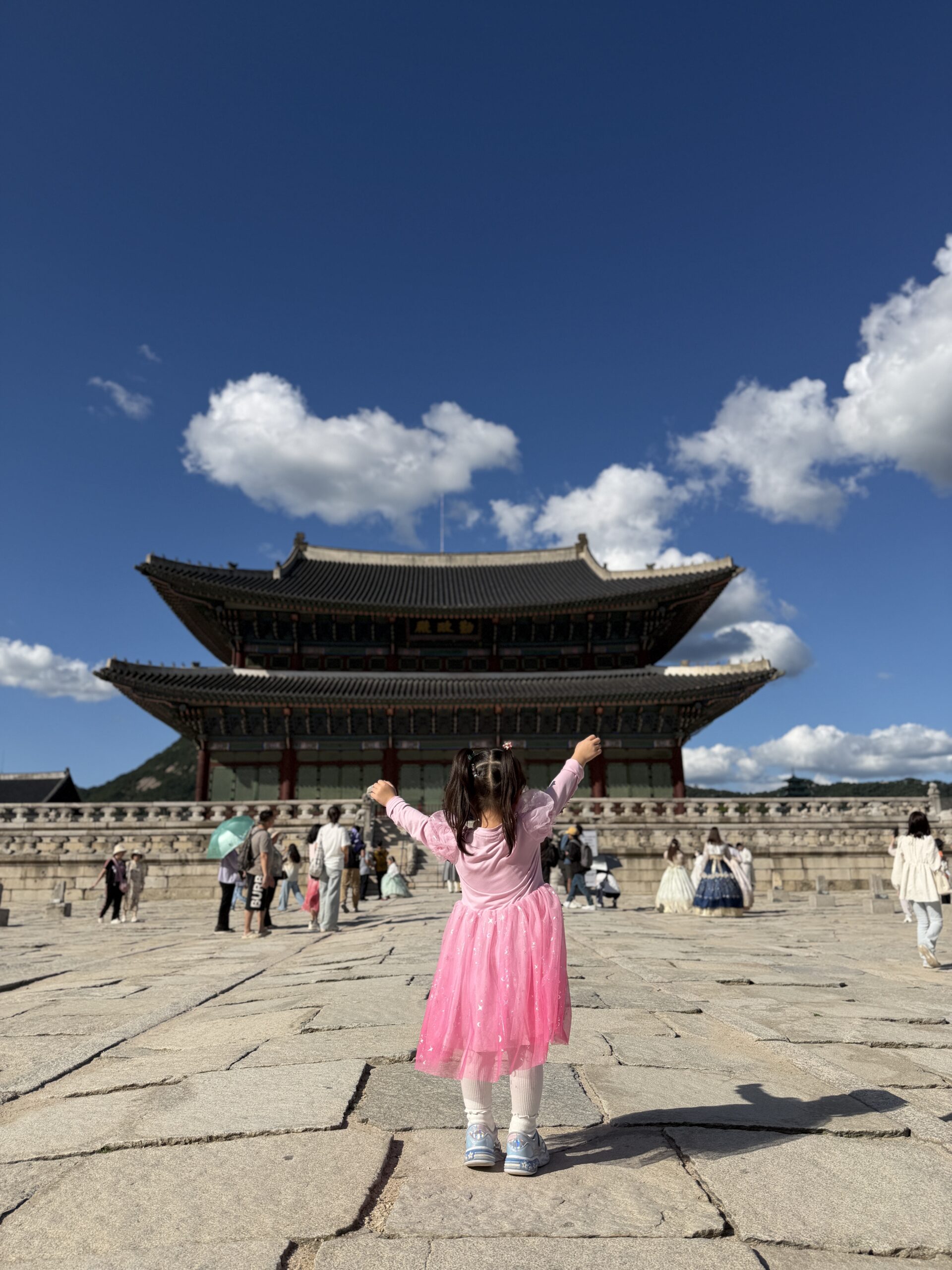
The Gyeongbokgung Palace is the grandest of Seoul’s five royal palaces and, for most first-time visitors, the single must-see spot in the city. Built in 1395 as the main palace of the Joseon Dynasty, it sits right in the heart of Seoul with the mountains rising dramatically behind it. It’s beautiful, it’s surprisingly walkable, and best of all, it’s still affordable. As a Seoul local who has wandered these courtyards many times, I want to share everything you actually need to know to make the most of your visit, including the one thing you absolutely shouldn’t miss: the Royal Guard Changing Ceremony.
Why It’s Worth Your Time
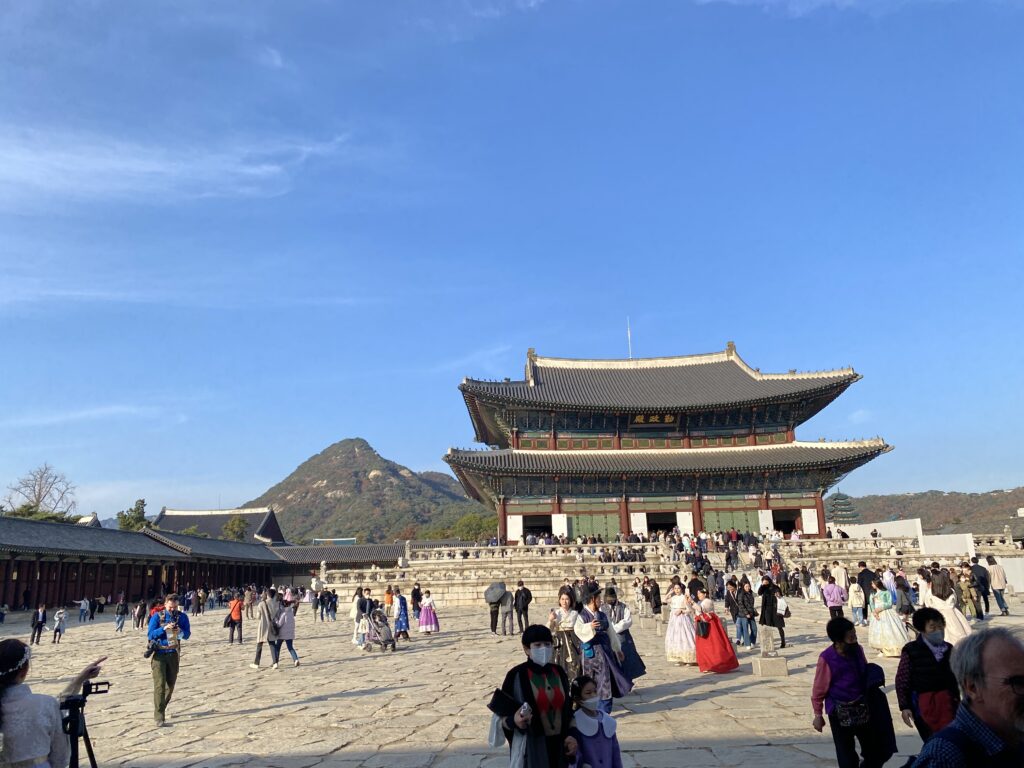
Gyeongbokgung isn’t just one building, it’s an entire walled complex of throne halls, wide courtyards, and quiet hidden pavilions. The scale of it surprises a lot of first-time visitors. You could easily spend a couple of hours just wandering and still find new corners.
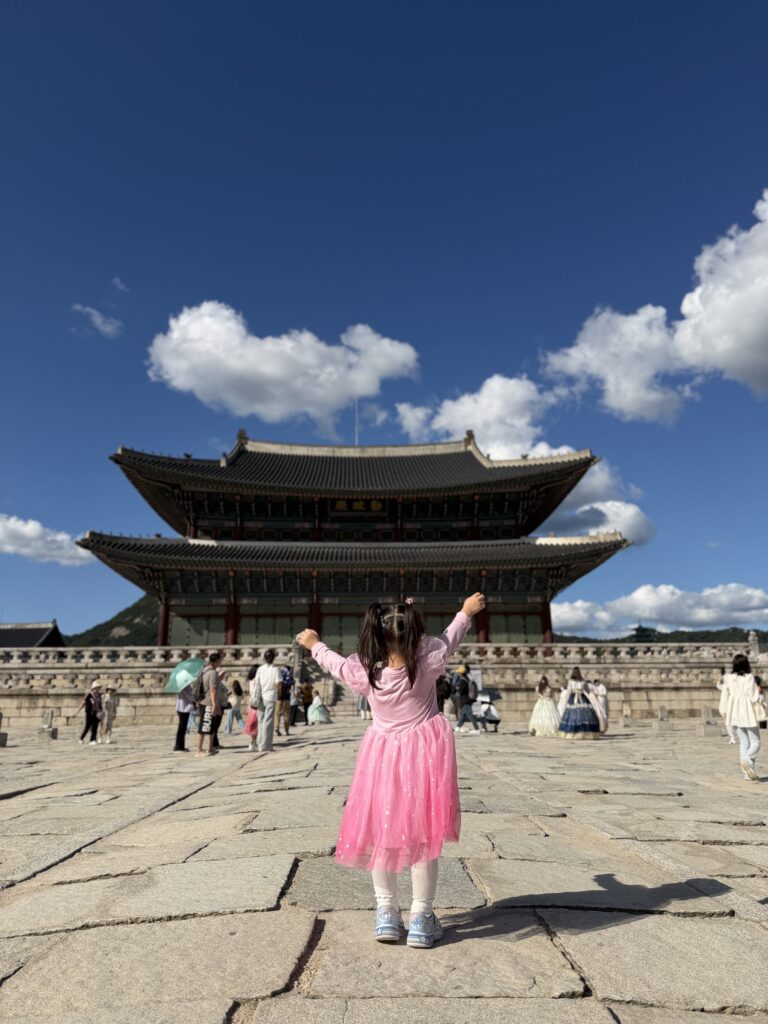
The one place you can’t skip is Geunjeongjeon, the main throne hall where Joseon kings held court and received their officials. Standing in the stone courtyard in front of it, lined with rank stones marking where each minister once stood, you really feel the weight of 500 years of history.
A short walk away is Gyeonghoeru, a stunning two-story pavilion that seems to float on a wide lotus pond. It was built for royal banquets and welcoming foreign envoys, and today it’s one of the most photographed spots in all of Seoul, especially when the water is still and the pavilion mirrors perfectly on the surface.
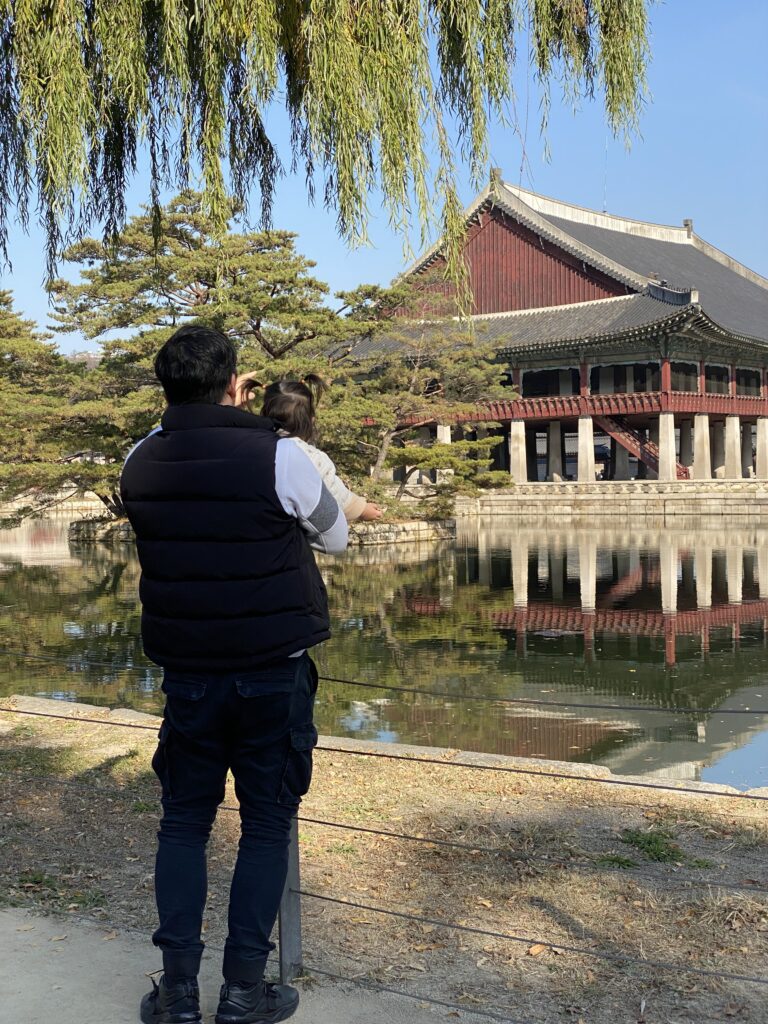
Taking in the view of Gyeonghoeru, the pavilion floating on its pond, one of the most peaceful spots in Gyeongbokgung Palace.
The Royal Guard Changing Ceremony (Don’t Miss This)
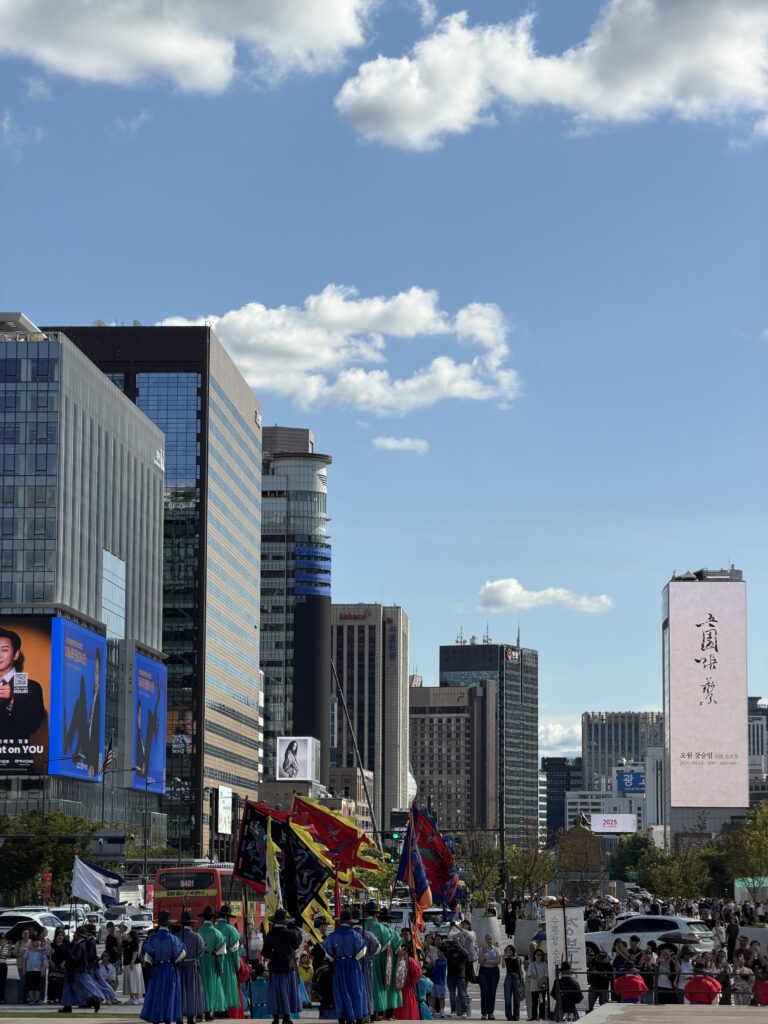
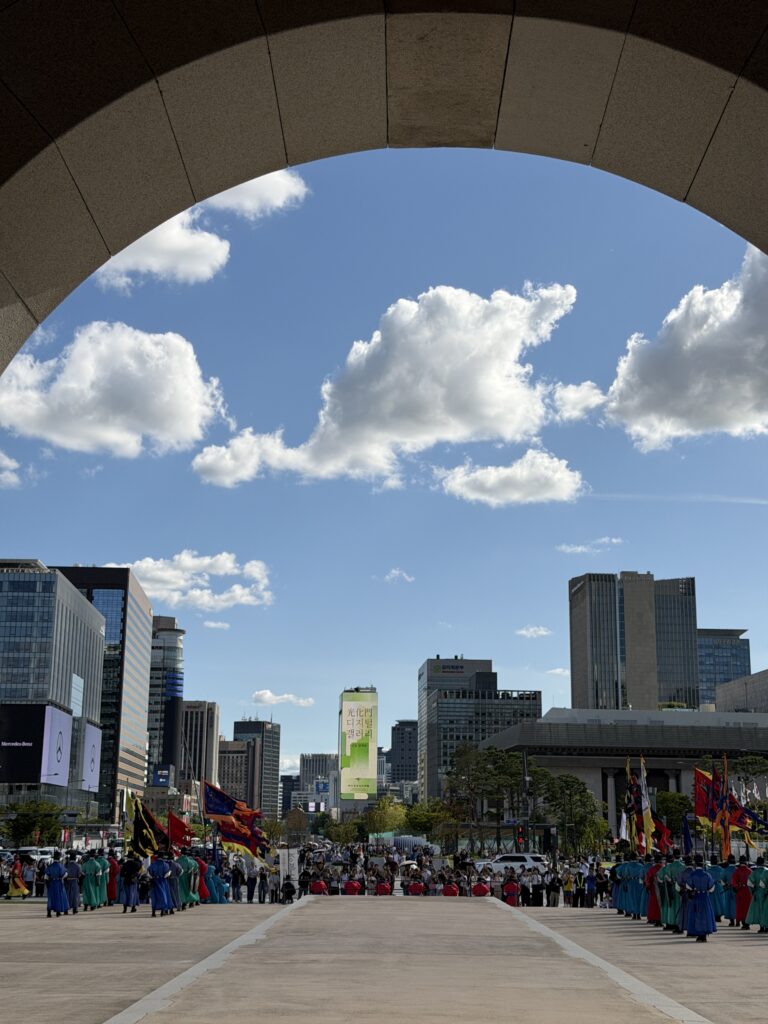
If you time your visit right, you can watch the Royal Guard Changing Ceremony in front of Gwanghwamun, the palace’s main gate. Guards in full Joseon-era costume, complete with flags, weapons, and traditional music, recreate the centuries-old ritual of changing the palace watch. It’s colorful, surprisingly moving, and completely free to watch, you don’t even need a palace ticket, since it all happens just outside the gate.
Ceremony times (2026): 10:00 AM and 2:00 PM, each lasting about 20 minutes. There is no ceremony on Tuesdays, when the palace is closed. Arrive 10 to 15 minutes early to grab a good spot near the front, it fills up fast, especially in spring and autumn.
Tickets & Hours (2026)
| Item | Detail |
|---|---|
| Adult (19 – 64) | 3,000 KRW |
| Youth (7 – 18) | 1,500 KRW |
| Children under 7 & seniors 65+ | Free |
| Wearing hanbok | Free entry |
Opening hours (last admission 1 hour before closing):
- Nov–Feb: 09:00 – 17:00
- Mar–May & Sep–Oct: 09:00 – 18:00
- Jun–Aug: 09:00 – 18:30
Closed every Tuesday. This is important, a lot of travelers mix this up with other palaces that close on Mondays, then show up to locked gates. Plan around it.
Free Entry with Hanbok
Here’s a fun local tip: if you rent and wear a hanbok (traditional Korean dress), you get into the palace completely free. Both classic and modernized hanbok count, as long as you’re wearing the proper top (jeogori) and a bottom. There are dozens of hanbok rental shops just outside the palace gates and around nearby Bukchon, and renting for a few hours is inexpensive. Walking through the palace courtyards in hanbok is one of the most popular things to do in Seoul, and it makes for unforgettable photos against the palace backdrop. Even if you’re not usually one for dressing up, it’s worth considering, the free entry alone often covers most of the rental cost.
How to Get There
The easiest way is by subway. Take Line 3 to Gyeongbokgung Station, Exit 5, which leads almost directly to the palace ticket office. Alternatively, Gwanghwamun Station (Line 5, Exit 2) is about a 5 to 10 minute walk and brings you right to the main gate, perfect if you’re coming for the guard ceremony. Both stations are easy to navigate and well signed in English.
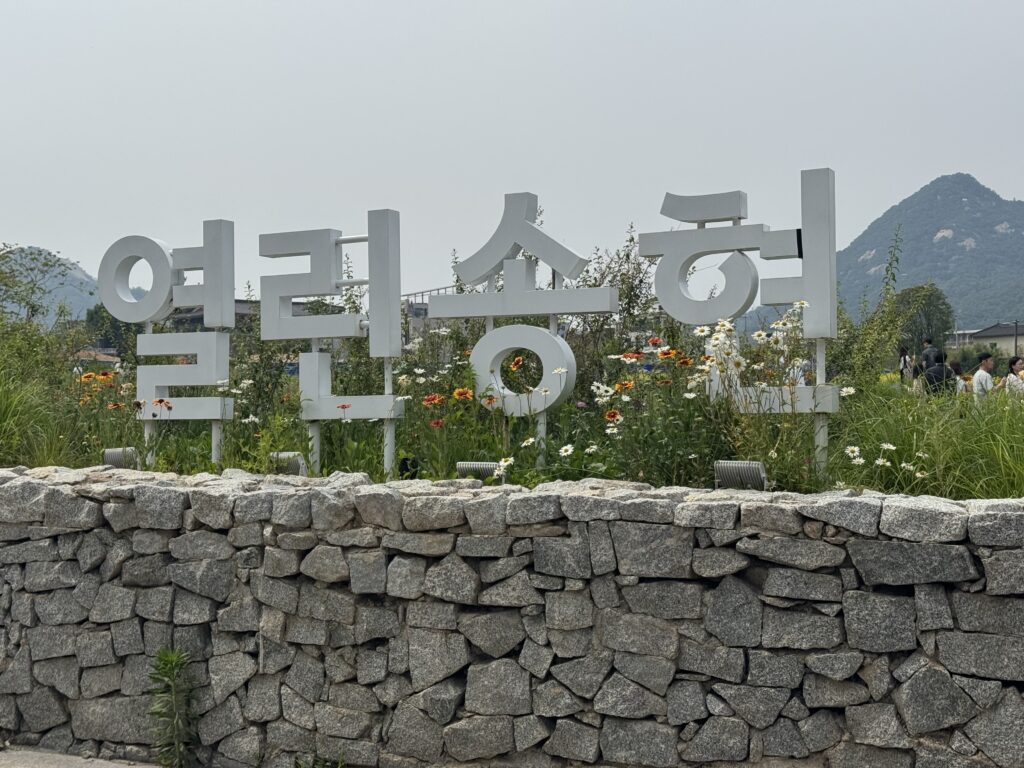
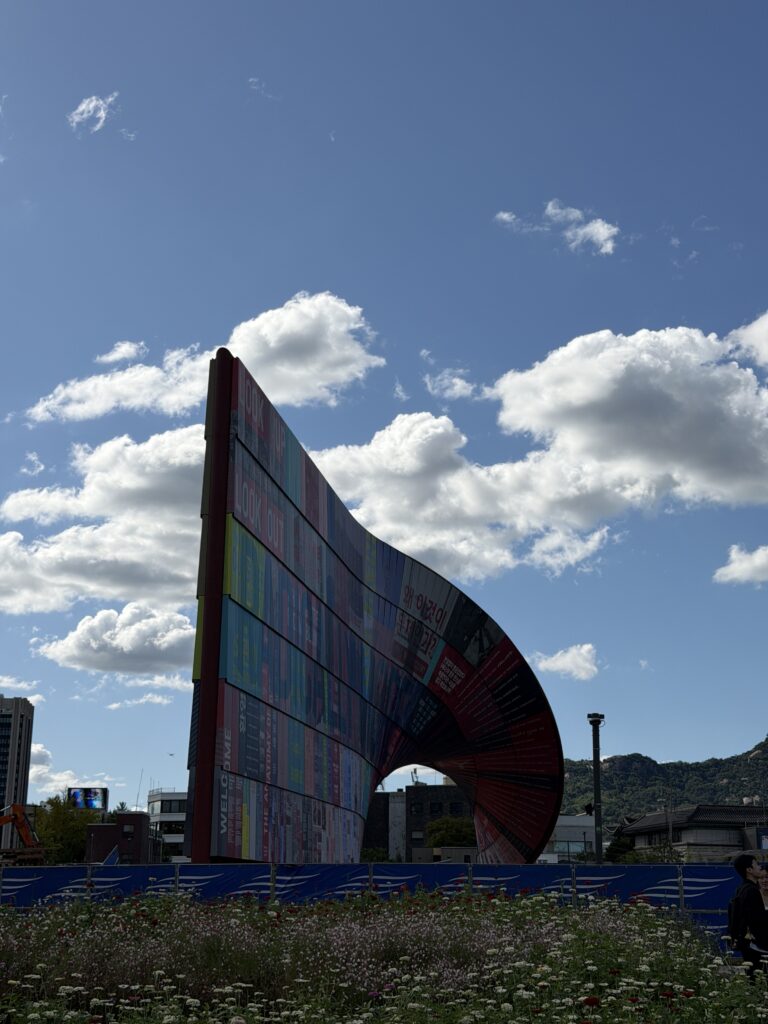
On your way to the palace, you’ll pass Songhyeon Green Plaza, a wide, open park right next to Gyeongbokgung. It’s worth a quick look, especially since the area often hosts outdoor art and exhibitions. Until recently it was home to the Humanise Wall, a striking 90-meter-long installation by the world-renowned designer Thomas Heatherwick (the mind behind New York’s Vessel), curling through the plaza like a giant ribbon. That particular piece has since been relocated to the Sangam area of Seoul, but the plaza itself remains a pleasant, breezy spot to pause before stepping into 500 years of palace history.
My Honest Take (Visiting with Kids)
I went for the first time by subway, with my wife and our two kids, and I’m so glad we did. Here’s my biggest tip: do not drive. Parking at Gyeongbokgung is an absolute nightmare, and if you bring a car, the stress of finding a spot will eat up your whole morning. Take the subway, it’s easy, and it drops you right at the gate.
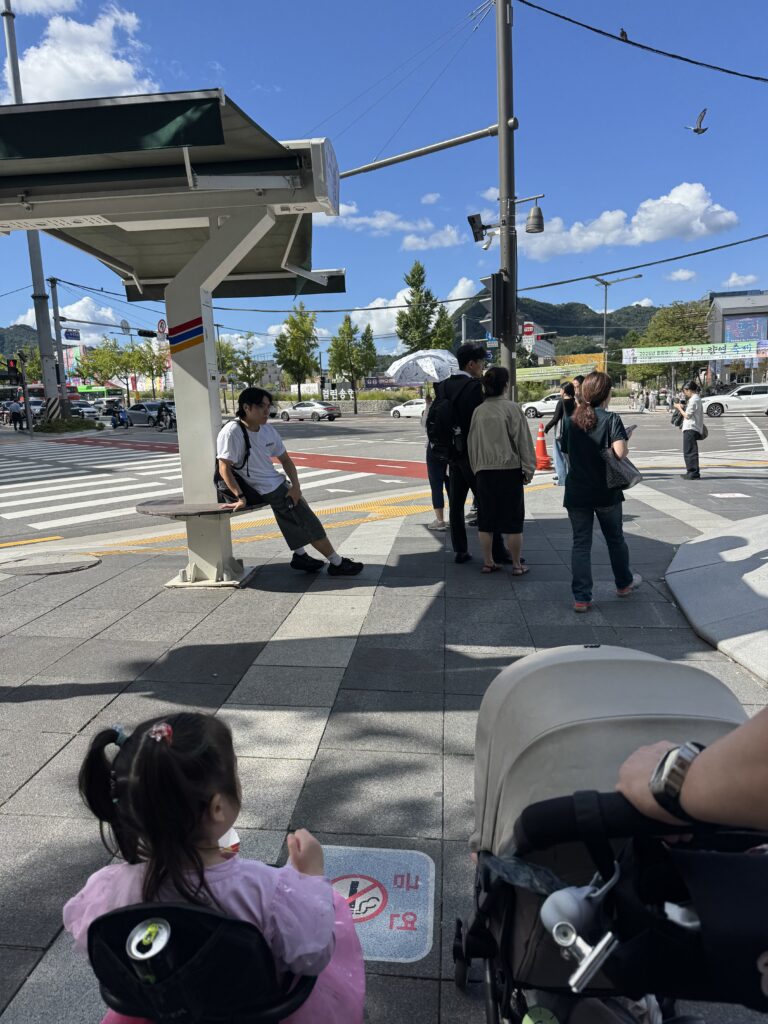
It was a genuinely hot day when we went, but the route there has plenty of shaded spots to rest along the way, so it never felt like too much, even with little ones in tow. We arrived in time to catch the Royal Guard Changing Ceremony, did a full loop of the palace grounds, and headed out. The kids loved it.
One more thing that’s perfect if you’re traveling with children: there’s a Children’s Museum inside the palace grounds (part of the National Folk Museum). It’s a great way to let the kids burn off energy and learn something, and it makes Gyeongbokgung a genuinely family-friendly stop rather than just a “look but don’t touch” history site.
Final Tips
- Visiting on a Tuesday? Don’t. The palace and the guard ceremony are both closed. Plan around it.
- Time your visit with the ceremony at 10:00 AM or 2:00 PM, it’s the highlight and it’s free to watch.
- Wear comfortable shoes. The complex is large and you’ll be walking on stone and gravel for a while.
- Consider renting a hanbok for free entry and great photos, especially if you’re with family.
- Go early. Mornings, right at opening, are the quietest and best for photos before the crowds and tour groups arrive.
- Allow about 1.5 to 2 hours to see the main halls without rushing.
What to Pair It With
Gyeongbokgung sits in the middle of Seoul’s most history-rich neighborhood, so it’s easy to build a full day around it. Just nearby you’ll find the Seoul Museum of History, a free stop that’s especially great with kids, and the charming traditional streets of Bukchon Hanok Village. If you’re up for more history, the War Memorial of Korea in Yongsan is another excellent free museum with plenty for families. And to round out the day, consider catching the evening light show at the Banpo Rainbow Fountain, the perfect way to end a full day of sightseeing by the Han River.
Read next
Ssamzigil: The Insadong Building You Walk Up Like a Hill — Under a kilometre east of the palace. Korean-made crafts, a dalgona stall, and a building that works as a ramp from the street to the roof.
Jogyesa Temple and Korea’s First Post Office — A working temple fifteen minutes from the palace gate, free, with a lotus festival in summer and a piece of 1884 history next door.
2 thoughts on “Gyeongbokgung Palace: The Ultimate Local’s Guide (2026) ”