Ssamzigil is the building every Insadong guide uses for its cover photo and almost none of them explain. From the street it looks like a craft mall, which it is. What nobody tells you is that it has no floors in the usual sense. It has one path that starts at street level and keeps rising until you are four storeys up, and you can walk the whole thing without taking a single step. We took a pushchair up it.
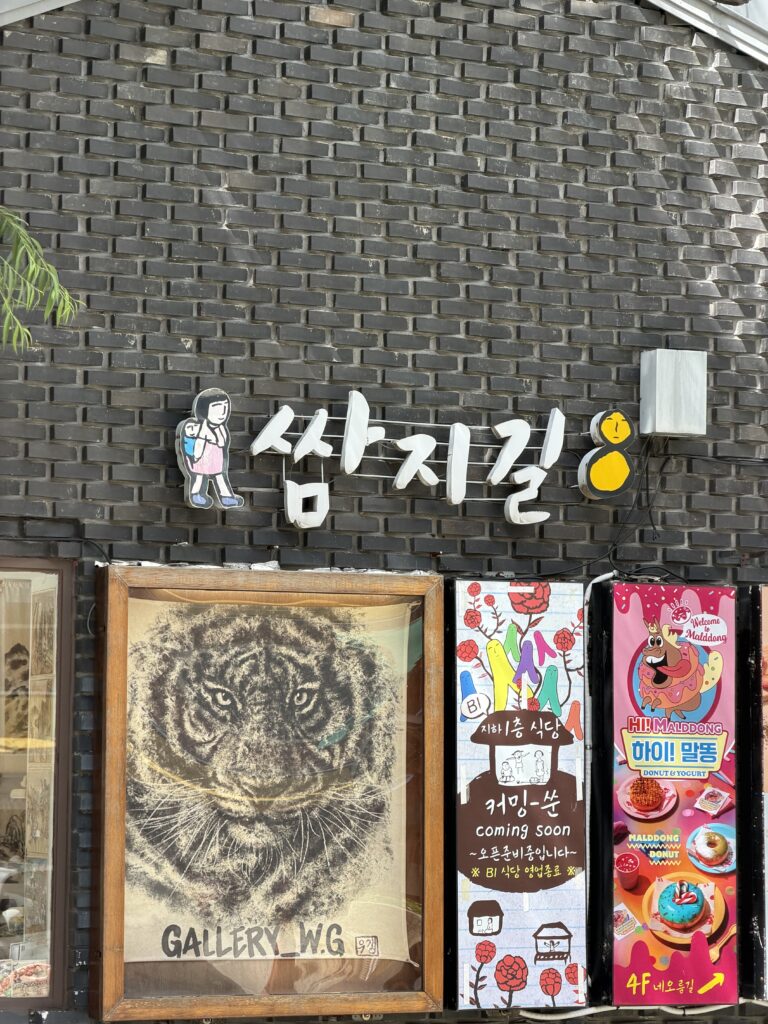
One ramp, four storeys
The building was completed in 2004 by the architect Choi Moon-gyu of Ga.A Architects, and it won a silver prize at the Seoul Architecture Awards the following year. The idea was to take the alley outside and continue it indoors: instead of stacking shop floors and connecting them with a lift, the architects wrapped a single walkway around an open courtyard and let it climb.
According to the architects’ own description, the ramp runs at a gradient of roughly 1 in 20 to 1 in 25. That number is worth pausing on. The legal maximum for a wheelchair ramp in the United States is 1 in 12, and anything at 1 in 20 or gentler is usually classified not as a ramp but as a walking surface. In practice it means you climb four storeys without noticing you are climbing.
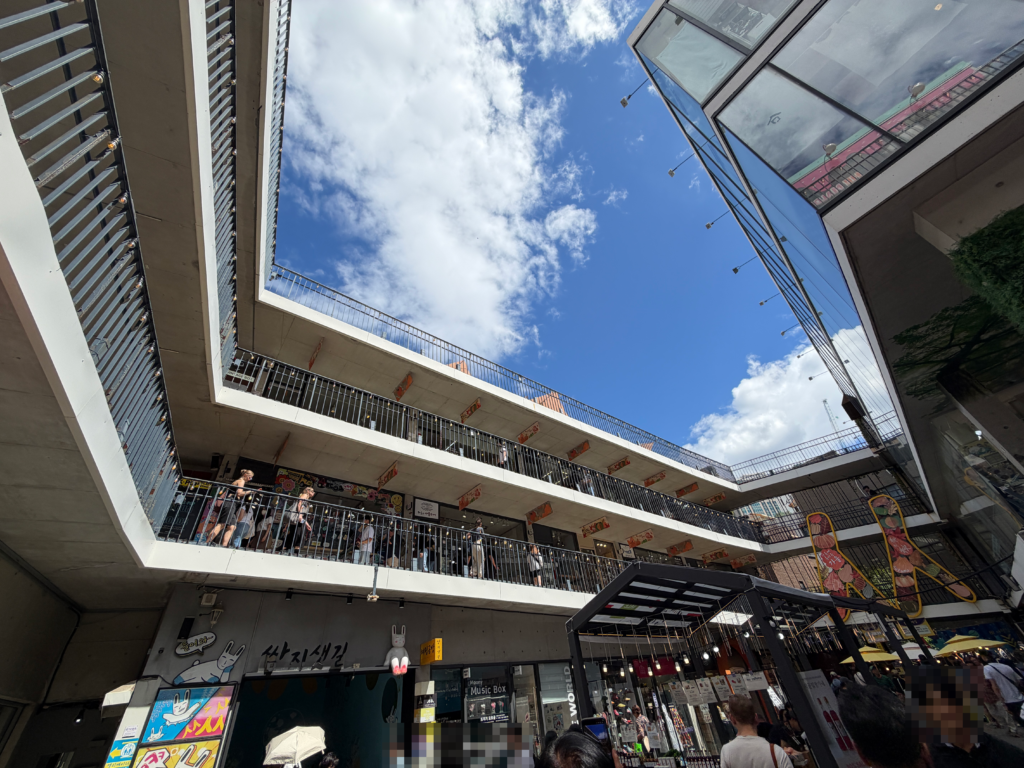
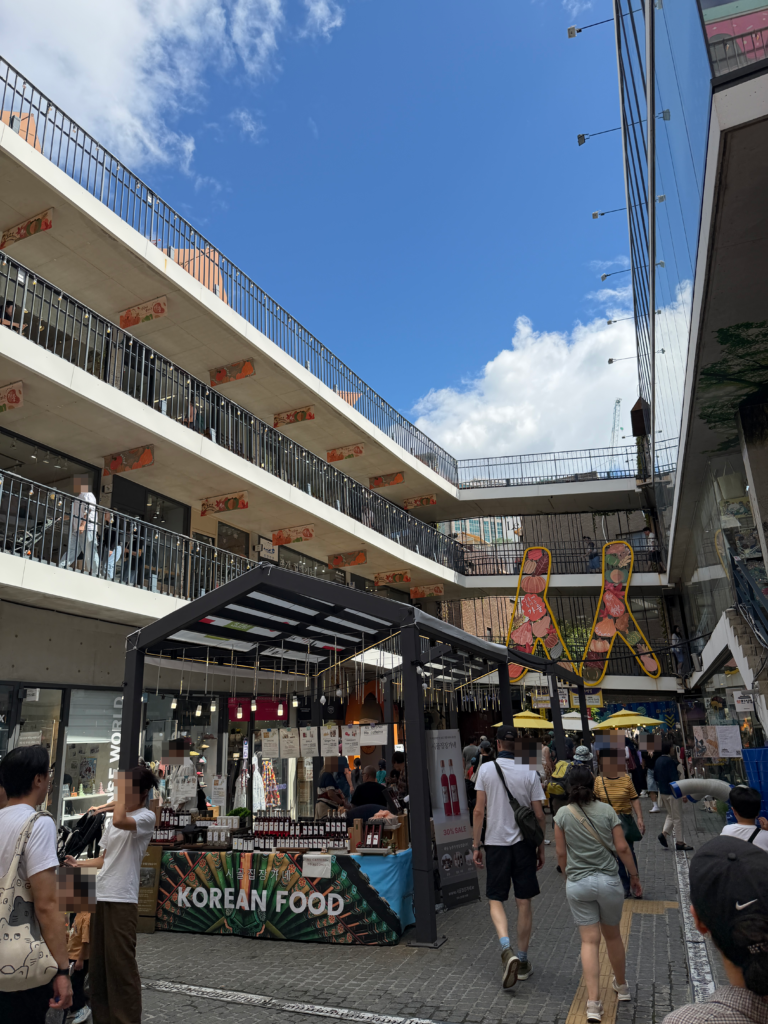
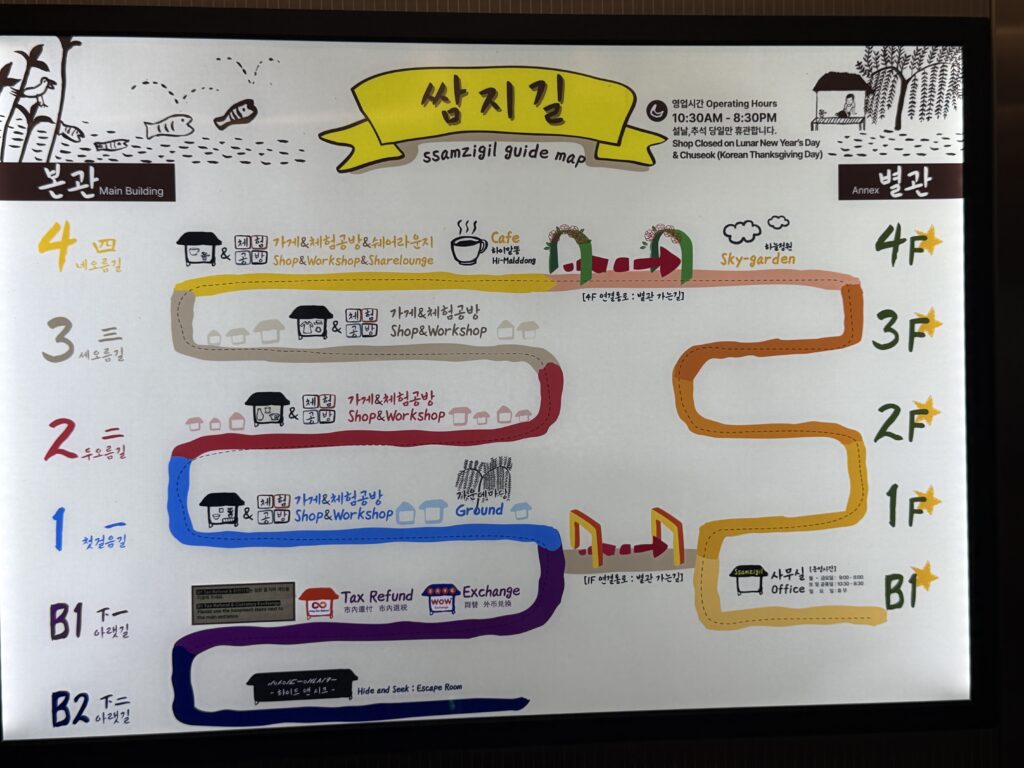
The levels are not numbered on the signage the way you would expect. They are named as stages of a walk — first-step path, second climb, third climb, fourth climb — which is a small thing that tells you exactly how the building wants to be used.
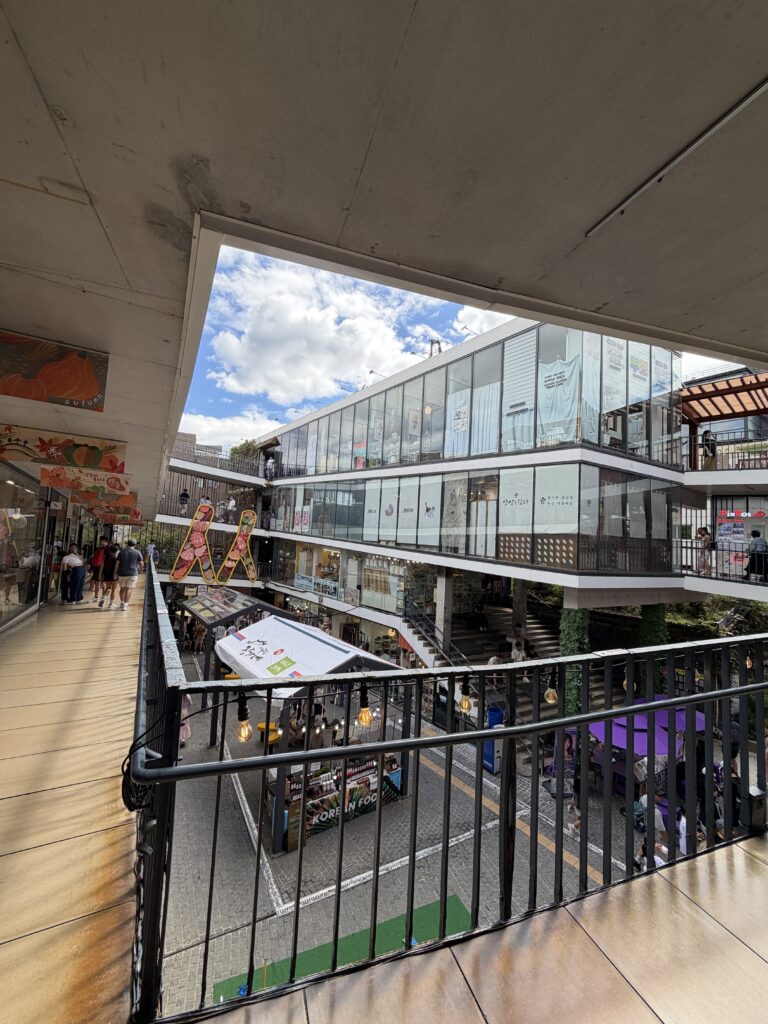
What is actually in it
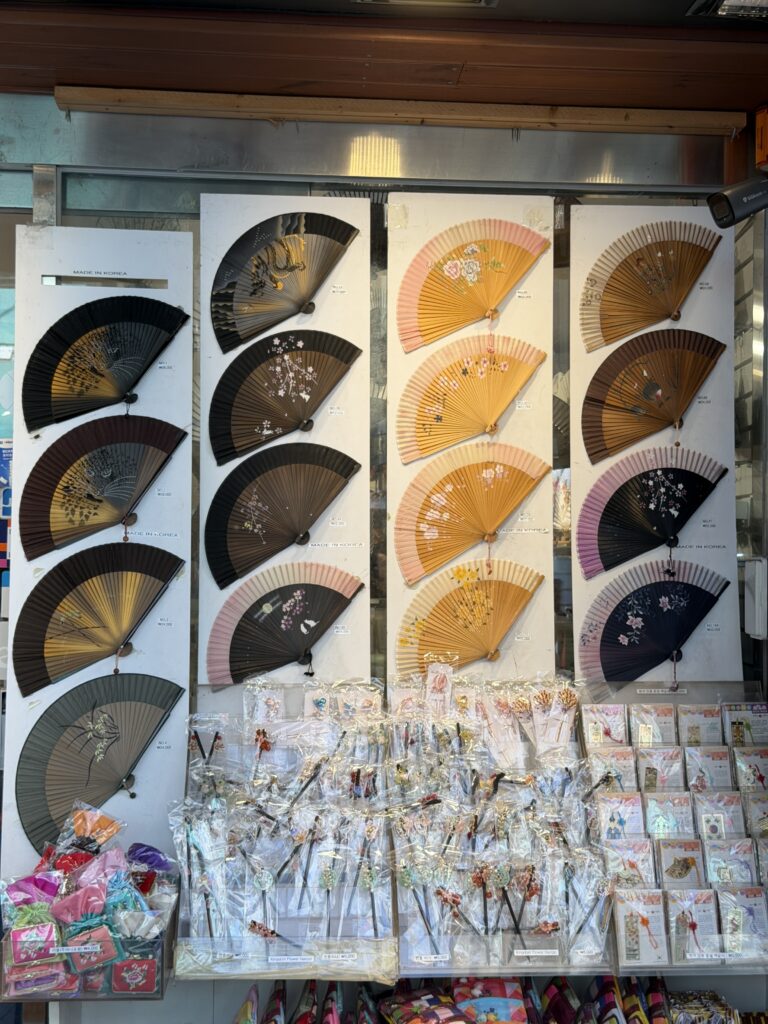
Shops and workshops on every level, mostly Korean-made crafts rather than the mass-produced souvenirs you get closer to the subway exits. Ceramics, stationery, jewellery, fabric.
Two things on the lower levels are genuinely useful for visitors rather than just pleasant. There is a tax refund desk and a currency exchange on the basement level, which is unusual for a building this size, and in the basement below that there is an escape room.
The entrance map shows a café and a sky garden at the top level, and an annex building that connects across at ground level and again on the fourth. We ran out of time before the roof, so that one is unverified.
What we actually did on the fourth floor
The shops on each level alternate with workshops — small studios where you make something rather than buy it. On the fourth level our five-year-old made a pencil case. Cut, glued, chose the fabric, carried it out flat in both hands the way you carry something you made.
This is the part of Ssamzigil worth planning for. A craft mall is a difficult sell to a child, because it is full of breakable objects they are not allowed to touch. A workshop inverts that completely: the whole point is touching. If you are bringing children here, the workshops are the reason to come, not the shops.
Prices vary by studio and by what you make, and most sessions run in the low tens of thousands of won or less. Ask at the door; the staff are used to walk-ins.
We did not get any further up. The sky garden was two levels away and lunch was across the street, and lunch won.
Fortune machines and dalgona
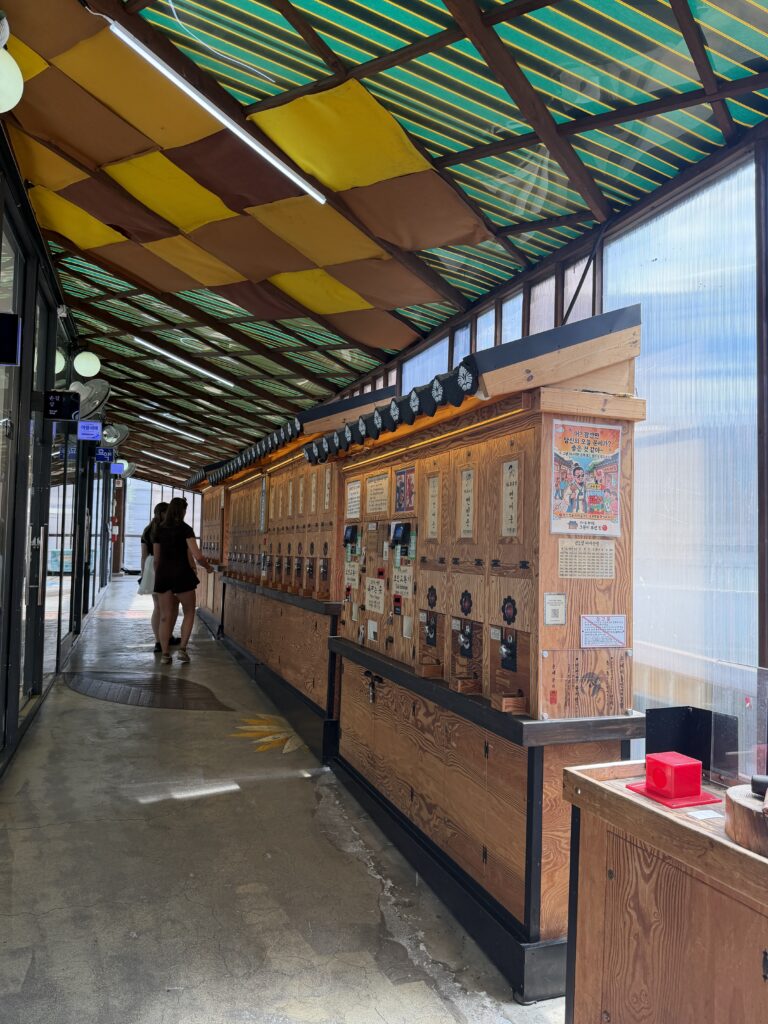
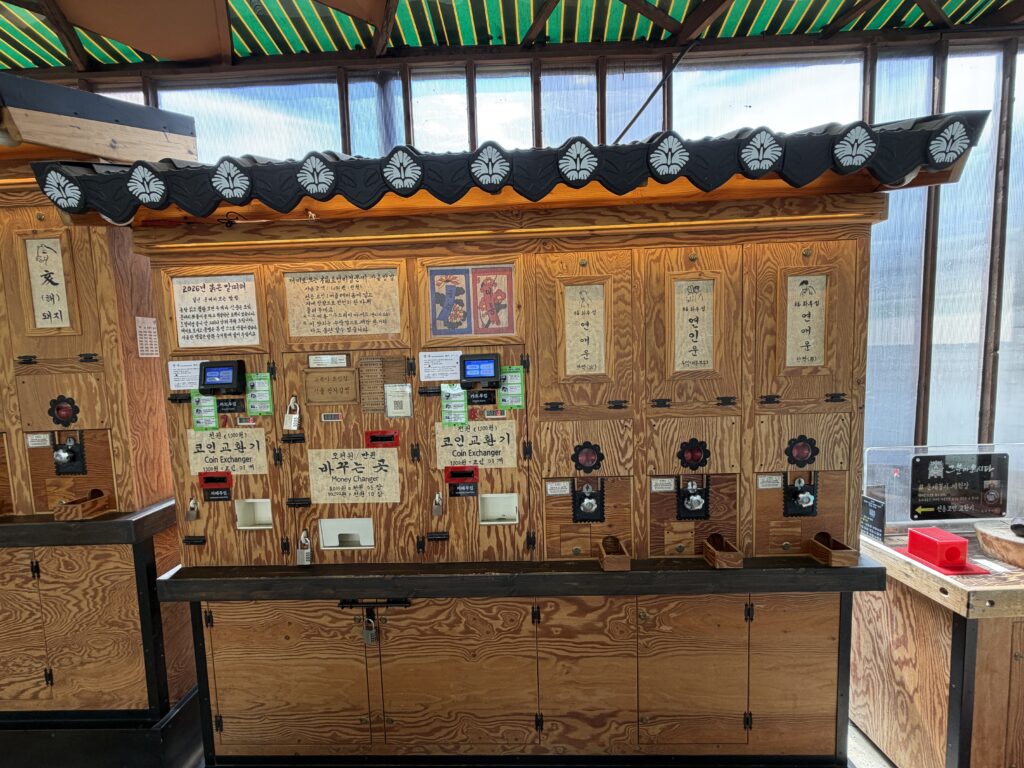
There is a corridor lined with wooden fortune-telling machines under a tiled roof, built to look like a row of traditional shopfronts. You exchange money for a token, drop it in, hit the block with a wooden mallet, and a paper fortune comes out. There is a coin machine next to it and the signs confirm cards are accepted.
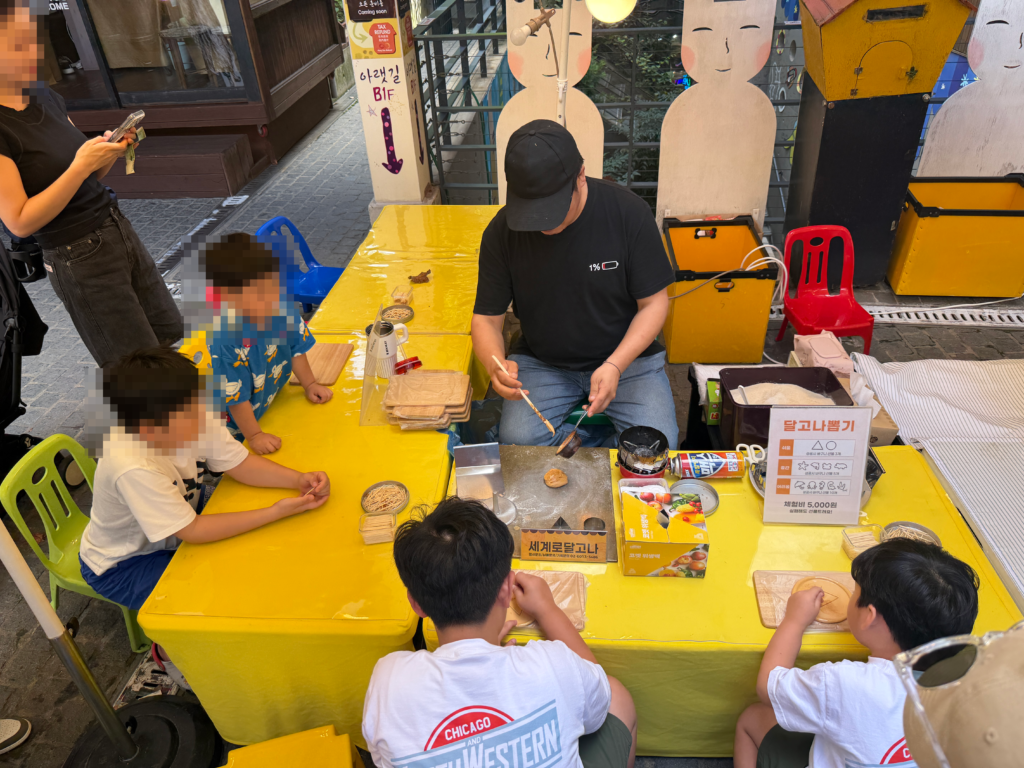
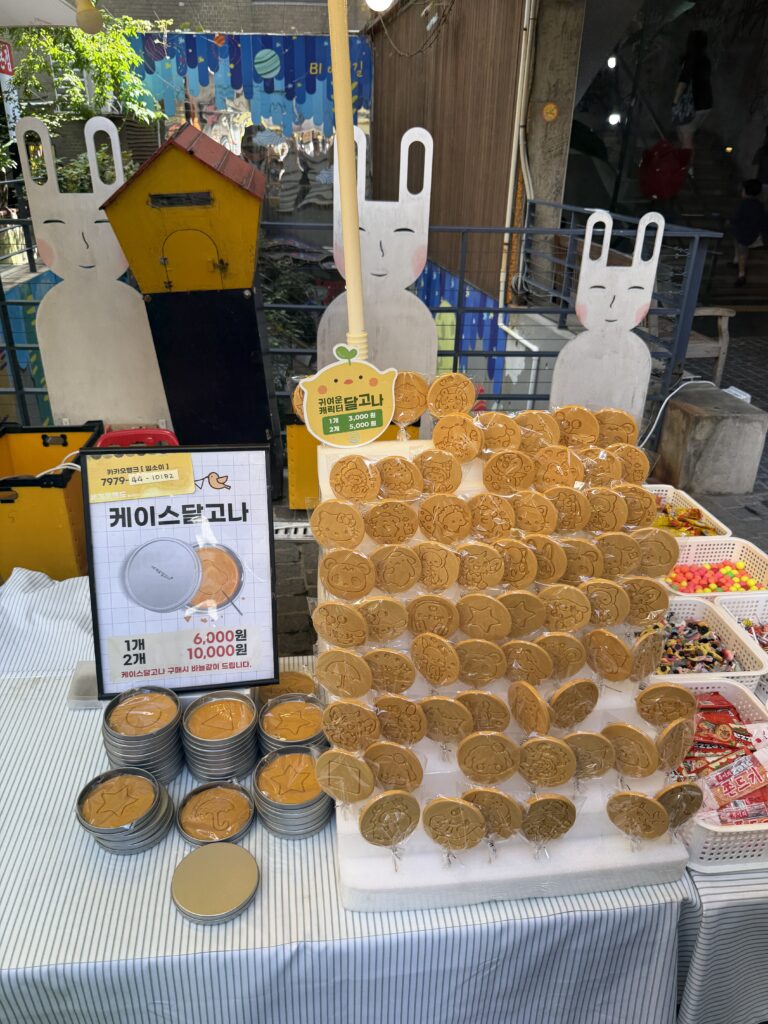
The other draw is dalgona, the honeycomb sugar sweet that most foreign visitors now recognise from television. Stalls near the lower entrance press it into stamped discs and characters. At the time of our visit the character ones were 3,000 won each or two for 5,000, the tin-cased versions 6,000 or two for 10,000, and a make-your-own session 5,000. Prices on a street stall are the most likely thing in this article to change, so treat those as a guide.
With a buggy
We pushed one the whole way up, so this is not a guess.
The ramp runs at a gradient of 1 in 20 to 1 in 25, and at that angle a buggy rolls up without effort — no leaning into it, no pausing to gather momentum. Coming back down is the same path in reverse, and the slope is gentle enough that the brake is optional rather than essential.
There is also a lift. The lift hall is on your left as you come in at ground level, and it runs to the roof. We did not use it, because the point of this building is the walk, but it is there — which makes Ssamzigil genuinely accessible rather than merely walkable. If you are pushing a buggy loaded with bags, or travelling with someone who cannot manage a long slope, take the lift up and walk the ramp down.
Two caveats. The shops are small, and many have a doorway or an internal layout that a buggy will not clear — expect to leave it on the walkway and take turns going in, which is normal here and nobody minds. And the walkway is shared with everyone walking up, so on a busy weekend you are negotiating the same slope as the crowd.
Insadong Street outside is flat and pedestrianised for most of the day. The crowds are the obstacle, not the surface.
Getting there, and what is nearby
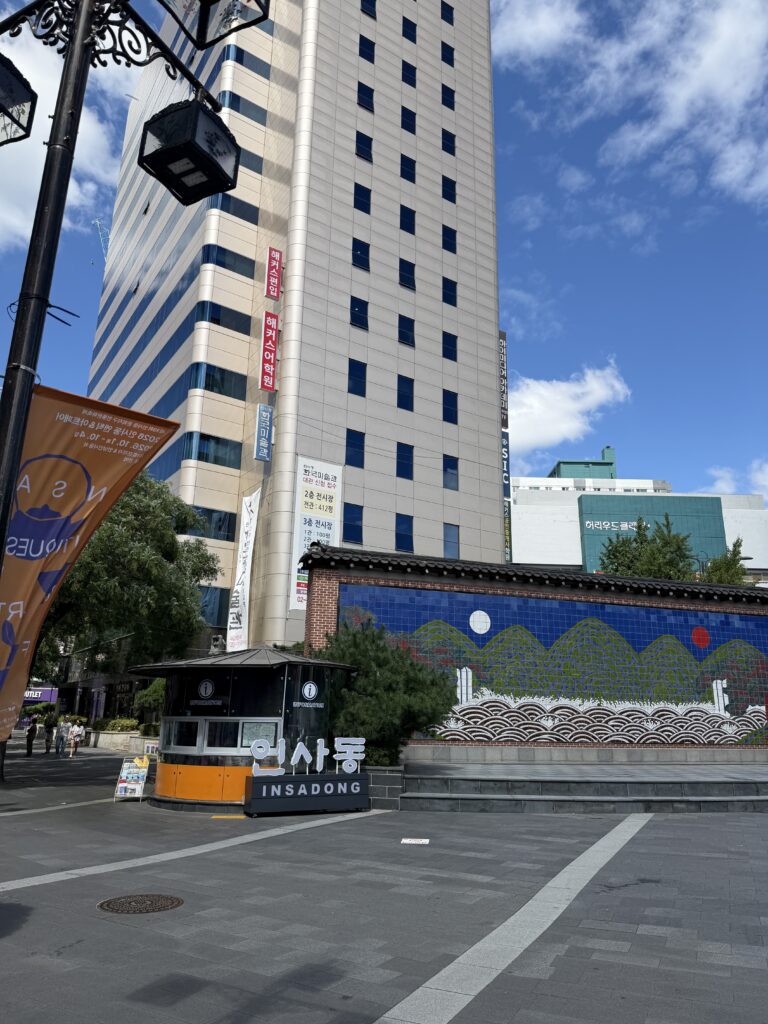
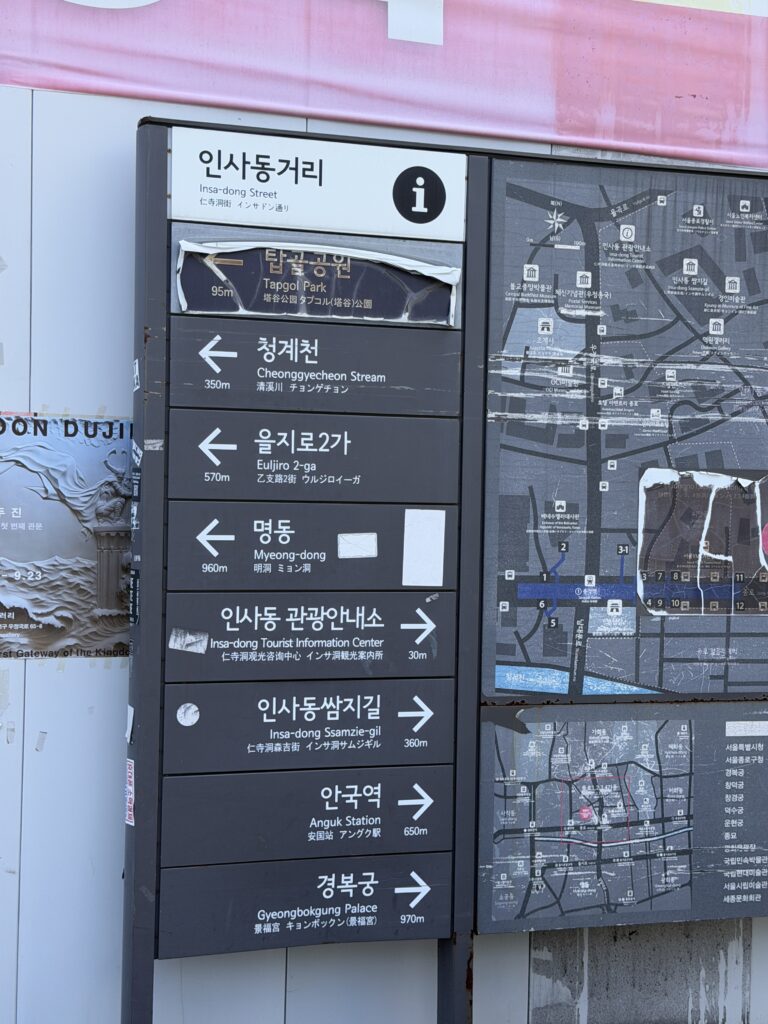
Photo 11 — VviKvNoq alt: Multilingual direction sign on Insadong Street showing distances to Ssamzigil, Gyeongbokgung Palace, Tapgol Park and Anguk Station caption: This sign does most of the work of a guidebook. Distances in metres, four languages.
Ssamzigil is at 44 Insadong-gil, Jongno-gu, and the signage on the main street puts it 360 metres from the Insadong entrance. Opening hours posted on the building’s own map are 10:30 to 20:30, and it closes only on Lunar New Year’s Day and Chuseok. The management office number is 02-736-0900.
The useful part is what the street sign lists around it: Tapgol Park 95 metres, the Insadong tourist information centre 30 metres, Cheonggyecheon 350 metres, Anguk Station 650 metres, Myeongdong 960 metres, and Gyeongbokgung Palace 970 metres. Almost everything a first-time visitor to Seoul wants to see is inside a kilometre of this spot, which is the real reason to start a day here rather than end one.
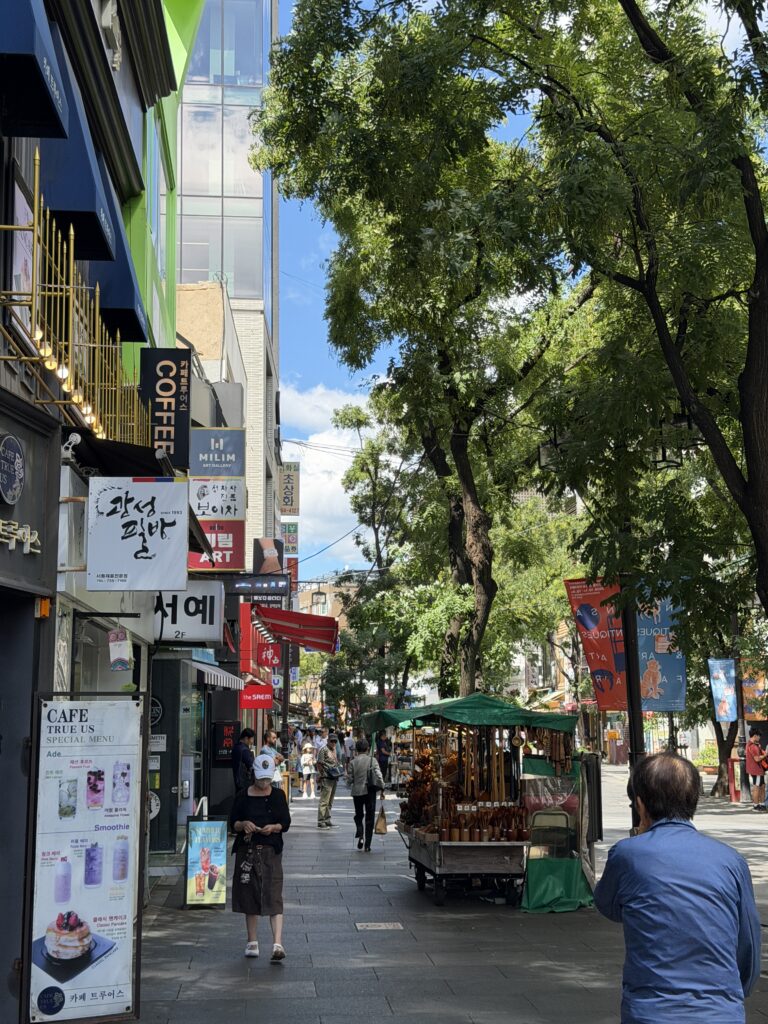
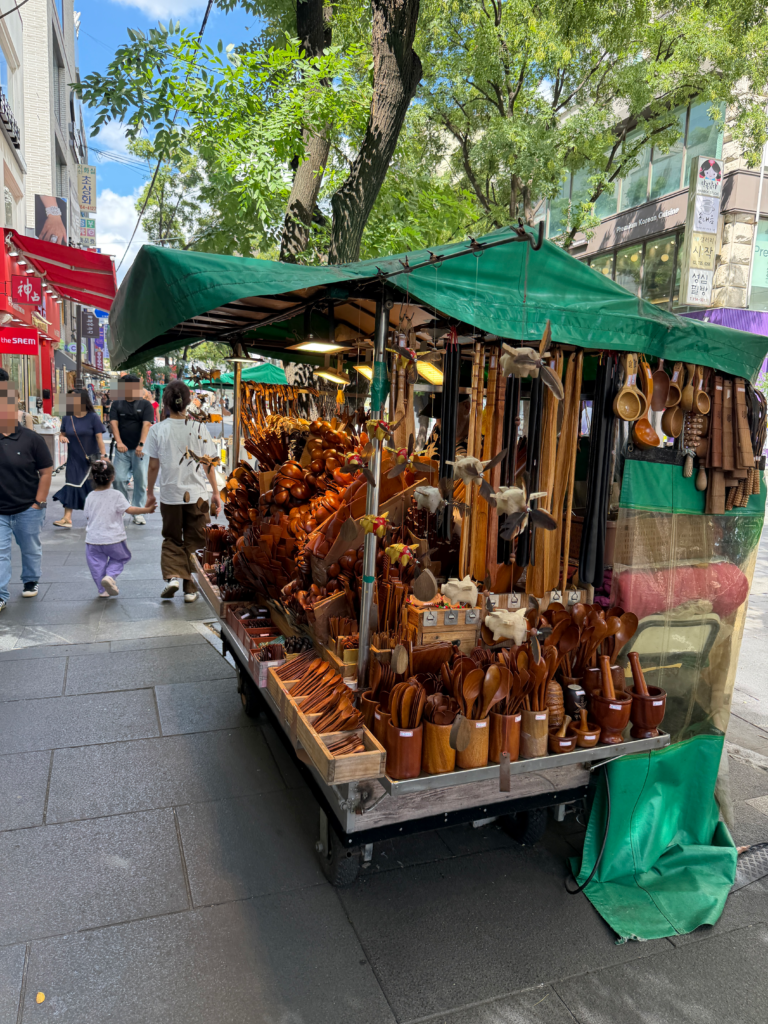
Insadong Street itself is lined with carts selling carved wood — spoons, chopsticks, bowls, mortars — usually for less than the shops charge. The trade-off is labelling: in a shop you can check where something was made, at a cart you generally cannot. For a wooden spoon that may not matter. For anything you are carrying home as a gift, it might.
Questions people ask
Is Ssamzigil free to enter? Yes. It is a shopping complex, not an attraction, and there is no admission.
Can I visit Ssamzigil with a stroller? Yes, and you can reach the top floor without a lift. The whole building is one gentle ramp. We took a buggy up all four levels. There is also a lift by the ground-floor entrance. Individual shops are often too small to enter with it.
How long do I need? Forty minutes to walk up and back down looking at things, longer if anyone stops for a fortune machine or a workshop.
Is it worth it if I do not want to shop? For the building, yes. Half an hour for the architecture and the courtyard costs nothing.
Is anything open on Mondays? Yes. Ssamzigil opens every day except the two main holidays.
Read next
Jogyesa Temple and Korea’s First Post Office — A working Buddhist temple five minutes from Ssamzigil, free to enter, with a summer lotus festival and thousands of prayer lanterns hanging from the main hall ceiling. The building next door is where Korea’s postal service began in 1884 and collapsed sixteen days later.
Gyeongbokgung Palace: The Ultimate Local’s Guide — Just under a kilometre from Insadong, and the one place most first-time visitors to Seoul will not skip. Ticket prices, opening hours, and the times for the Royal Guard changing ceremony.
2 thoughts on “Ssamzigil, the Insadong Building You Walk Up Like a Hill”