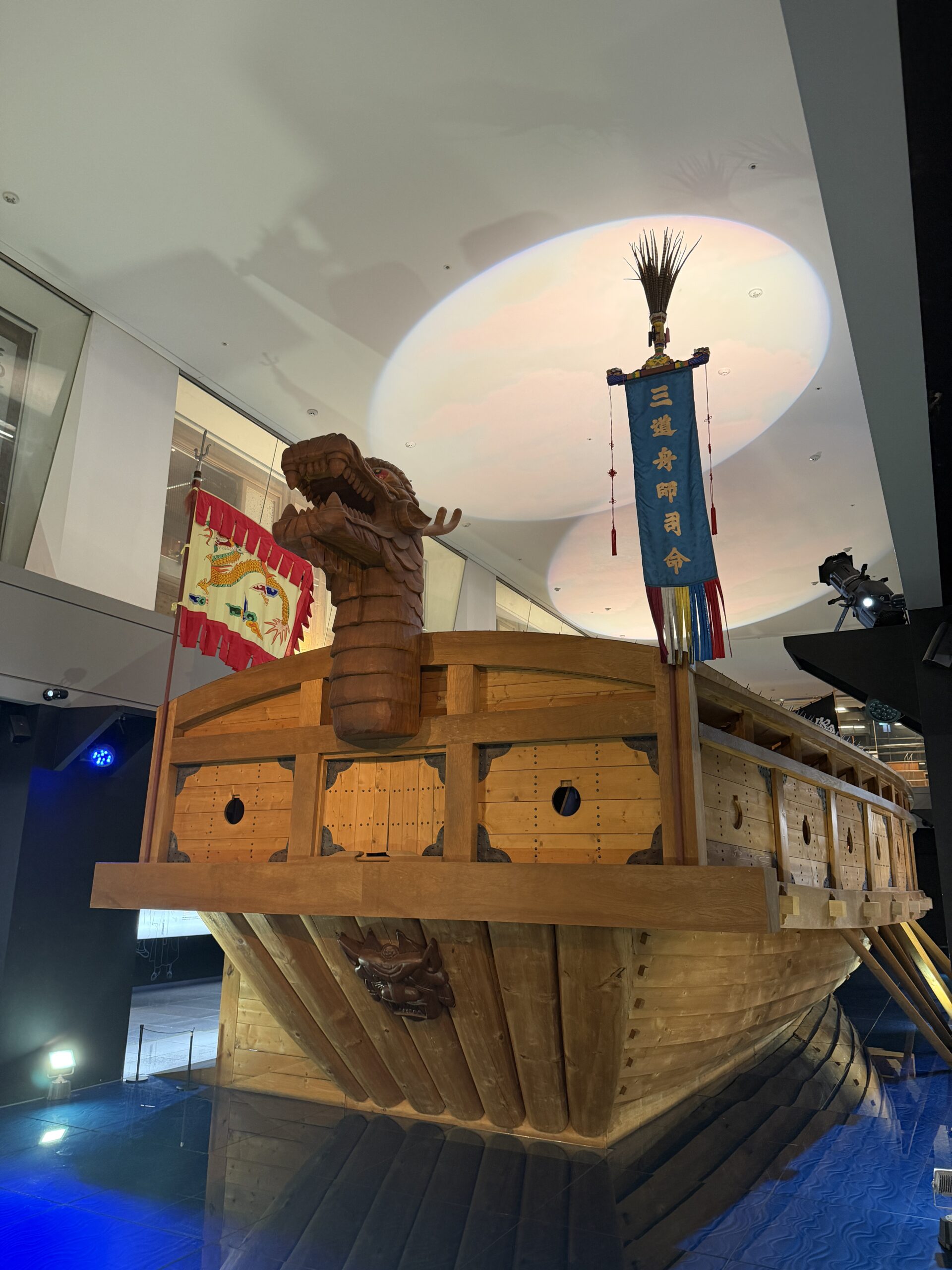
What is under Gwanghwamun Square?
The Gwanghwamun Square underground is not just a passage to the subway. It is three free museums strung along one basement corridor, and you can walk the whole thing without going back above ground.
Everyone photographs the two statues on Gwanghwamun Square. Almost nobody walks down the stairs underneath them.
I have lived in Seoul for years and I had walked past that entrance a hundred times before I finally went down. What is under there is not a subway passage. It is a genuine museum floor that runs the length of the square and keeps going under the Sejong Center, and by the end of it you have crossed about three hundred metres entirely indoors. We went at the end of September 2026, on an afternoon that was still warm enough for the fountains outside to be running.
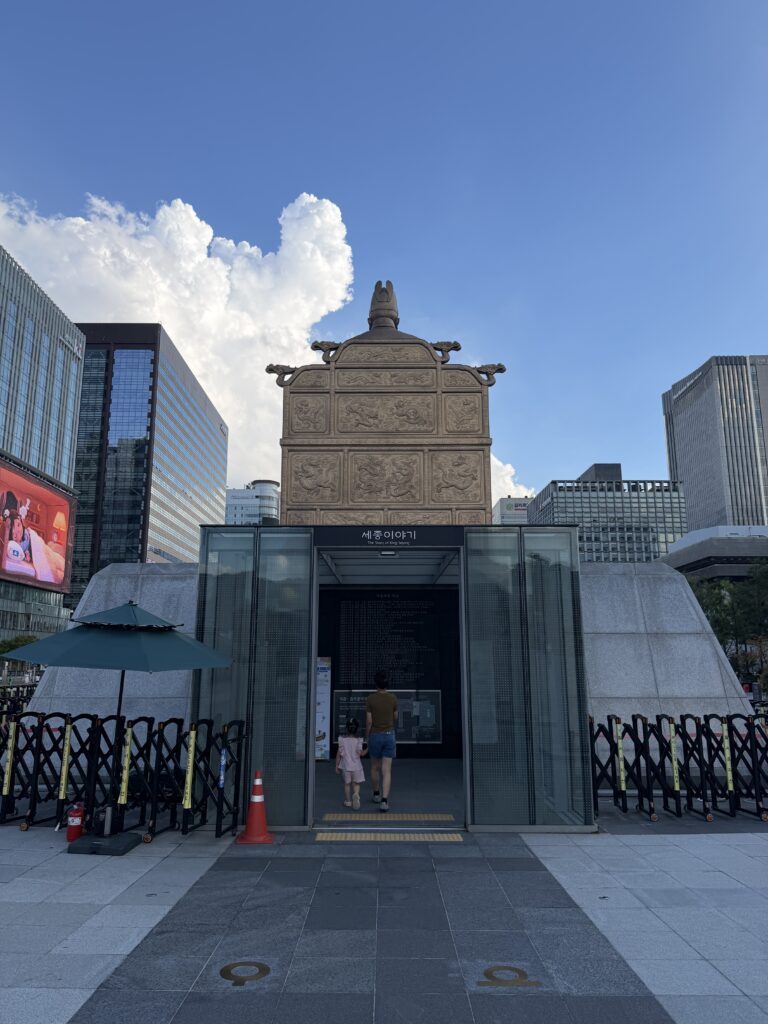
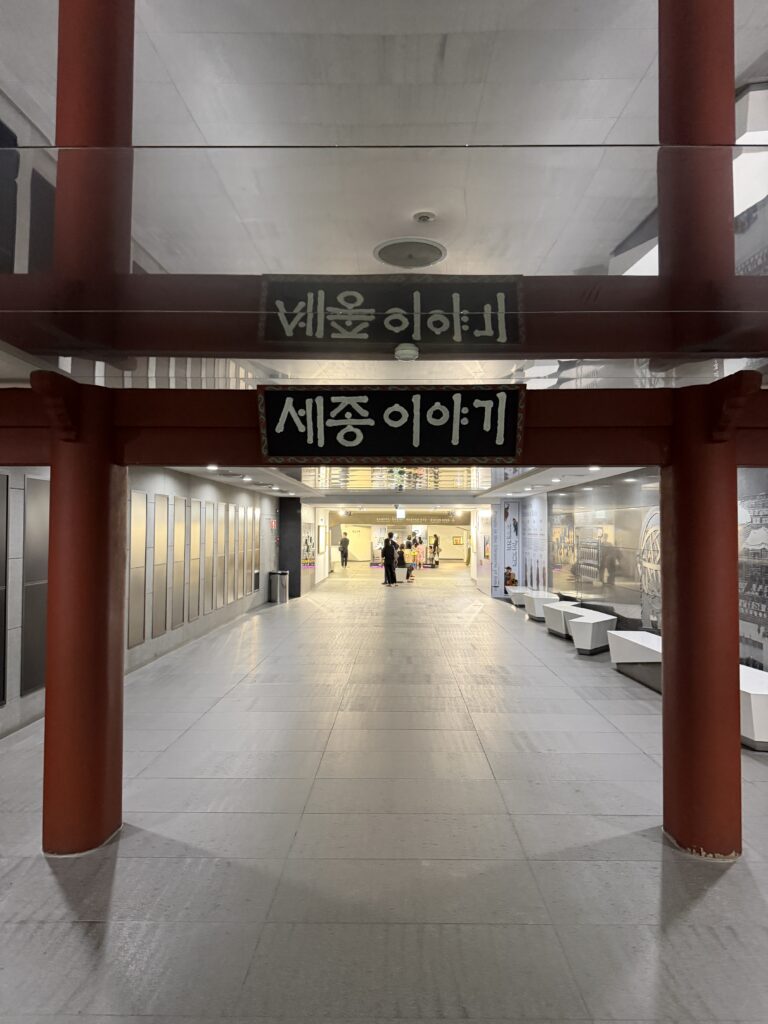
Quick Info
| Gwanghwamun Square undergroun | Details |
|---|---|
| What it is | Three connected free exhibition halls under Gwanghwamun Square |
| Address | 175 Sejong-daero, Jongno-gu, Seoul (B2) |
| Admission | Free — all three halls |
| Reservation | Not required for any of them |
| Sejong & Yi hours | 10:00–18:30, last entry 18:00. Closed Mondays |
| Freedom Hall hours | Mon–Thu 10:00–22:00, Fri–Sun 10:00–23:00 |
| Nearest station | Gwanghwamun Station, Line 5, Exit 9 |
| Phone | +82-2-399-1177 (Sejong & Yi halls) |
| Last checked | October 2026 |
The hours are the single most useful thing on this page, so read them twice. The two history halls shut at 6:30 PM. Freedom Hall runs until 10 PM on weekdays and 11 PM at weekends, and it does not close on Mondays. Turn up at seven in the evening and you will find two thirds of this basement locked and one third wide open.
One note on the Monday closure: if a Monday falls on a public holiday, the Sejong and Yi halls open as normal and close the following weekday instead.
The Story of King Sejong
The first hall is about the king who invented Hangul, and it leans hard into the alphabet rather than the biography.
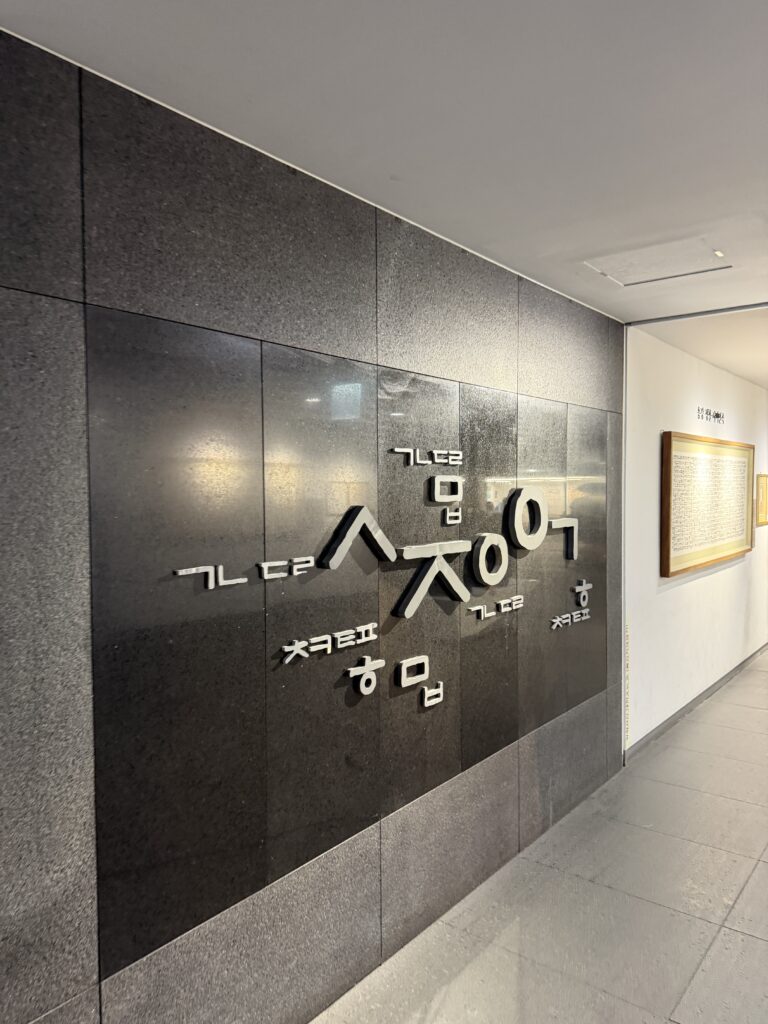
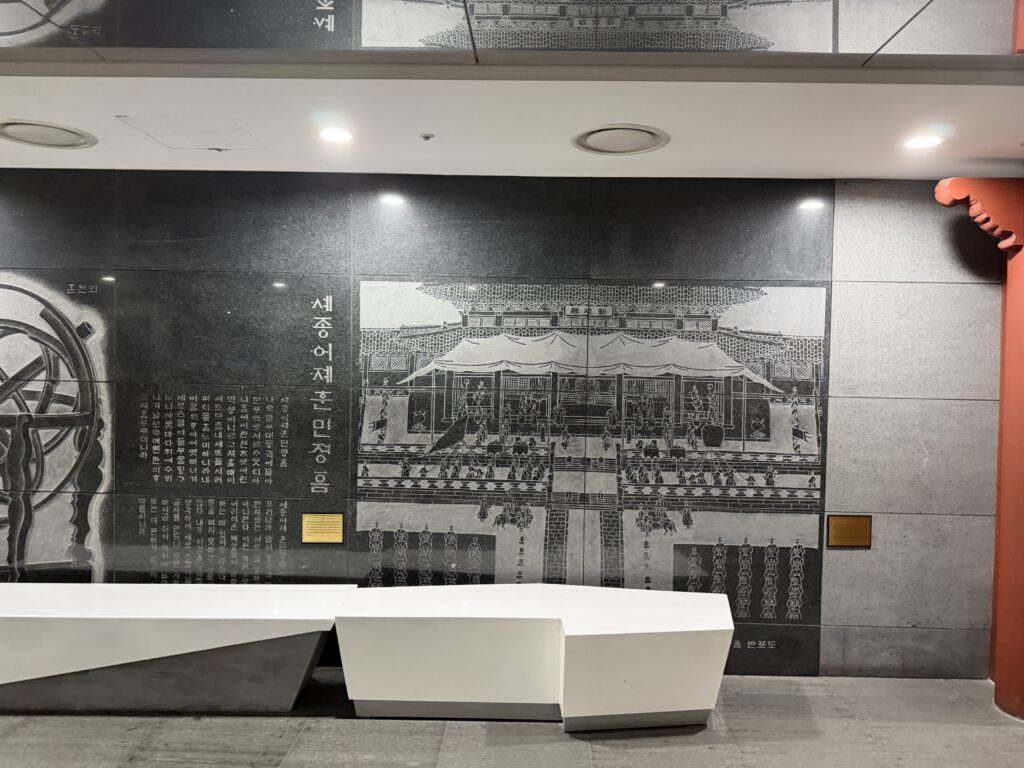
There is a working replica of the water clock, a section on the rain gauge, and the usual run of astronomical instruments. The displays are solid rather than spectacular. If you only have an hour in this basement, this is the hall to move through briskly.
A detour to Dokdo
Tucked in between the two main halls is the Dokdo Experience Center, a small separate exhibition about the islets in the East Sea.
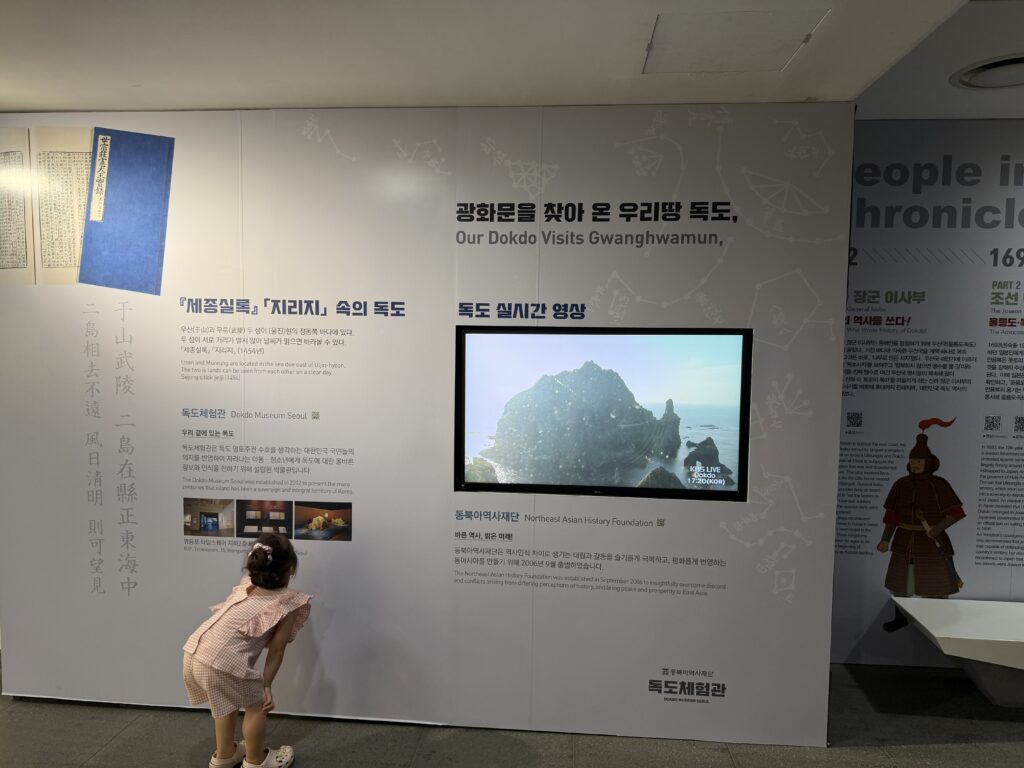
I will say plainly that the territorial dispute behind this room is a live political issue between Korea and Japan, and this exhibition presents the Korean position. You can take it as you find it. As a stop with a small child, it works because of that live camera.
The Story of Admiral Yi Sunshin
This is where the basement suddenly gets good.
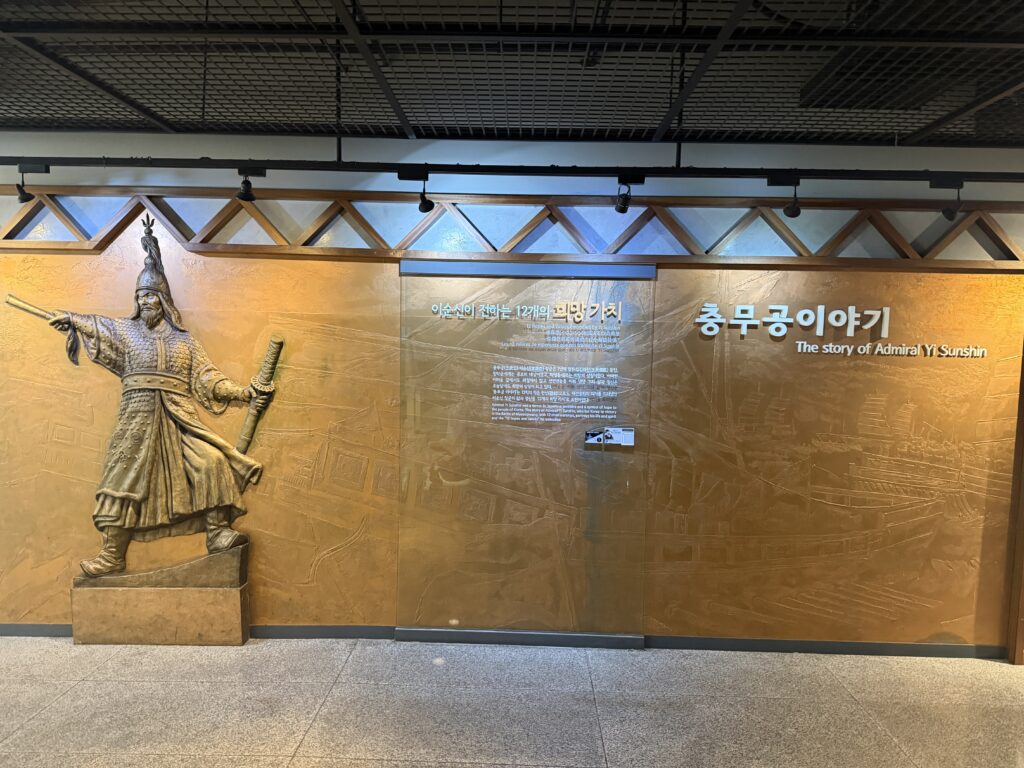
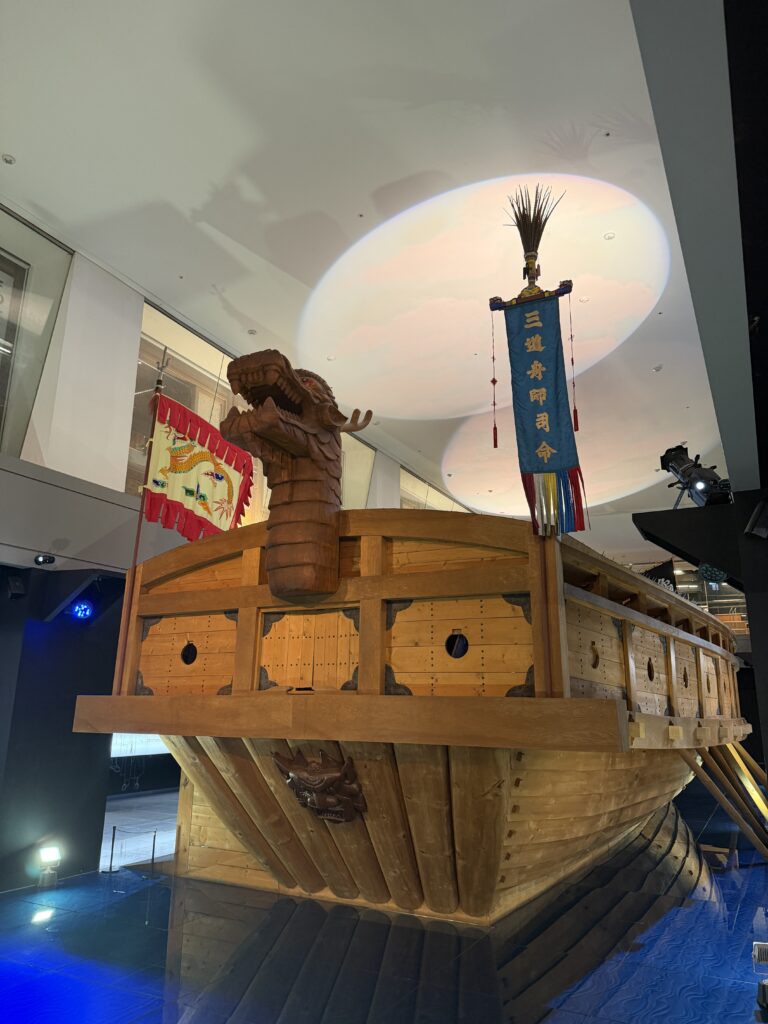
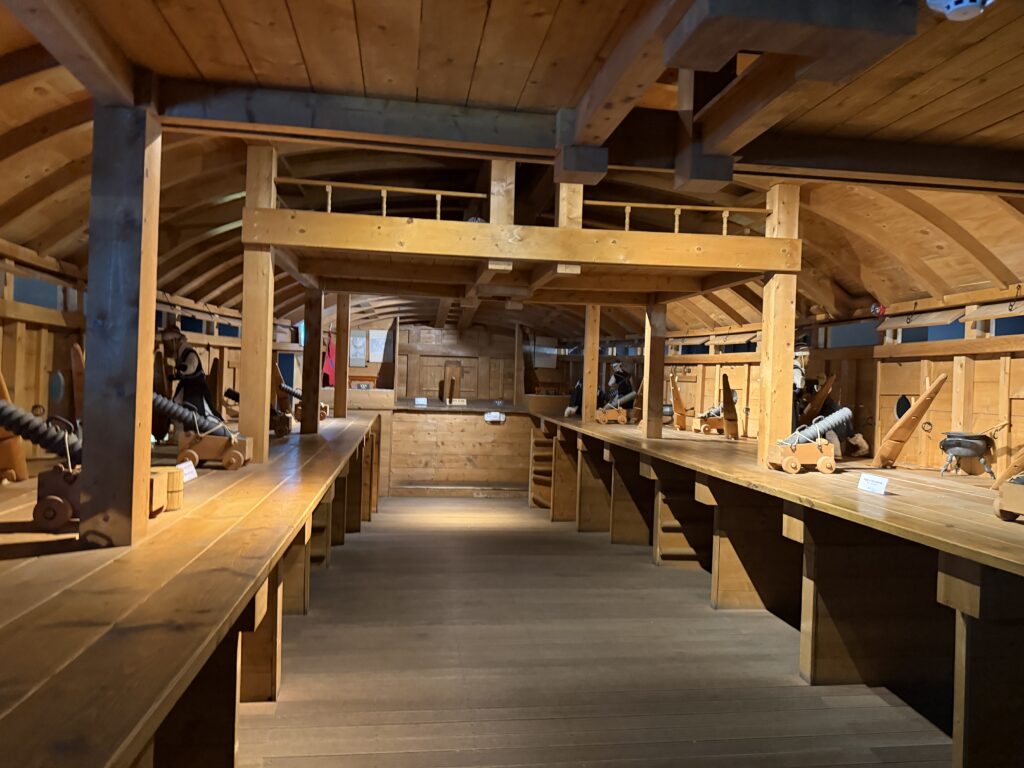
A full-size warship inside a basement is a genuinely strange thing to come across under a city square. The scale lands immediately, even for someone who has no idea what the Imjin War was.
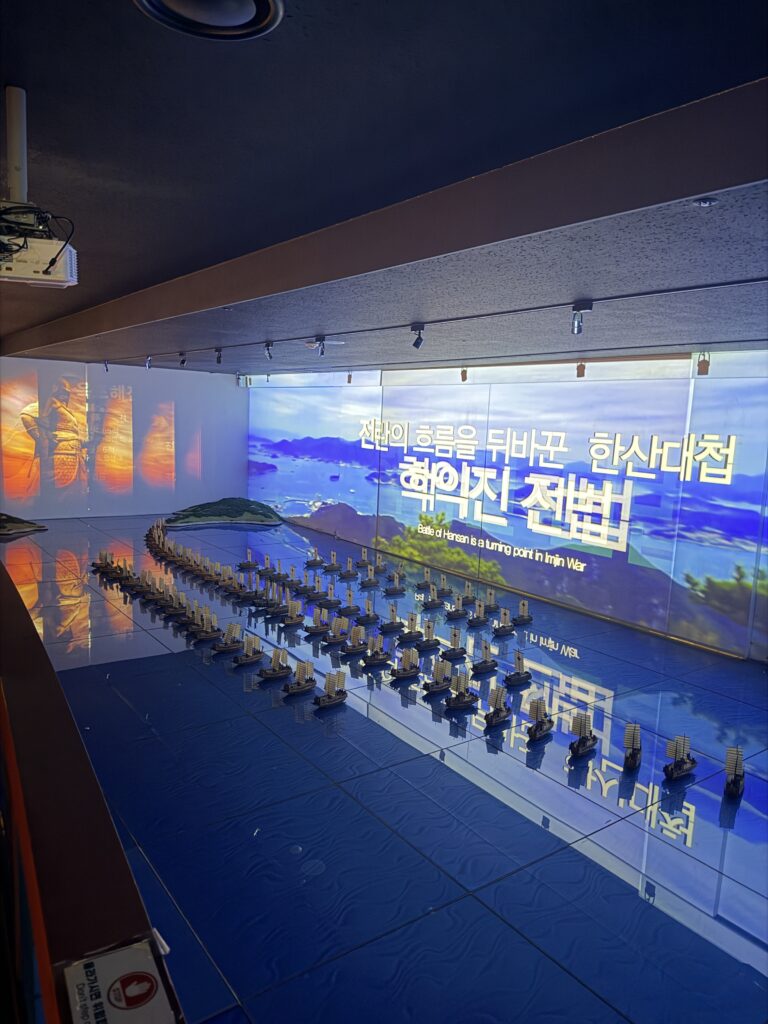
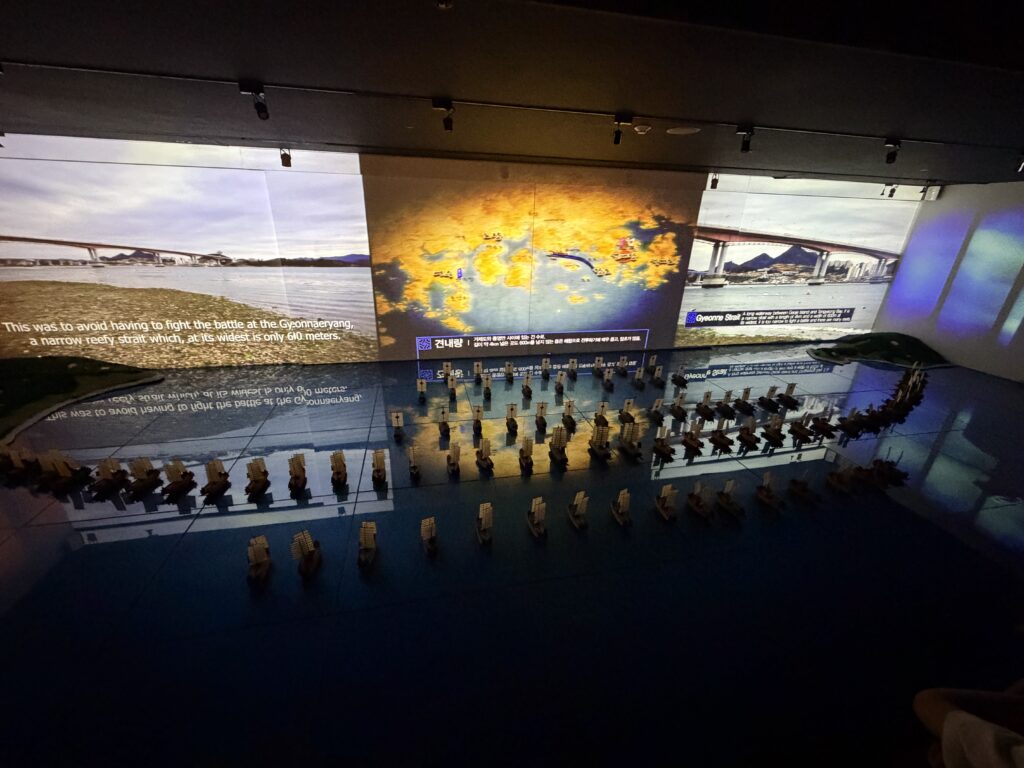
That second photo is the detail worth knowing about. The battle projection is narrated in English, which is more than most Korean municipal exhibitions manage. You can stand there for the whole cycle and follow the tactics without a word of Korean.
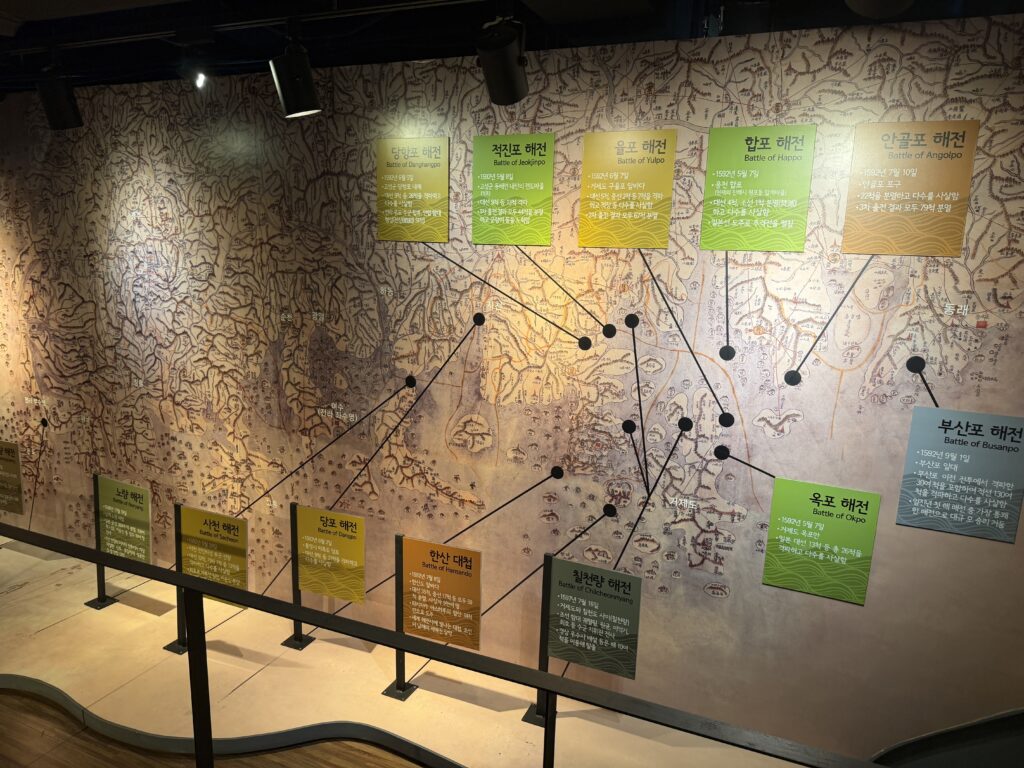
[사진 10 — q8PRJrhK] gwanghwamun-admiral-yi-naval-battle-map.jpg Alt: Wall map of the southern Korean coast marked with bilingual labels for each naval battle of the Imjin War Caption: Every naval engagement of the Imjin War, pinned to an old map of the southern coast. Each label is bilingual.
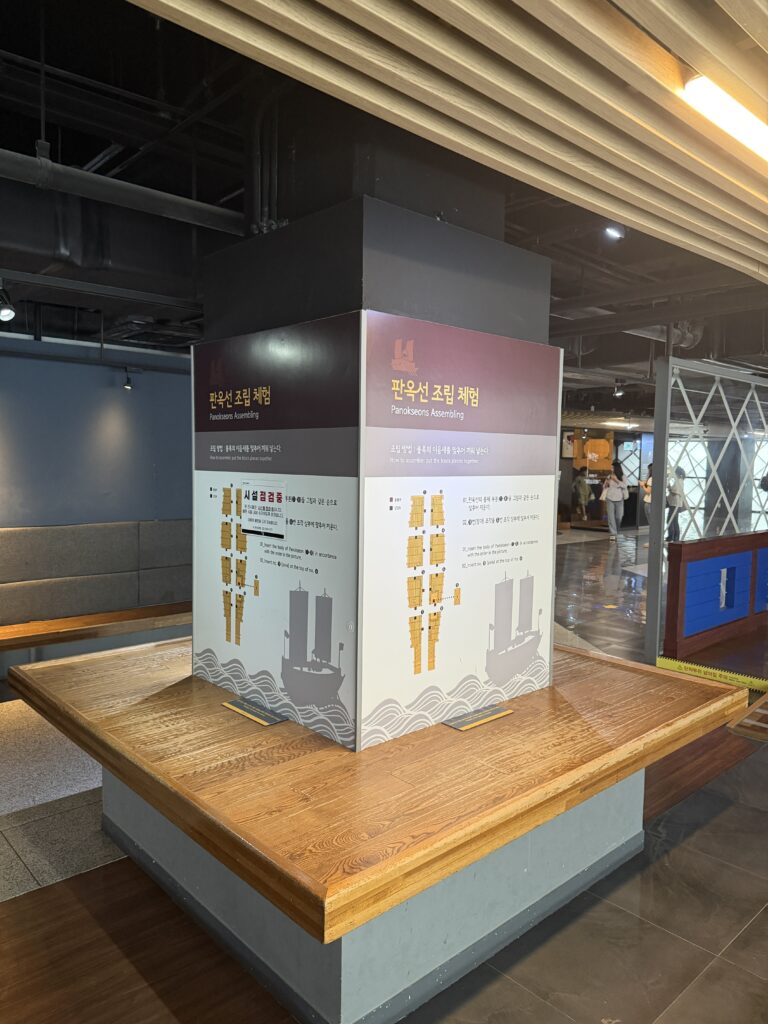
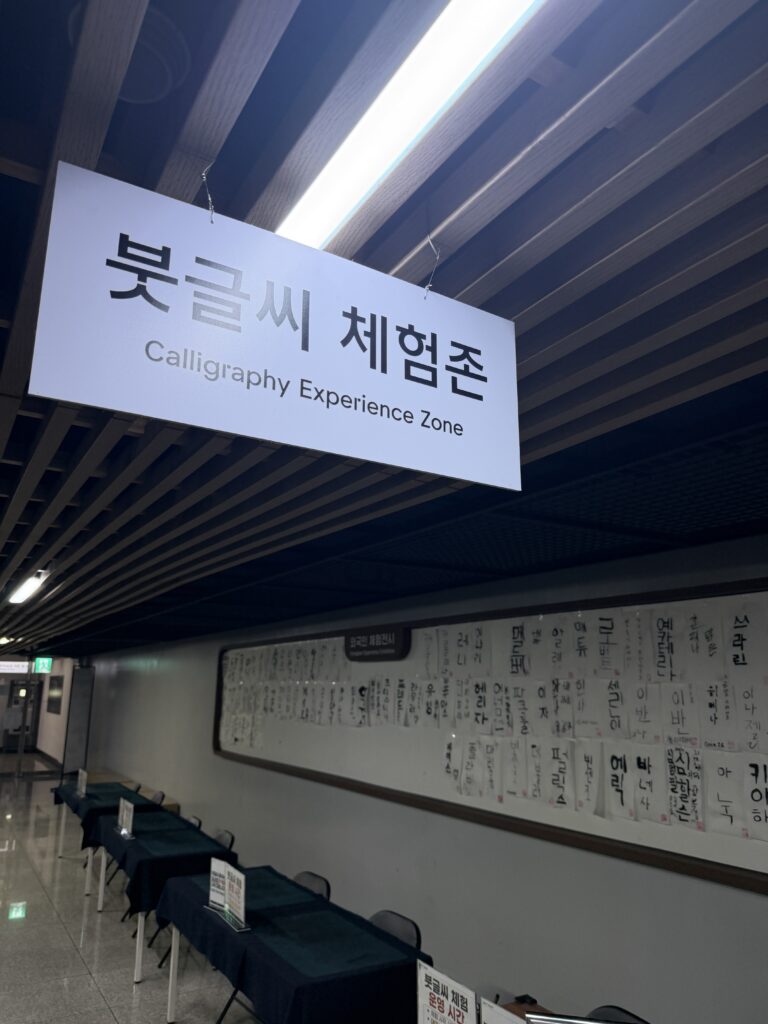
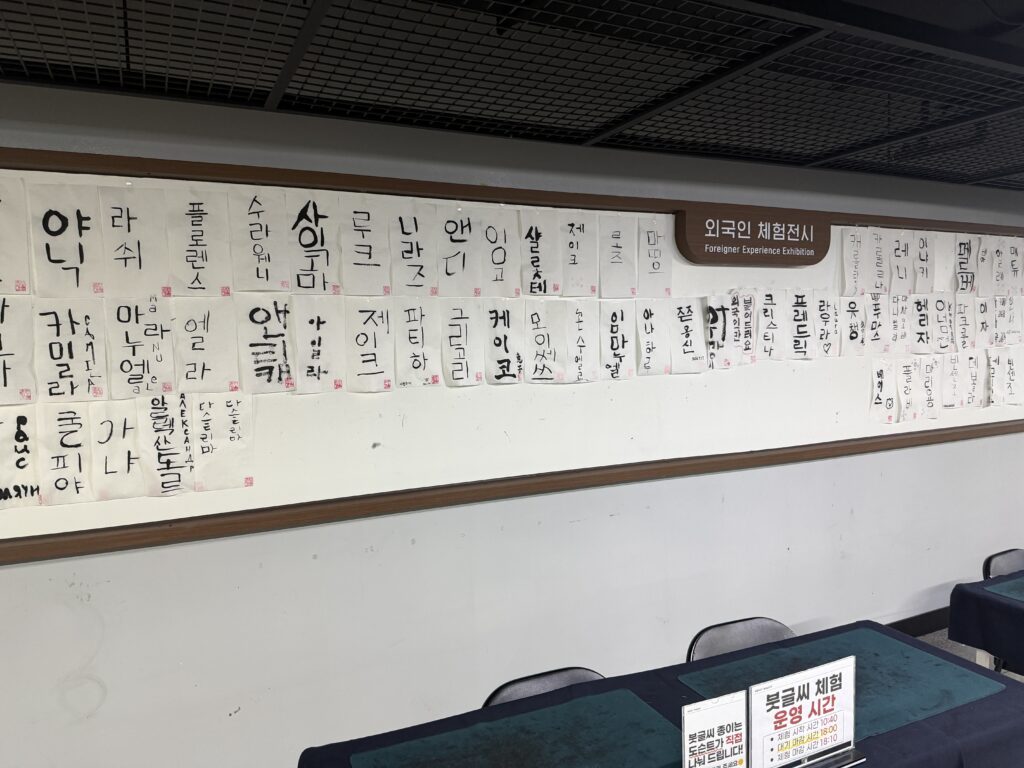
There are two hands-on corners too, and both were free when we visited.
Freedom Hall and the Garden of Gratitude
Keep walking and the floor changes. The wood and bronze stop, and you come out into a dark stone hall.
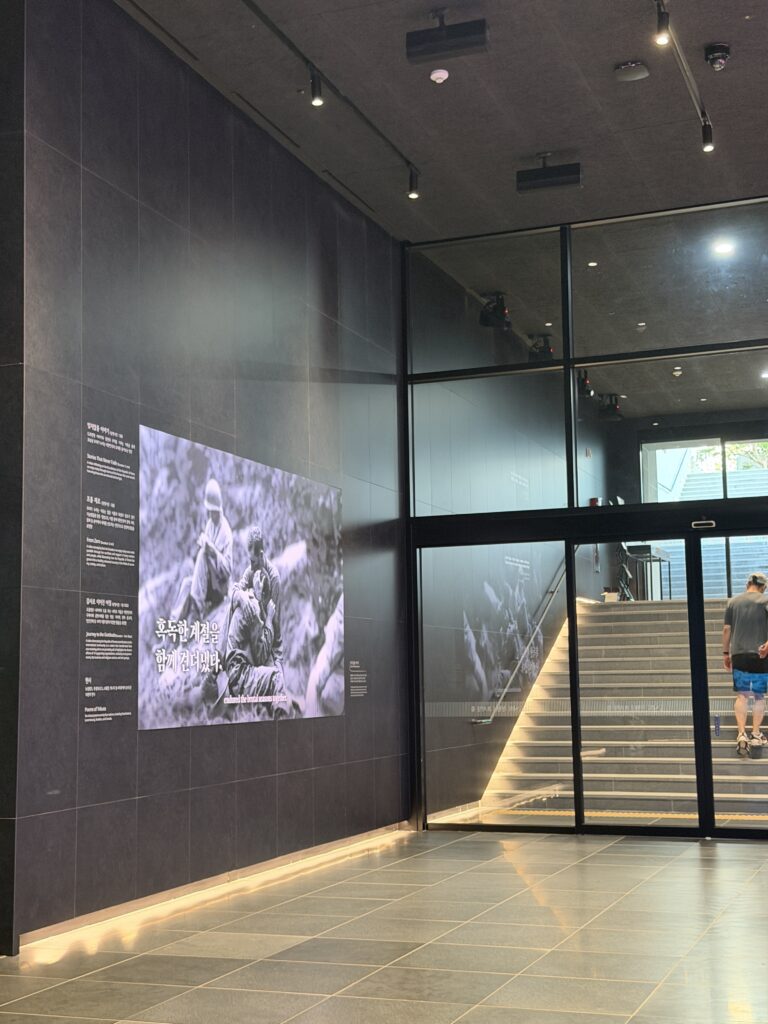
This is the underground half of the Garden of Gratitude, built to honour the twenty-two nations that supported South Korea during the Korean War. Above ground on the square there are twenty-three stone pillars, each 6.25 metres tall — twenty-two allies plus Korea. The number is the date: the war began on 25 June. Seven of those countries have since donated stone from home to be set into their own pillar.
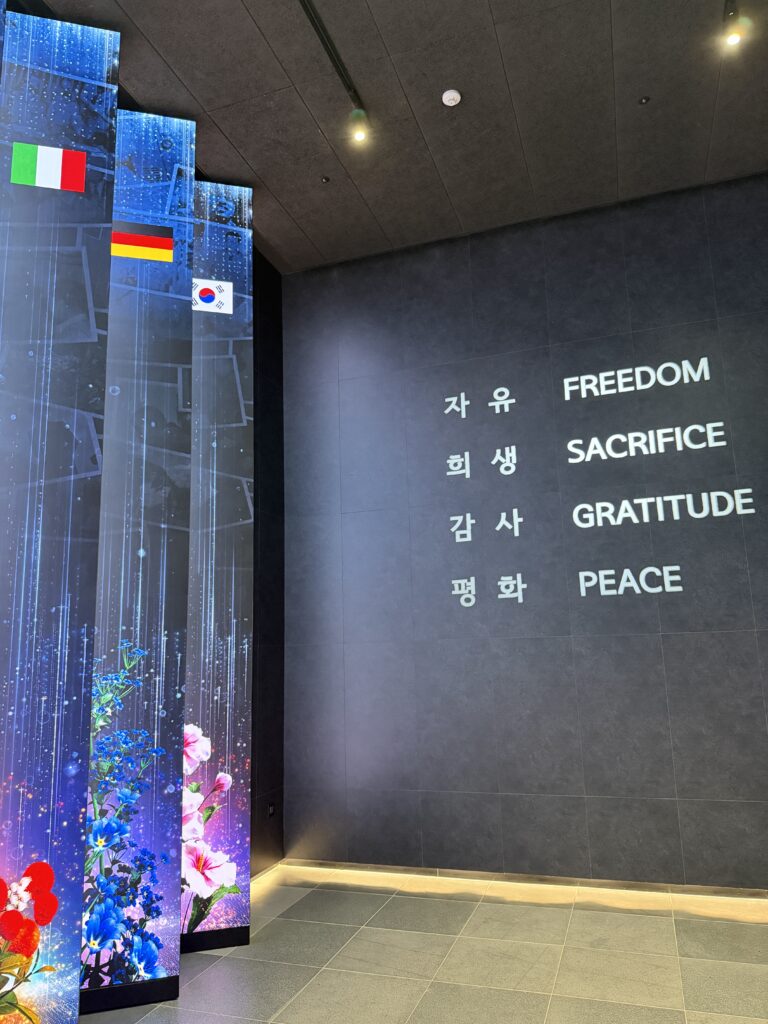
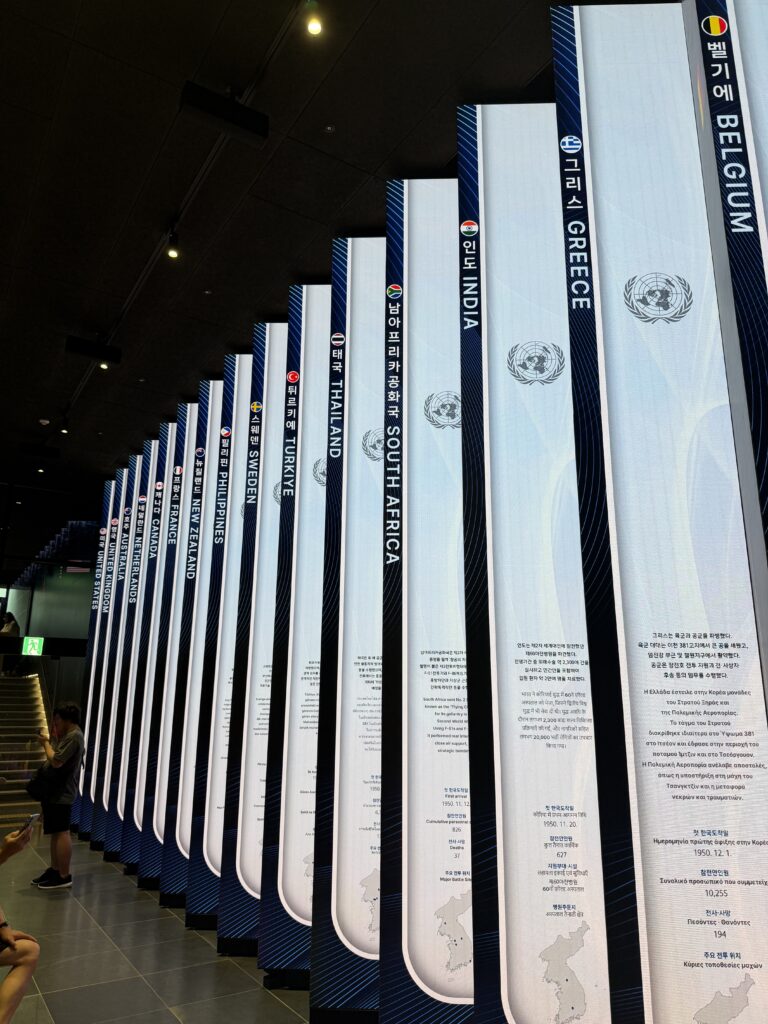
Here is the thing that makes this hall worth the walk for an English-speaking visitor, and I have not seen it mentioned anywhere else. Each pillar is written in that country’s own language. The Greek pillar is in Greek. The Indian pillar is in Hindi. The South African one is in English.
Sixteen nations sent combat troops — the US, UK, Canada, Türkiye, Australia, the Philippines, Thailand, the Netherlands, Colombia, Greece, New Zealand, Ethiopia, Belgium, France, South Africa and Luxembourg. Six sent medical support: Sweden, India, Denmark, Norway, Italy and Germany.
Find yours and read it in your own language. That is a small thing and it is also the whole point of the room.
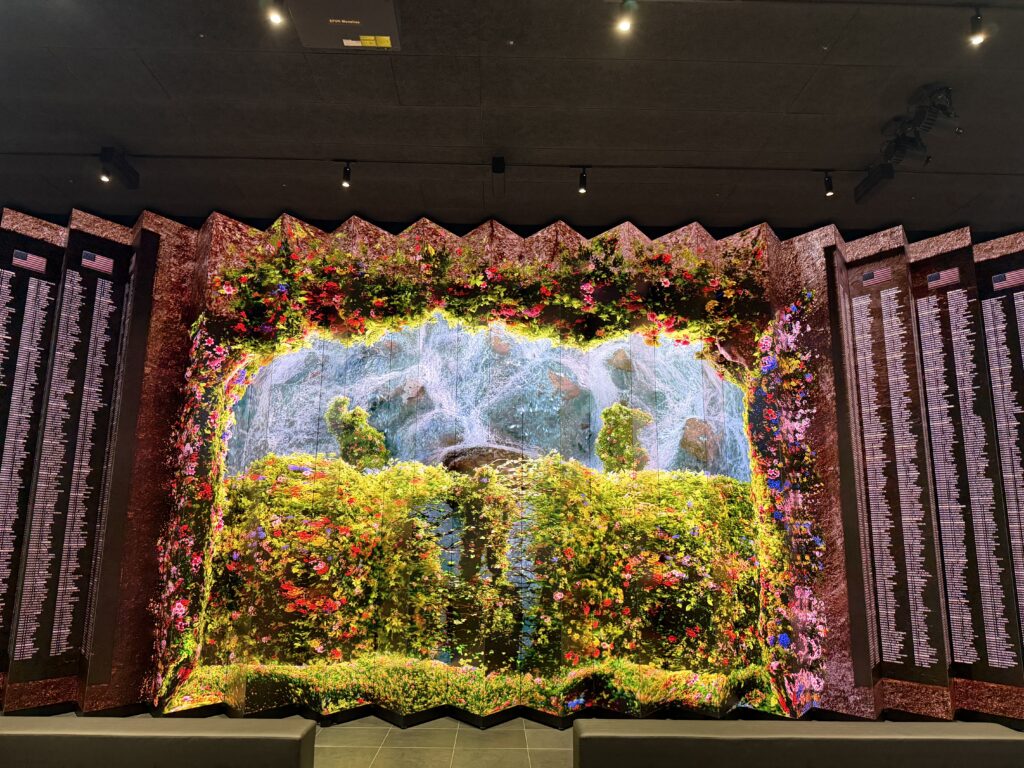
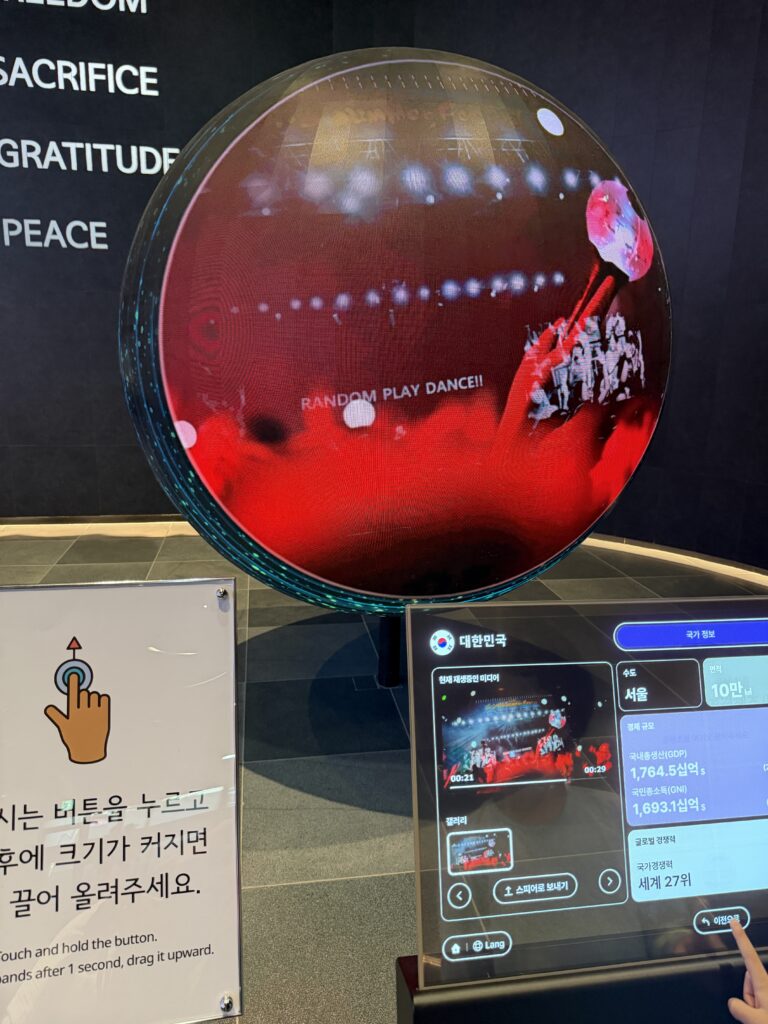
There are four media walls down here and thirteen pieces of content across them. Everything we tried was self-guided and bilingual. There is a docent programme — twelve sessions a day, forty minutes each, twenty people per session, booked through the Seoul public reservation service — but you do not need it to get in. Walk-in viewing is free and unrestricted, and the official page says so explicitly.
Above ground, the twenty-three pillars are lit from 8 PM until midnight.
Honest notes on language
The Admiral Yi battle projection and the Freedom Hall media walls are properly bilingual. The King Sejong hall is weaker — plenty of panels carry English, but the interactive stations are mostly Korean. The Dokdo room is Korean-first.
So: two thirds of this basement works in English, and the newest third works best.
Why this matters in December
Gwanghwamun Square in winter is brutal. It is wide, it is flat, and the wind comes straight down Sejong-daero with nothing to stop it.
The Gwanghwamun Christmas Market runs on this square from 5:30 PM. The two history halls will already be closing by then — but Freedom Hall is open until 10 PM, and it is directly underneath. If you are standing in that market with a cold child, the warmest room within fifty metres is down the stairs, it is free, and it has four glowing walls to look at.
Market, then the lit pillars at eight, then downstairs to warm up. That is an evening.
How to Get There
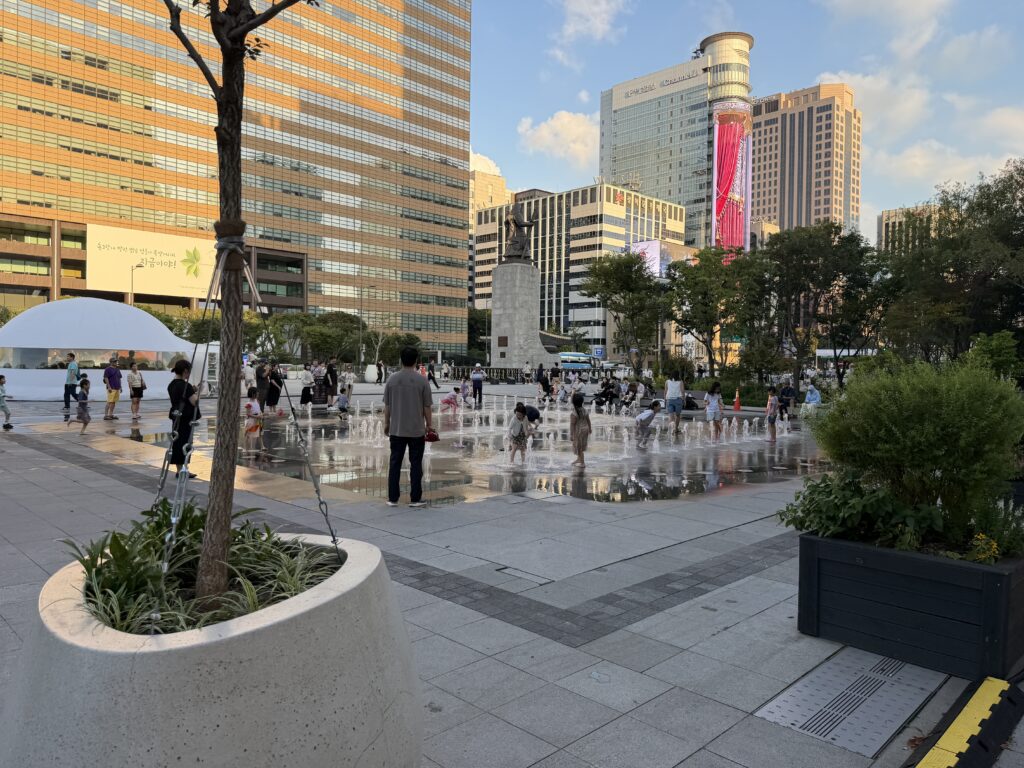
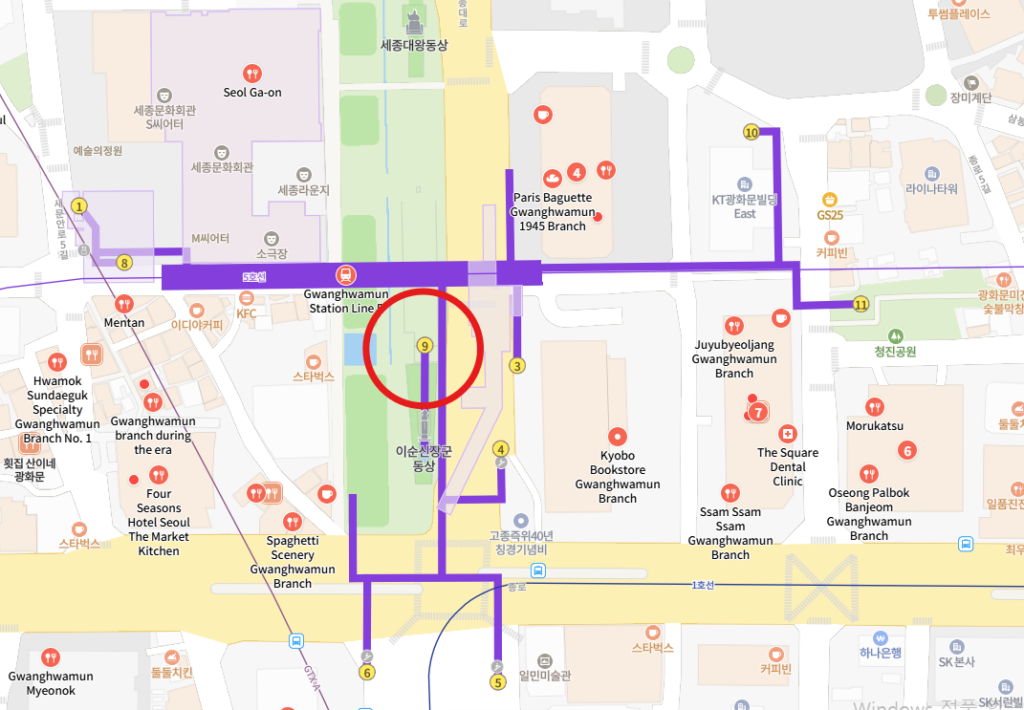
Take Line 5 to Gwanghwamun Station and use Exit 9. It comes up in the middle of the square, right beside the Admiral Yi statue — but on a cold day you may not want to come up at all. The halls are underground, and so is the station, so you can walk the whole way without stepping outside. Exits 1 and 8 are the ones at the Sejong Center end if you are heading straight for the Admiral Yi hall.
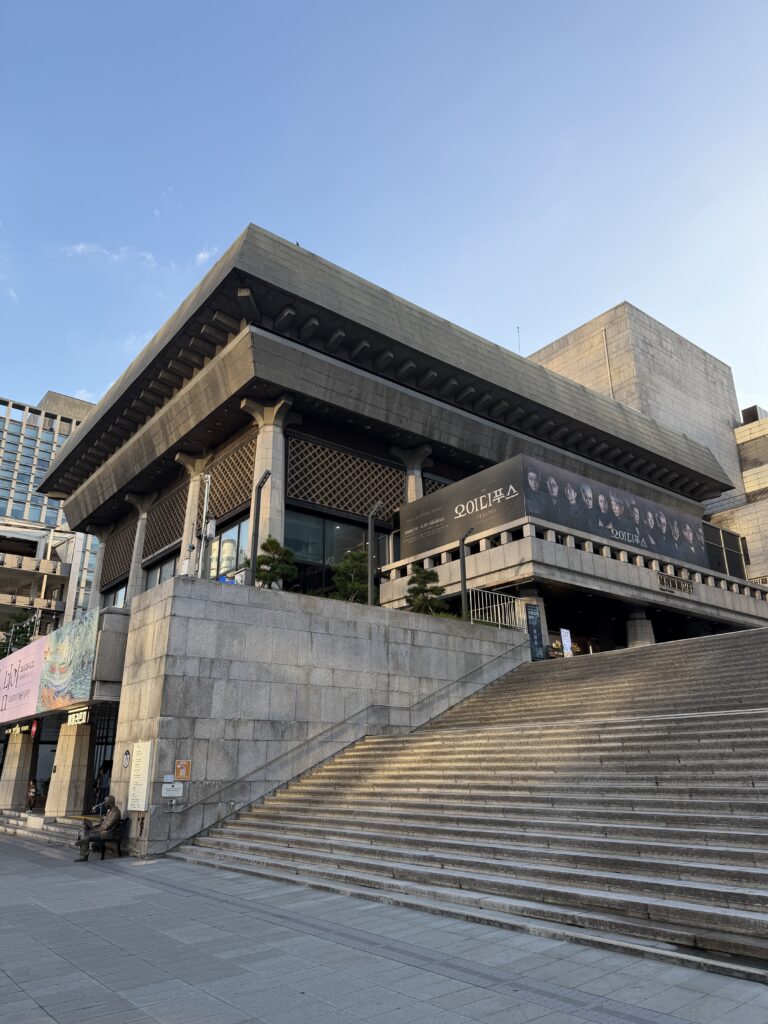
If you need to check anything before you go, the Sejong and Yi halls answer on +82-2-399-1177. The line is in Korean, so if you do not speak it, call the Korea Travel Hotline on 1330 instead — English, Chinese and Japanese, around the clock, and the operators will phone on your behalf. Hours and closures are listed on the official Sejong Center site.
My Honest Take
Three free museums, one basement, no booking, and one of them open until eleven at night. For a family in central Seoul on a cold or wet day, I do not know a better use of two hours.
The warship is the thing my kids still talk about. The pillars are the thing I still think about.
If you are building a Gwanghwamun day, pair this with the National Museum of Korean Contemporary History across the road, or the Seoul Museum of History a few minutes west. For more on the Korean War itself, the War Memorial of Korea in Yongsan goes far deeper.
3 thoughts on “Gwanghwamun Square Underground: 3 Free Museums in One Basement”