The Italy Hall: Where Kids Race Roman Chariots

Looking for an indoor weekend outing for my two daughters, I took them to the Italy Hall inside Nowon Train Village (located in Hwarangdae Railroad Park, Seoul). For me, Italy isn’t just another tourist destination. Seven years ago, my wife and I spent our honeymoon traveling independently through Rome and Florence, and as someone who studied architecture, I was completely captivated by Rome’s historic buildings. So as I walked my kids through this miniature Italy, my own memories of standing in front of the real thing kept surfacing. This post is two things at once: an honest review of visiting the Italy Hall, and a “miniature vs. real” comparison using photos I took myself seven years ago.
Quick Info Before You Go
| Item | Details |
|---|---|
| Opening hours | Tue–Sun 10:00–19:00 (last entry 18:00) |
| Closed | Every Monday |
| Admission | Adults ₩4,000 / Youth & children ₩2,000 (half price for Nowon residents) |
| Ticket covers | Swiss Hall and Italy Hall (one ticket for both) |
| Location | Inside Hwarangdae Railroad Park |
| Parking | Free for 2 hours, then ₩150 / 5 min |
A single ticket covers both the Swiss Hall and the Italy Hall, which makes it good value. The hall is closed on Mondays, so plan your visit for a weekend or a weekday afternoon. Please note that these details are accurate as of my visit — it’s worth double-checking the official channels before you go.
Where the Kids Stayed Longest — The Roman Chariot Racing Track (Circus Maximus)
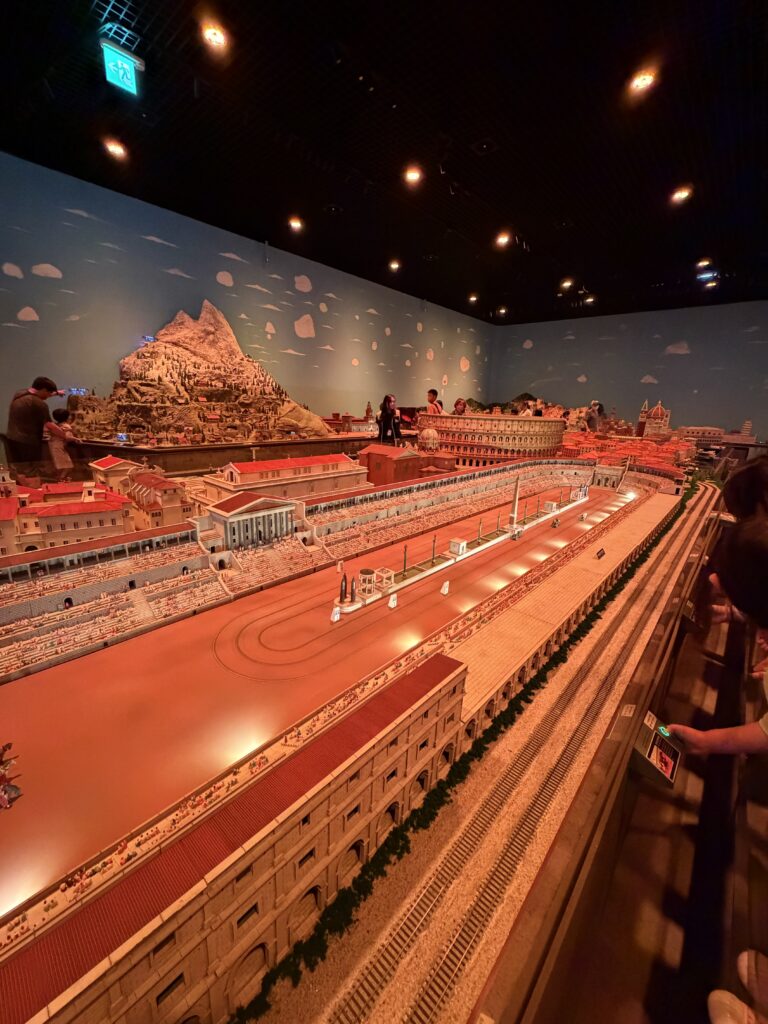
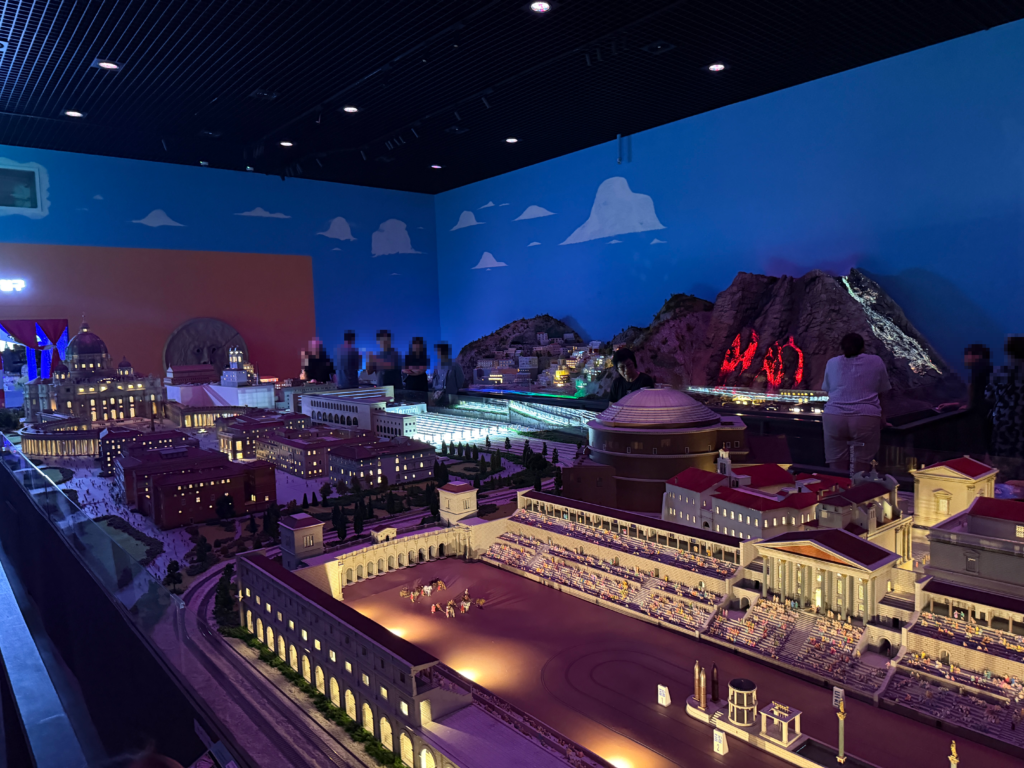
Honestly, the Colosseum and the Pantheon earned a single “wow” from my daughters and that was it. The place that truly held them was something else entirely: a miniature recreation of an ancient Roman chariot racing track. It features a button game for up to three players at once, where each racer mashes their own button to push their chariot forward, competing to see who crosses the finish line first.
My two girls spent a solid 15 to 20 minutes here. They pounded the buttons until their fingers hurt, laughing and shouting, and every time they lost they yelled “One more time!” and refused to move on. If you’re on the fence about visiting with children, I’d say this chariot race game alone makes the trip worthwhile. As an architecture-trained dad, I also found it fascinating that Rome’s arenas weren’t just spectacles but the very center of public entertainment — and my kids absorbed that through play, far more memorably than any textbook line could manage.
The Colosseum — Where the Miniature Meets My Seven-Year-Old Photos
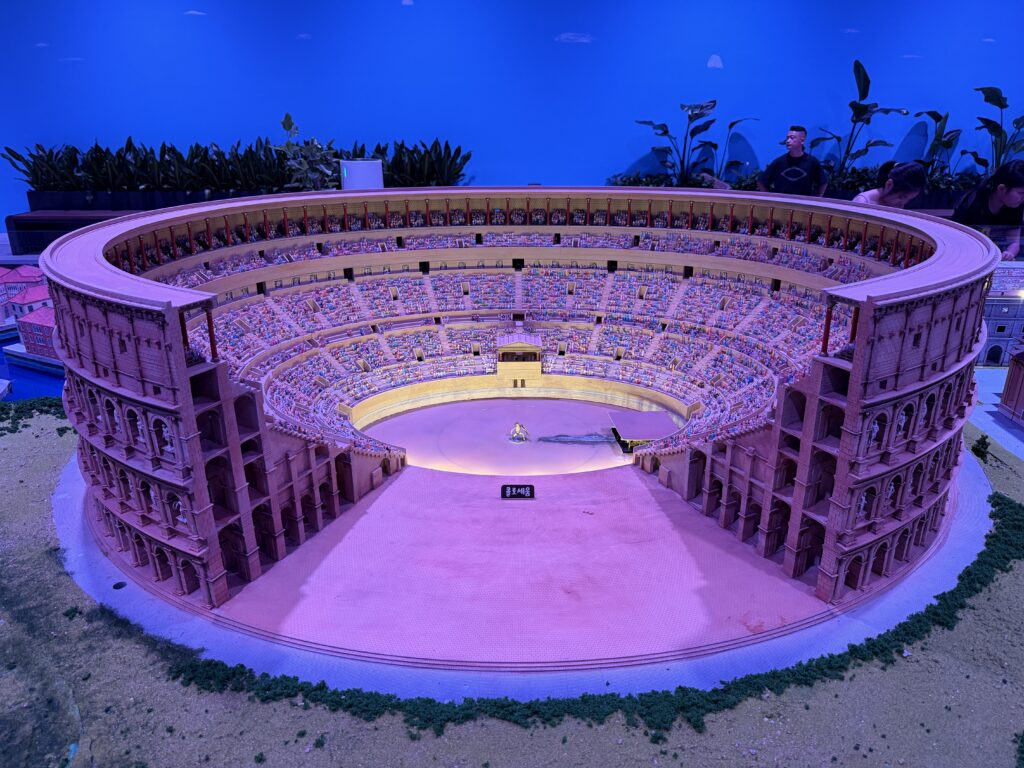
The Colosseum miniature stands under pink lighting, giving it a dreamlike mood quite different from the real thing. When I told my kids, “Daddy actually went there on his honeymoon,” their eyes went wide — so I pulled up the photos I took seven years ago to compare.
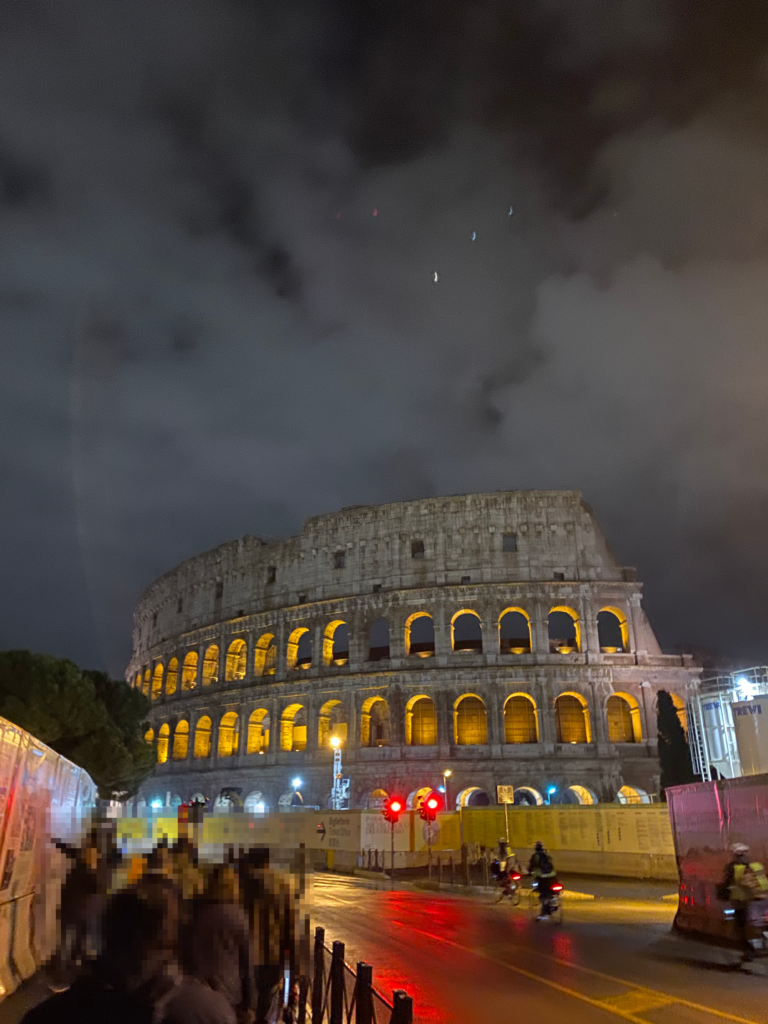
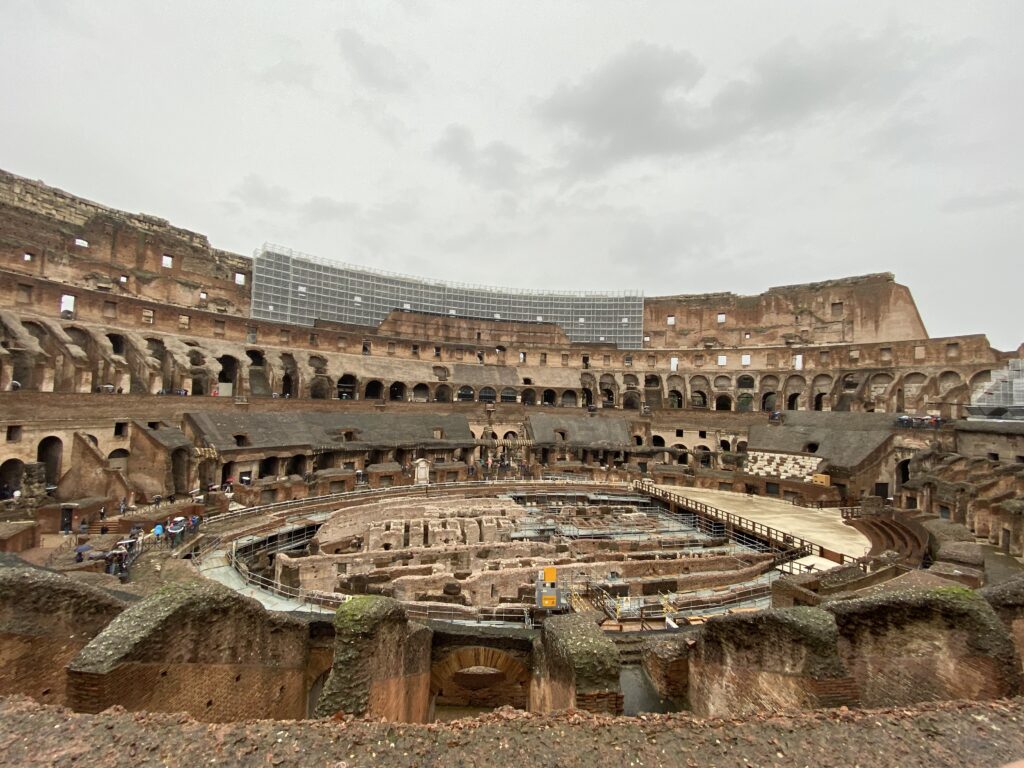
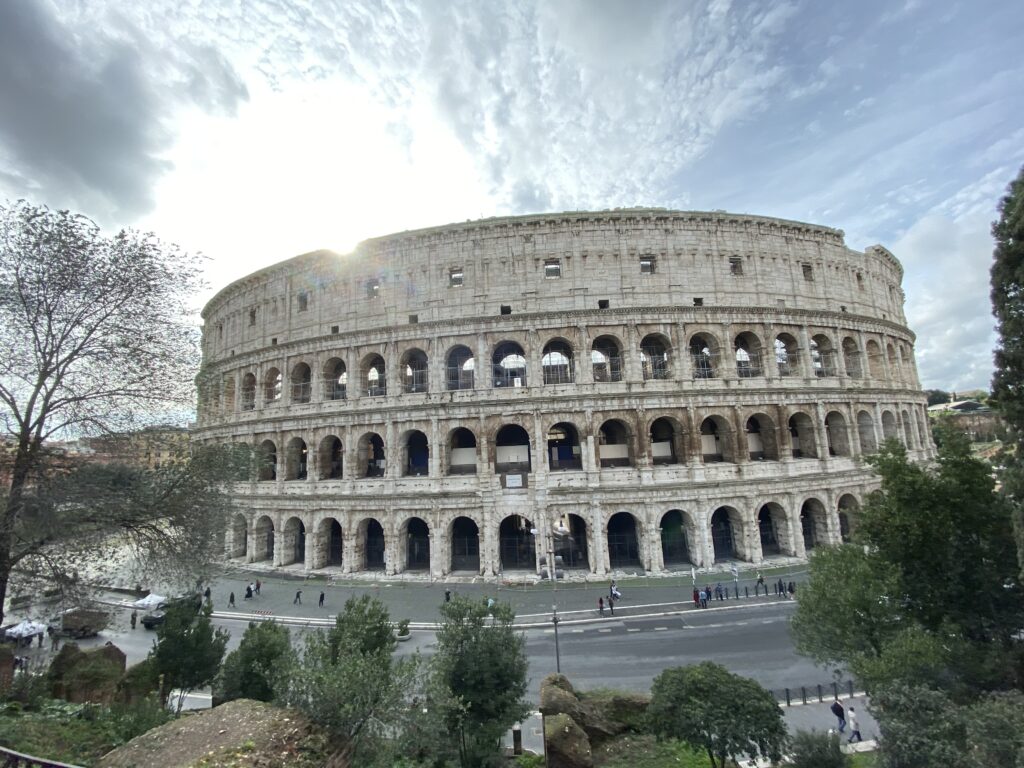
No matter how well a miniature is made, it can’t fully capture the sheer presence of the real Colosseum in daylight. Standing before a mass of stone that has endured for nearly two thousand years, there’s an overwhelming sense of scale. As someone who studied architecture, I was especially struck by how the Colosseum stacked arches and vaults layer upon layer to distribute its enormous load. Seeing the Doric, Ionic, and Corinthian column orders rise floor by floor — something I’d only read about in textbooks — was genuinely moving in person.
Step inside and the hypogeum — the underground network beneath the arena floor — comes into view. This is where gladiators and animals were held and where stage machinery was raised. Seeing this complex subterranean system makes you realize just how sophisticated Roman engineering really was.
At night, the Colosseum takes on an entirely different face, bathed in amber light. Its daytime grandeur turns into something lyrical and beautiful. I suspect the Italy Hall’s use of lighting on its miniature draws inspiration from exactly this kind of nighttime view.
The Pantheon — The Building I Most Wanted to See as an Architect
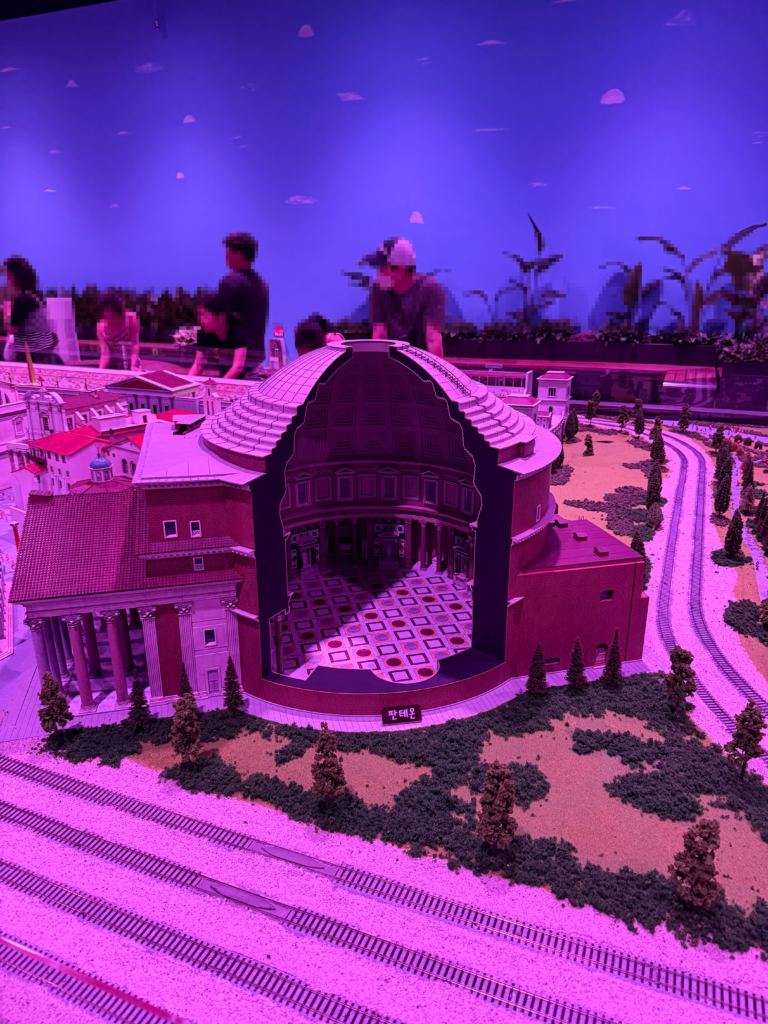
The Pantheon miniature is built as a cutaway so you can see inside the dome — revealing the hemispherical ceiling structure you’d never guess from the exterior. The moment I saw it, I told my daughters, “This is the building Daddy wanted to see most in Italy.”
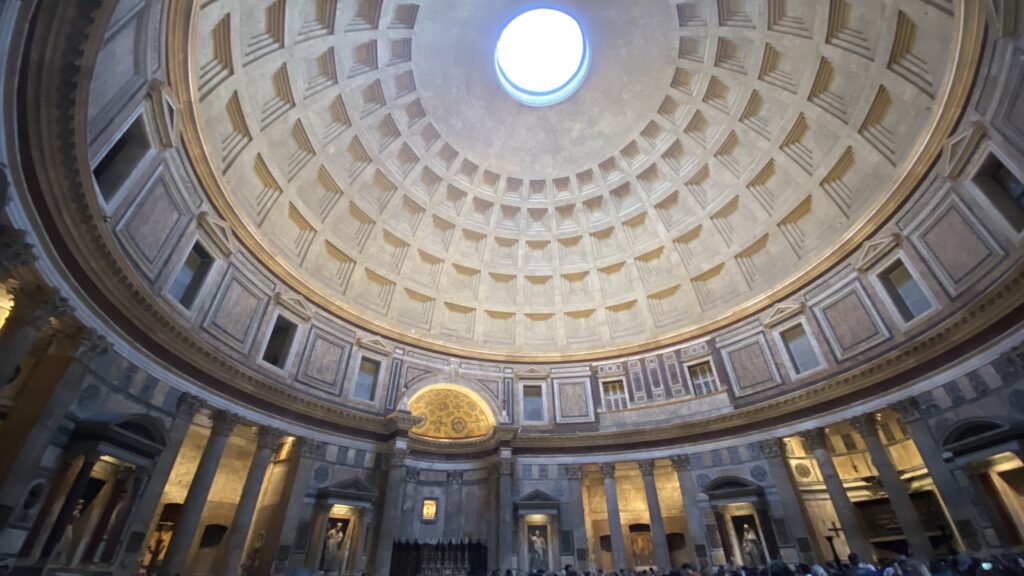
For anyone who studied architecture, the Pantheon is something close to a pilgrimage site. Its unreinforced concrete dome has stood for nearly two thousand years and remains the largest unreinforced concrete dome in the world. Standing directly beneath the oculus — the circular opening at the center of the ceiling — and watching that single shaft of light slowly travel across the coffered ceiling is an experience no model or photograph can fully prepare you for. The dome grows thinner toward the top, and lighter volcanic stone was used higher up to reduce weight — a design that still draws admiration today.
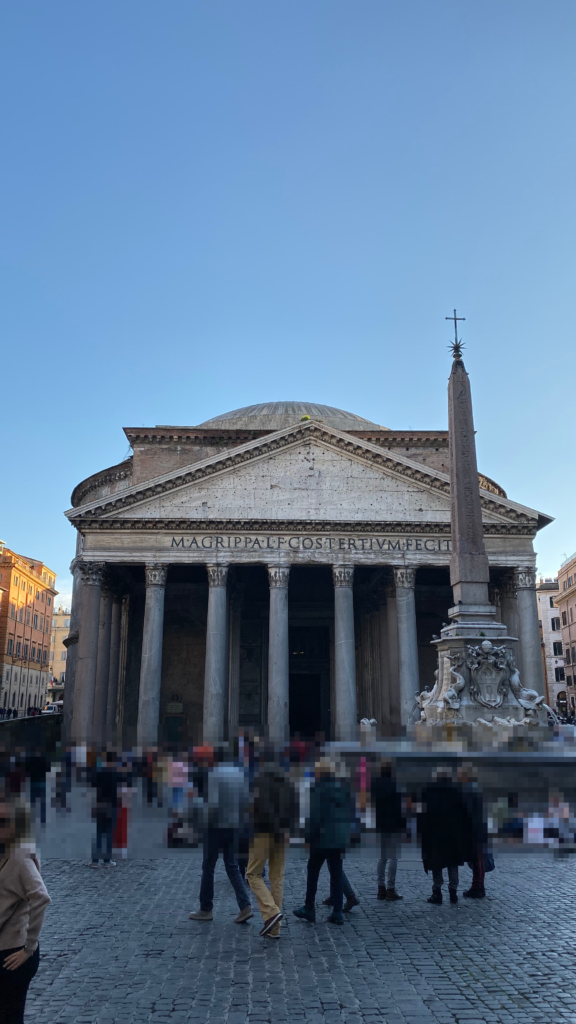
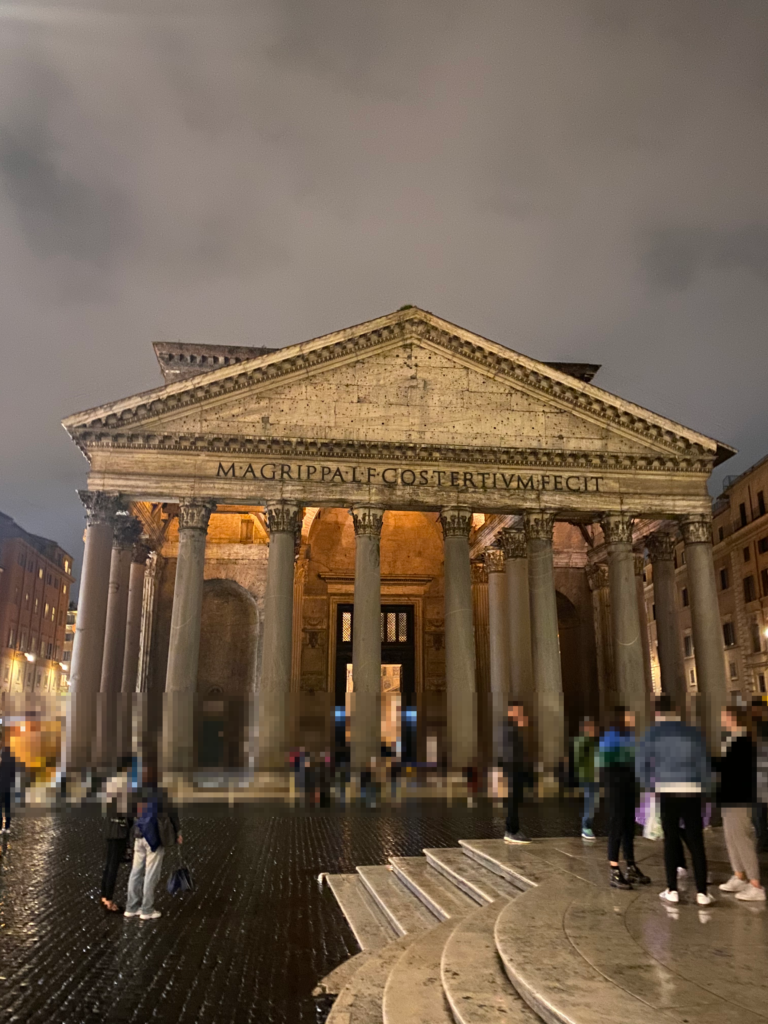
By day, the Pantheon’s facade presents the face of a grand temple, fronted by rows of massive columns. Paired with the obelisk fountain in the square out front, it made for a wonderful scene.
After the rain stopped, the Pantheon at night reflected its lighting off the wet pavement, creating an atmosphere completely different from the daytime. It was the most memorable evening stroll of our honeymoon.
Florence’s Duomo — The Second City We Reached by Train from Rome
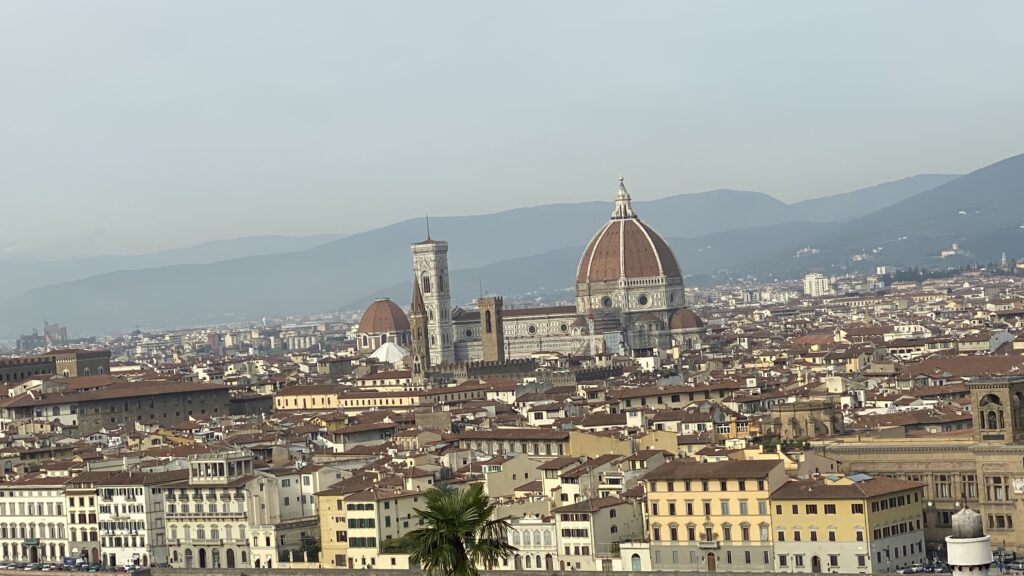
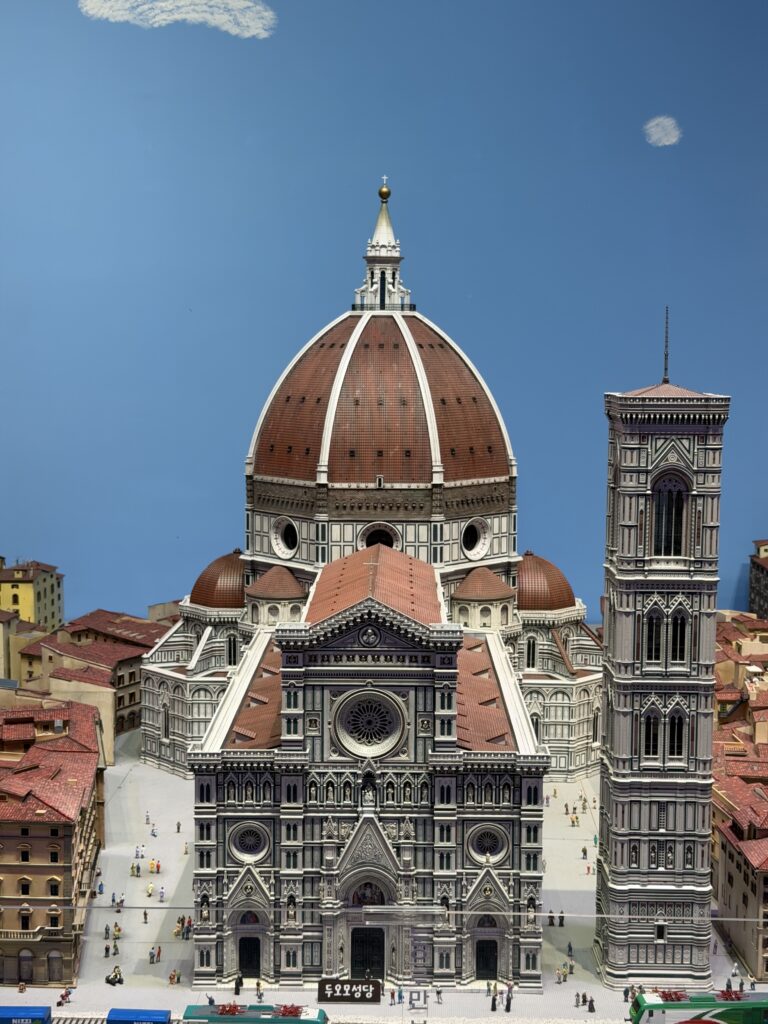
Our trip covered just two cities: Rome and Florence. The exact order of our route is hazy now, but I clearly remember traveling between the two by train. Seeing the Florence Duomo miniature, I was glad to spot that familiar red dome again.
From anywhere in central Florence, you can see the terracotta dome of the Duomo rising above the city. Designed by Brunelleschi, this dome was a monumental achievement in architectural history — a massive structure built without scaffolding, using an ingenious double-shell design that seemed impossible with the technology of its time. Looking at that dome towering over the cityscape, you understand why Florence is called the heart of the Renaissance.
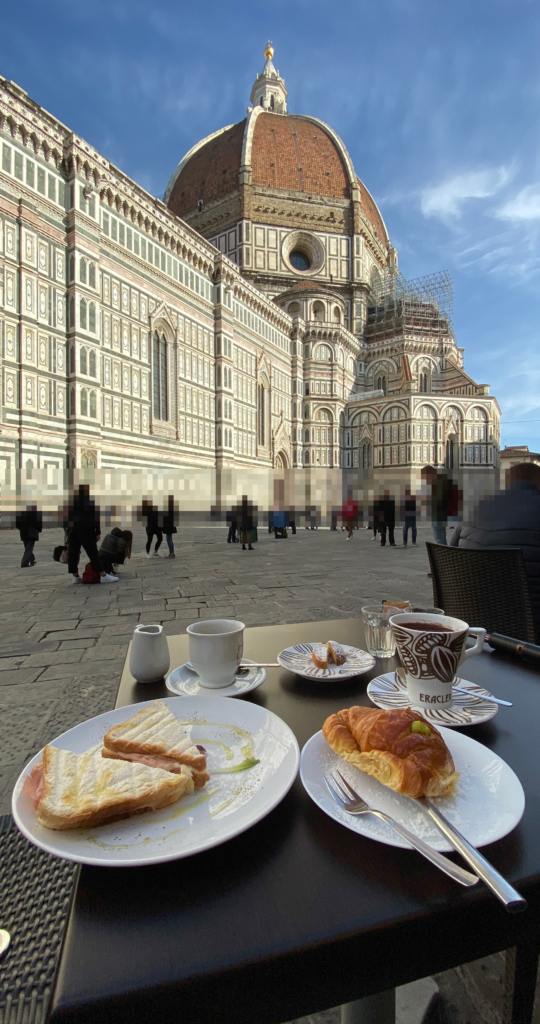
Breakfast at an outdoor cafe in the piazza facing the Duomo was the most relaxed moment of our honeymoon. Looking up at the cathedral over a cup of coffee — that feeling is still vivid to me.
The Vatican — St. Peter’s Basilica and Michelangelo’s Pietà
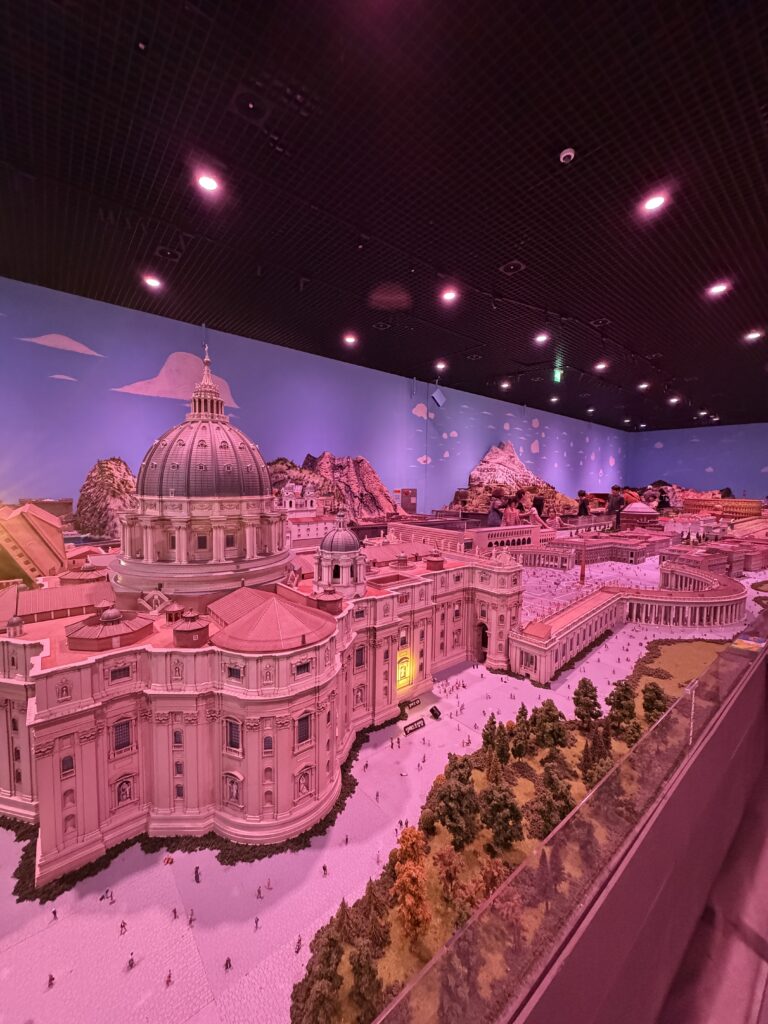
Miniature model of St. Peter’s Basilica and the Vatican in the Italy Hall, Nowon Train Village
The Italy Hall also includes a miniature of St. Peter’s Basilica in Vatican City.
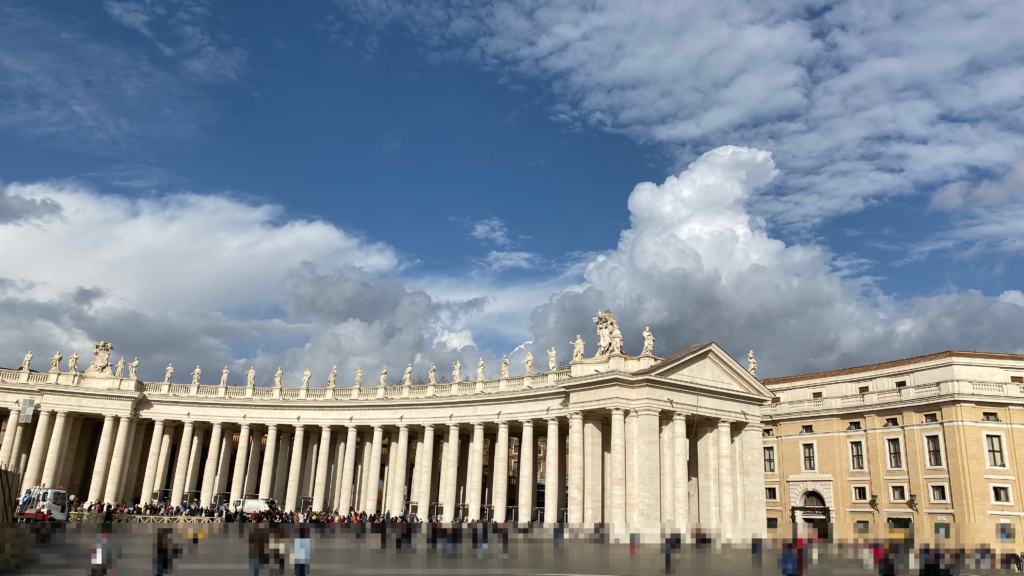
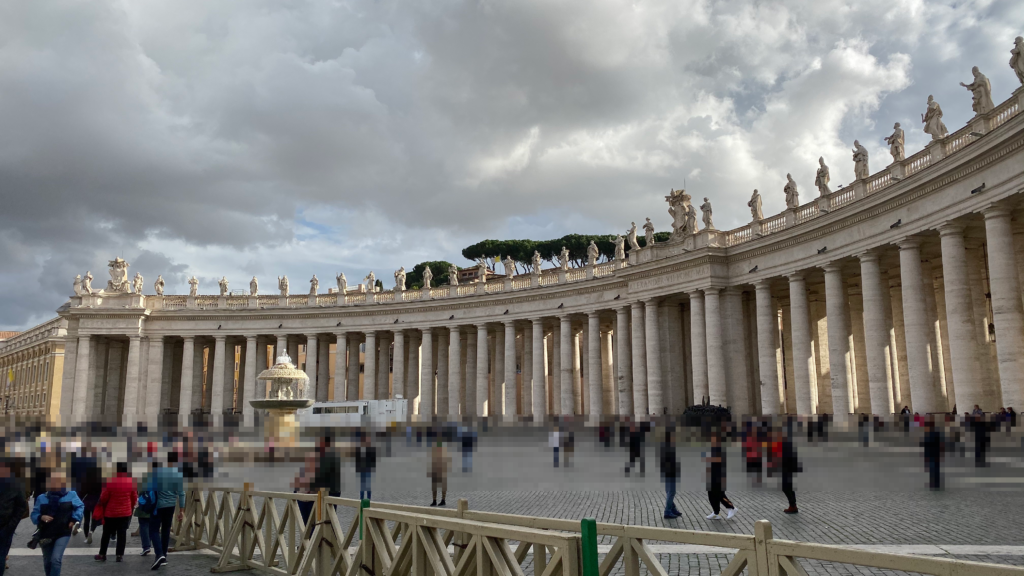
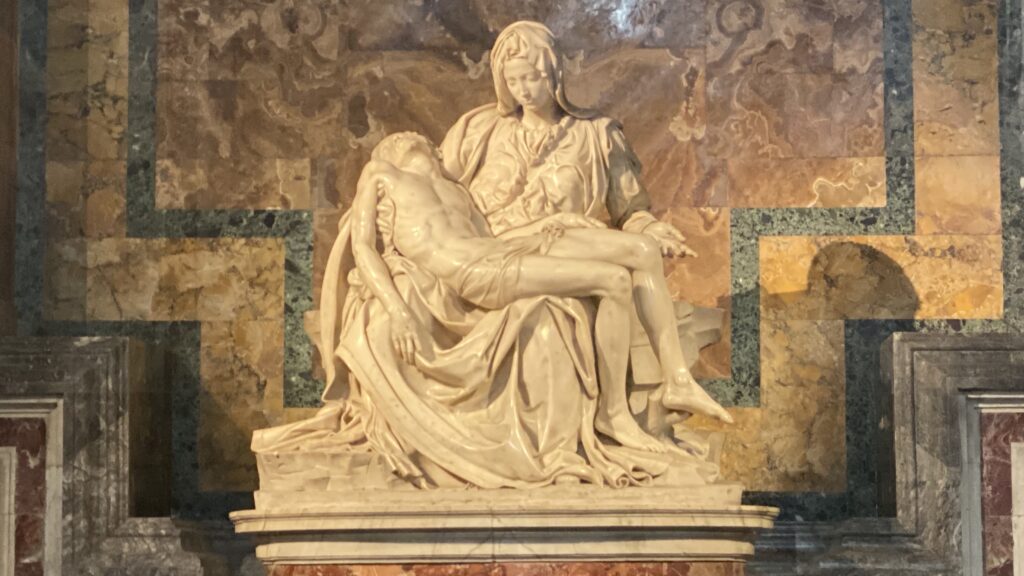
Standing in the real St. Peter’s Square, Bernini’s oval colonnade opens out like two arms embracing everyone who enters. Comparing my photos from a cloudy day and a clear one, you can see how differently the same space feels depending on the sky. The perspective created by these rows of columns is an architectural device that dramatically emphasizes the scale of the square.
Inside the basilica, Michelangelo’s Pietà moved me in a way no photograph could ever prepare me for. It was hard to believe that marble could be made to feel like the soft folds of cloth and living skin.
The Cities We Didn’t Reach — Milan, Pisa, and Cinque Terre in Miniature
On this honeymoon, the only places we actually visited were Rome and Florence. Captivated by architecture, I’d planned from the start to see only the specific places I most wanted to — a focused, independent trip. So there was a special joy in seeing miniatures of the cities we hadn’t reached.
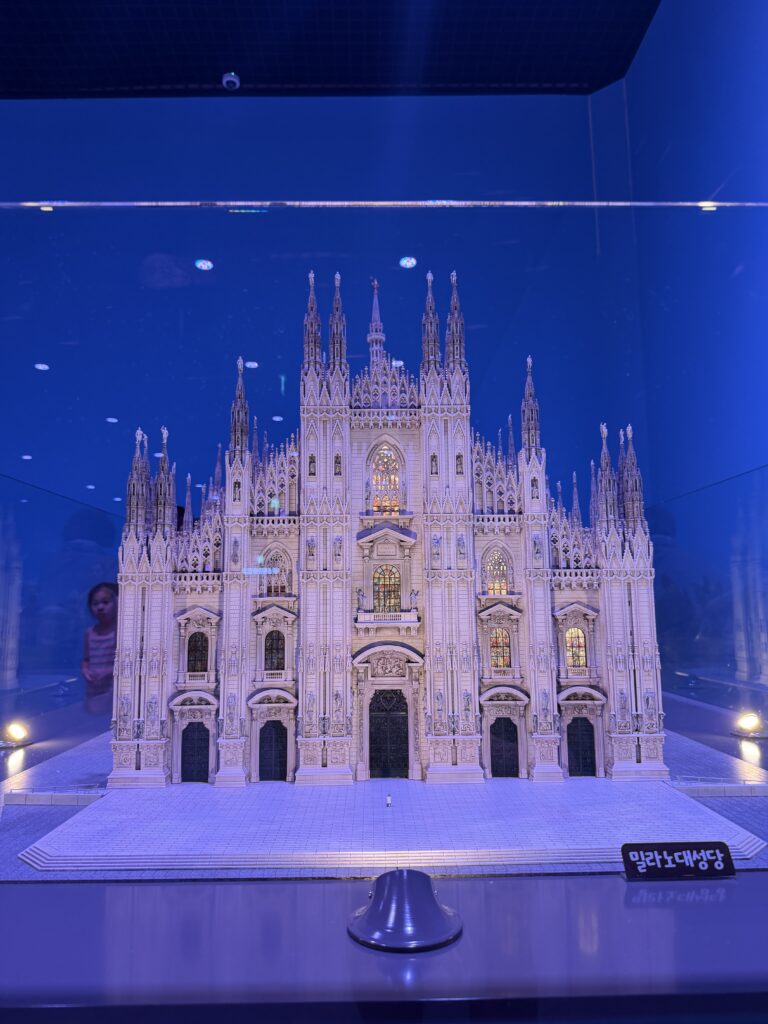
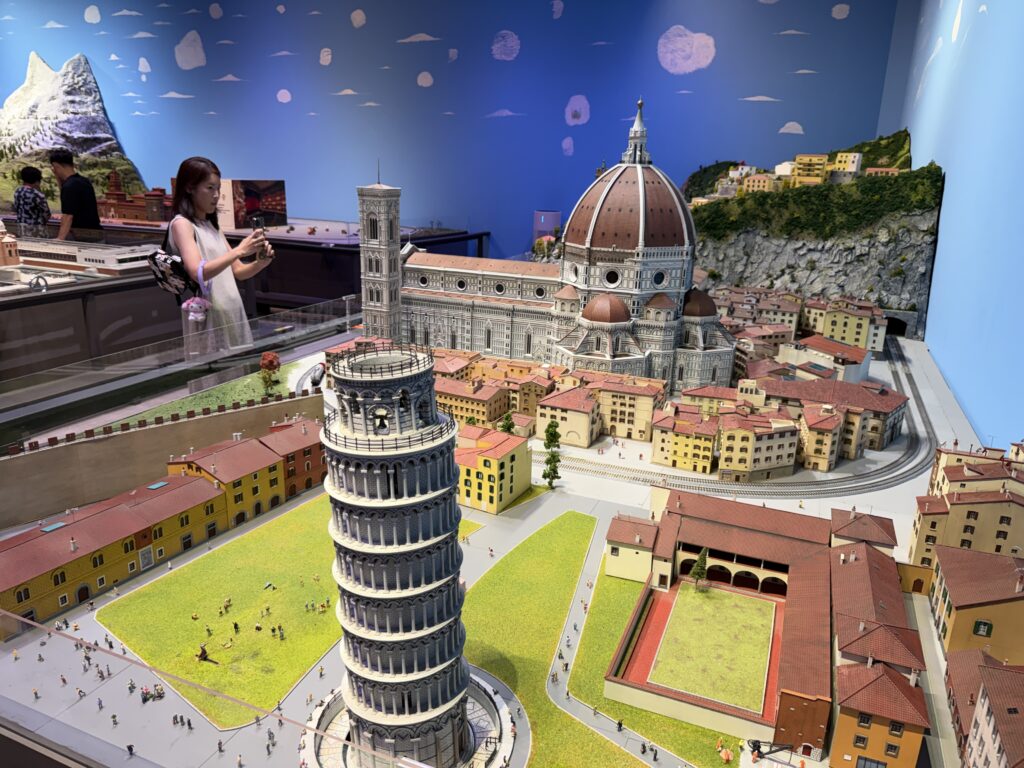
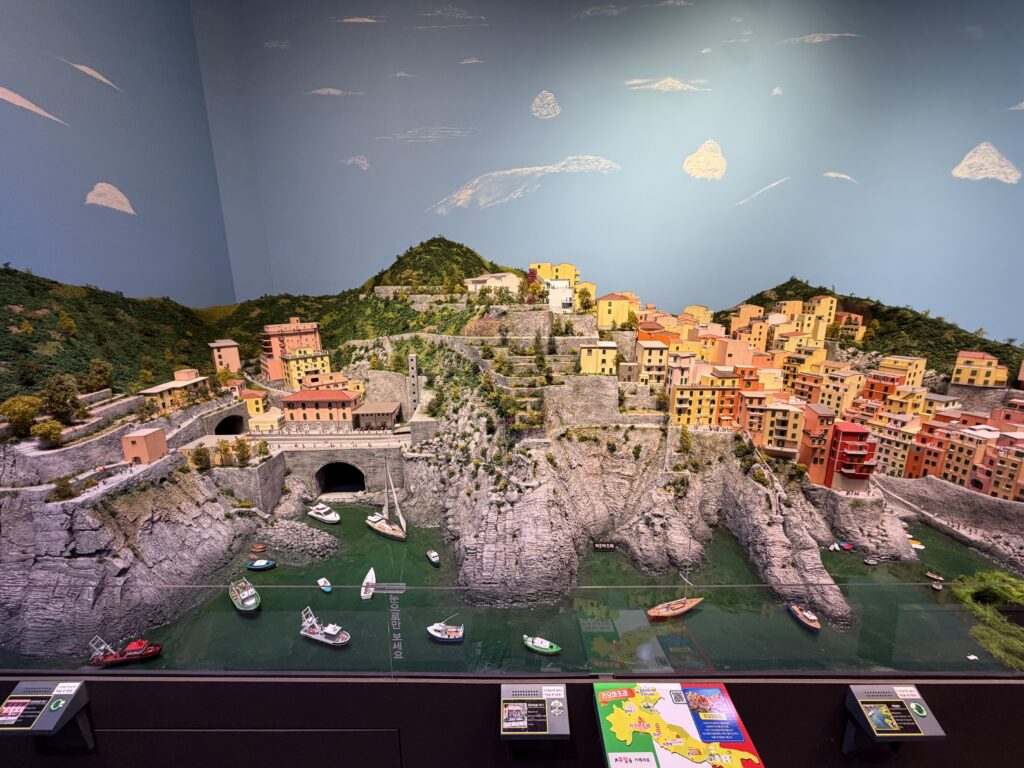
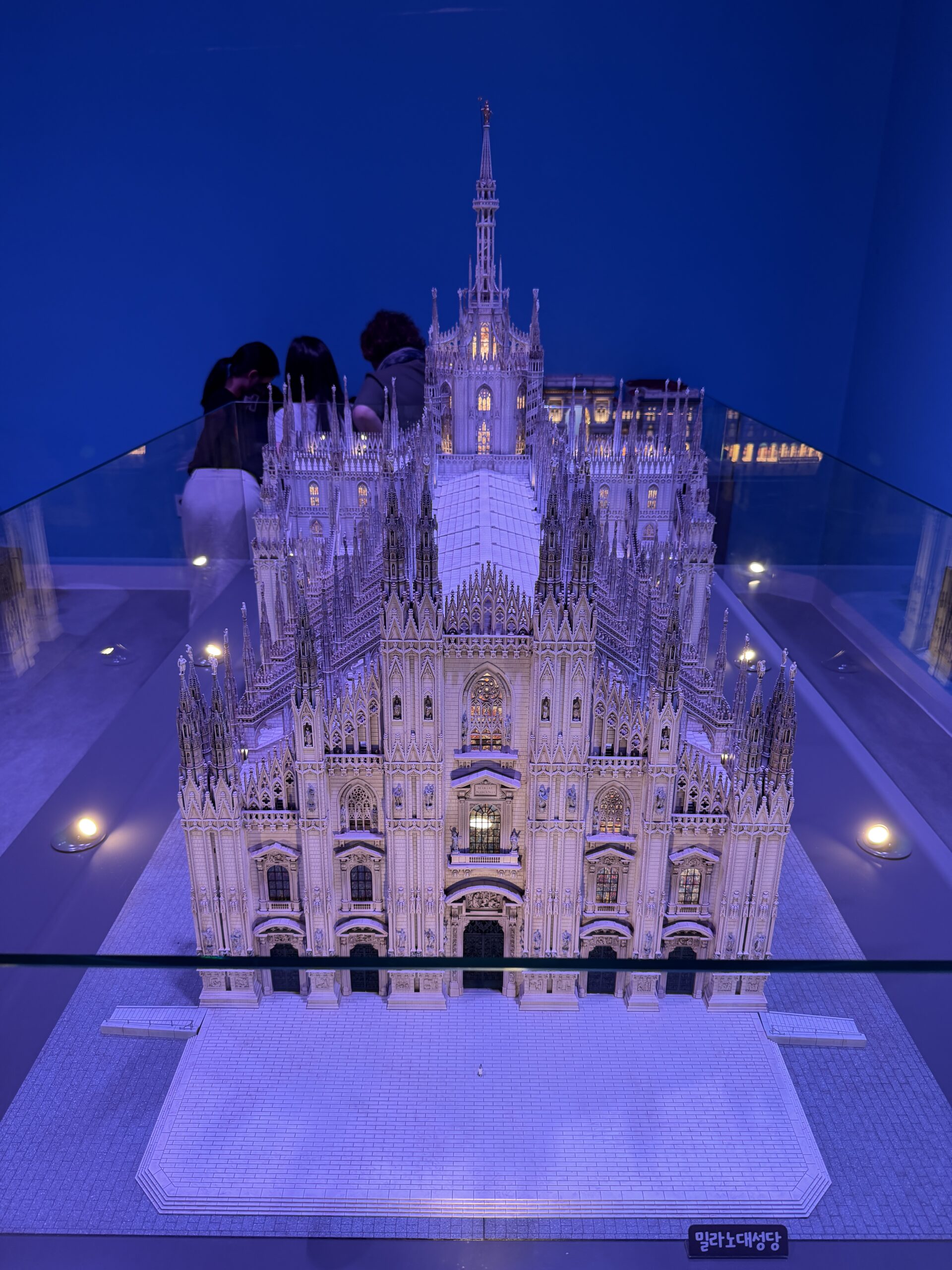
The Milan Cathedral with its dense spires under blue lighting, the precariously tilting Leaning Tower of Pisa, and Cinque Terre with its colorful houses clinging to the cliffs — meeting these places in miniature, ones I’d love to visit for real when my kids are older, gave me a fresh travel bucket list.
Is the Italy Hall worth it?
Short answer: yes, especially if you have kids. Between the chariot-race game, the moving trains, and the lighting that shifts the whole city from day to night, our kids stayed engaged the entire time. For adults, the level of detail on the landmarks is genuinely impressive — and if you’ve traveled in Italy yourself, you’ll enjoy spotting the places you’ve been. Your entry ticket covers both the Swiss Hall and the Italy Hall, so you get two “countries” in one visit.
Final Thoughts
Nowon Train Village’s Italy Hall offers something for everyone: hands-on play like the chariot racing game for kids, and finely detailed miniatures that evoke real Italian landmarks for adults. If you’ve been to Italy before, it becomes a chance to retrace old memories; if you haven’t yet, it plants the seed of a future trip. Since one ticket also gets you into the Swiss Hall, it’s well worth a stop if you’re looking for an indoor weekend outing.
The Nowon Train Village sits inside Hwarangdae Railroad Park — see our Hwarangdae Railroad Park guide for the vintage trains, summer water play, and the train café.